Trimmers & Edgers
Best string trimmer for fence lines
Chain link is a cheese grater for monofilament. The specs that matter are gauge, adjustable swath and how painful reloading is.
Affiliate disclosure: we earn a commission if you buy through our links, at no extra cost to you. It never changes which product we rank first — here is how we're funded.
We have not tested these units. Every spec on this page comes from the manufacturer's own documentation and is linked to it. Every computed figure is arithmetic you can redo. Prices are checked daily — last verified September 24, 2026. Here is exactly how we pick.
Quick picks
Ranked on the published specs and the arithmetic below. Tap any row to jump to the full write-up. We have not tested these units -- here is exactly how we pick.
| # | Product | Best for | Score | Price |
|---|---|---|---|---|
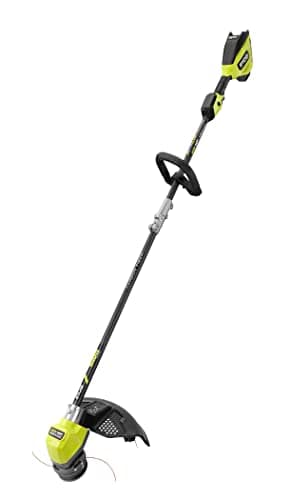
| 1 | Ryobi 40V HP Whisper 17" Carbon Fiber RY402110 67 published minutes and a swath you can dial from 15 to 17 inches -- the only adjustable-swath trimmer here. | Best runtime | 8.6 | |
| 2 | 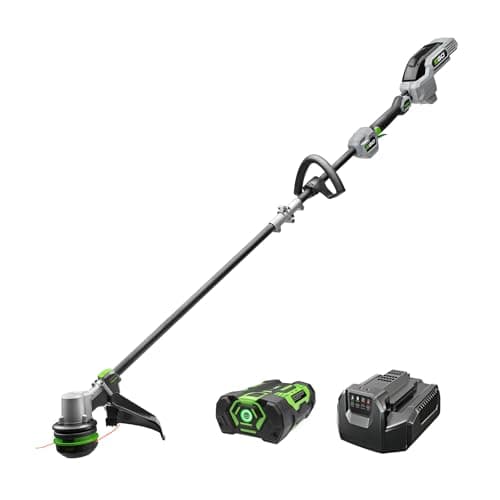 EGO Power+ 15" POWERLOAD Carbon Fiber ST1521S A lifetime shaft warranty and a head that reloads line at the push of a button -- the two things that actually go wrong with a string trimmer. | Best overall | 8.9 | |
| 3 | 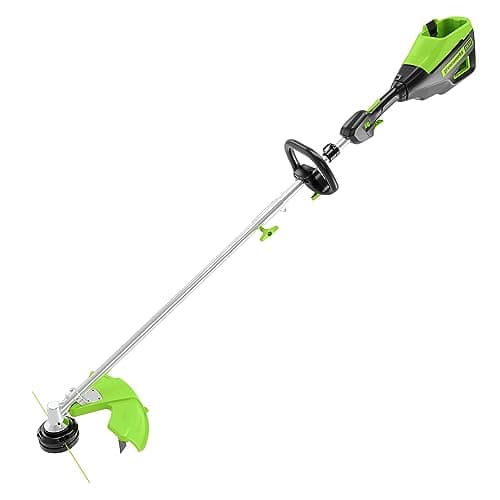 Greenworks 80V 16" Attachment-Capable String Trimmer (2123802) An 80V power head that takes Expand-It, TrimmerPlus and Poulan Pro attachments -- including brush blades. | Best power head for a blade | 8.5 |
#ad Buy links are affiliate links. Prices come from a live daily check; where we have no verified price we say "check price" rather than print a stale one.
Every other trimming job is grass against line. A fence line is line against steel, wood or masonry, and the line always loses. This is the one use case where consumable cost and reload speed matter more than runtime or swath.
The short answer
Gauge is the first decision
Line diameter decides how many impacts a length survives before it wears back into the head. Against grass the difference is marginal. Against chain link it is the whole job.
| Trimmer | Line gauge | Swath | Head / reload | Runtime |
|---|---|---|---|---|
| RYOBI RY402110 | 0.095 in | 15-17 in adjustable | Bump feed | Up to 67 min |
| EGO ST1521S | 0.095 in dual-feed spiral | 15 in fixed | POWERLOAD automatic winding | Up to 30 min |
| Greenworks 2123802 | 0.080 / 0.095 in | 14-16 in adjustable | LOAD N' GO bump feed | Up to 50 min |
| Greenworks ST80L210 | 0.080 in | 16 in fixed | Dual-line bump feed | Up to 45 min |
Transcribed from the RY402110, ST1521S, 2123802 and ST80L210 product pages.
Adjustable swath is the underrated one
The line tip travels fastest and does the cutting, and it is also the part that contacts the fence. Narrowing the cutting width pulls the tip back from the wire while you still cut the grass in front of it.
Two trimmers in our registry publish an adjustable width: RYOBI at 15 to 17 inches and Greenworks at 14 to 16. The other two are fixed, which means the only control you have along a fence is your own arm.
1. RYOBI RY402110 — heavy gauge and an adjustable path
Nought point nine five inch line, a 15 to 17 inch adjustable swath and up to 67 published minutes on the 240Wh in its kit. For a long fence line that is the right combination: the heavier line to survive the wire, the narrower setting to avoid it, and enough battery to finish the run.
Against it: bump feed means you reload by hand when the spool empties, and a fence line empties spools. At 12.9 lb with the 6.0Ah pack fitted it is the heaviest loaded trimmer we hold specs for, and RYOBI publishes no warranty on this product page.
#ad Check the Ryobi 40V HP Whisper 17" Carbon Fiber RY402110 price on Amazon — how we're funded.
2. EGO ST1521S — the reload problem, solved
Same 0.095 inch gauge, and POWERLOAD winds the line for you. On the job that empties spools fastest, the head that makes refilling painless has a strong claim — and the lifetime carbon fiber shaft warranty is worth noting on a tool that gets levered against posts.
Against it: a fixed 15 inch swath with no way to narrow it, and 30 published minutes on the 140Wh kit pack. Buy it on a platform where you already own a larger battery.
#ad Check the EGO Power+ 15" POWERLOAD Carbon Fiber ST1521S price on Amazon — how we're funded.
3. Greenworks 2123802 — both gauges, and a narrower minimum
Published for both 0.080 and 0.095 inch line, with a 14 to 16 inch adjustable path — the narrowest minimum setting in our registry, which is exactly what you want against a post. Fifty published minutes on 200Wh, and a four-year warranty on both tool and battery.
Against it: at 9.15 lb bare it is the heaviest unloaded trimmer here, and Greenworks publishes no shaft material.
#ad Check the Greenworks 80V 16" Attachment-Capable String Trimmer (2123802) price on Amazon — how we're funded.
Different fences, different damage
"Fence line" covers several quite different problems, and the right approach is not the same for each.
| Fence type | What it does to line | What it needs |
|---|---|---|
| Chain link | Thousands of wire edges; worst case for line | Heaviest gauge, narrowest swath, shallow approach |
| Welded wire / stock fence | Fewer edges but larger gaps; line snags | Heavy gauge, work parallel not into it |
| Wood picket or board | Abrades line; line also marks the wood | Keep the tip off the timber entirely |
| Vinyl / composite | Line scuffs and can mark the surface | Lowest practical speed, wide approach |
| Masonry or block | Highly abrasive; fastest line loss of all | Heaviest gauge and a mowing strip if possible |
Behavior described from material properties. No trimmer or fence maker in our registry publishes a line-wear figure against any surface.
Why the tip does the damage
Greenworks publishes a 6200 RPM motor speed on the ST80L210; no other trimmer in our registry publishes one, so the absolute tip speeds cannot be compared across brands. The relative effect of narrowing the swath holds regardless of the motor.
Bump feed or automatic, on a job that empties spools
Head type matters more here than on any other trimming job, because this is the job that runs you out of line.
- Bump feed advances line by tapping the head on the ground while it spins. It is simple and reliable, and reloading means opening the head and winding a spool by hand — three of the four trimmers here work this way.
- Automatic winding (EGO POWERLOAD) feeds the line through and winds it for you. On a fence line, where you may reload more than once in a session, that is the difference between finishing and giving up.
- Dual-line heads cut with two strands, which shares the wear but doubles the consumption rate. Both Greenworks trimmers publish dual-line heads.
What each head design does mechanically is covered in trimmer heads explained.
The permanent fix, costed in effort rather than money
Everything above manages a problem that can be removed. A mowing strip — a band of paver, brick or gravel running under the fence line — means the mower deck reaches the fence and the trimmer never has to.
- Gravel band: cheapest, fastest to install, needs topping up and will grow weeds eventually.
- Paver or brick strip: more work, more durable, and it gives the mower a wheel surface so the deck can overhang the edge.
- Neither, on a long rural fence. At some length the strip stops being worth it and the honest answer is heavy line and a wide swath.
It costs one weekend and it removes a recurring job for as long as you own the house. That is a better return than any trimmer on this page.
Four ways to spend less line
- Narrow the swath if the tool lets you. Free, immediate, and the single biggest reduction available.
- Cut with the tip, not the side of the head, and approach the fence rather than sweeping along it.
- Work the grass out from the fence first, then trim the last inch, so most of the pass never touches wire.
- Fix it permanently if you can. A mowing strip or a gravel band under the fence removes the job. It costs once; line costs every season.
What each head type does, and why bump feed and automatic winding behave differently, is in trimmer heads explained.
The buying checklist, in order
- Does it take 0.095 in line? Three of the four trimmers here do. The heavier gauge carries 41% more cross-sectional material to wear away.
- Can the swath be narrowed? Two of the four publish an adjustable width. It is the one free control you get over consumption.
- How painful is reloading? On the job that empties spools, an automatic head is worth real money.
- Is there enough battery to finish the run? A long fence is a large-yard problem — see trimmers for large yards.
- Is the shaft warranted? The shaft is what gets levered against posts, and only one trimmer in our registry publishes a lifetime term on it.
What we cannot tell you
We have not trimmed a fence with any of these. No maker publishes a line wear rate, a consumption figure per hour, or how much line a spool holds, so the gauge arithmetic above describes cross-sectional area rather than measured durability. Nobody publishes a shaft material for the two Greenworks trimmers, and RYOBI publishes no warranty on the page we cite.
The picks in full
Specs are the manufacturer's own and linked to the page they came from. Prices come from a live daily check; where we have no verified price we say so rather than print a stale one.
Ryobi 40V HP Whisper 17" Carbon Fiber RY402110
Ryobi · Ryobi 40V · Our score 8.6/10
#ad Price as of September 24, 2026. Prices change; we check daily. How we're funded.
67 published minutes and a swath you can dial from 15 to 17 inches -- the only adjustable-swath trimmer here.
Published specs
| Cutting swath | Adjustable 15-17 in |
|---|---|
| Line | 0.095 in bump feed |
| Shaft | Carbon fiber |
| Battery (kit) | 40V 6.0Ah |
| Runtime claim | Up to 67 min |
| Weight | 8.8 lb bare / 12.9 lb with 6.0Ah |
| Length | 72.25 in |
Source: 40V HP Brushless 17" String Trimmer (RY402110), ryobitools.com
40V x 6.0Ah = 240Wh. 67 minutes from 240Wh is about 3.6Wh per minute -- the most efficient published figure of the three trimmers here.
What the numbers favor
- 67 minutes published, more than double the EGO kit's 30
- Swath adjusts 15-17 in, so tight borders and open verge get the same tool
- Best published watt-hours per minute of the trimmers on this page
- Whisper Series noise engineering, same line as the 57 dB blower
What they don't
- 12.9 lb with the 6.0Ah pack fitted -- the heaviest trimmer here, and it is held at arm's length
- Ryobi publishes no noise figure for this specific model
- Bump feed, not an automatic reload head
you have wrist or shoulder trouble. 12.9 lb on the end of a 72 in shaft is a lot of leverage, whatever the runtime says.
How it scores
Scores are our editorial weighting of the published specs above, not a test result. They are deliberately kept out of this page's structured data.
EGO Power+ 15" POWERLOAD Carbon Fiber ST1521S
EGO · EGO 56V ARC Lithium · Our score 8.9/10
#ad Price as of September 24, 2026. Prices change; we check daily. How we're funded.
A lifetime shaft warranty and a head that reloads line at the push of a button -- the two things that actually go wrong with a string trimmer.
Published specs
| Cutting swath | 15 in |
|---|---|
| Line | 0.095 in dual-feed spiral twist |
| Head | POWERLOAD automatic winding |
| Shaft | Carbon fiber, split shaft |
| Battery (kit) | 56V 2.5Ah |
| Runtime claim | Up to 30 min on 2.5Ah |
| Charge time | 50 min |
| Warranty | 5-yr tool / 3-yr battery, lifetime shaft |
Source: POWER+ 15" POWERLOAD String Trimmer with Carbon Fiber Shaft, egopowerplus.com
56V x 2.5Ah = 140Wh. 30 minutes of published runtime from 140Wh is about 4.7Wh per minute -- roughly a quarter of what a blower on turbo burns.
What the numbers favor
- Lifetime warranty on the carbon fiber shaft, published
- POWERLOAD winds the line for you -- the job everyone hates
- 0.095 in line, the heavier of the two common home gauges
- Split shaft, so it takes EGO's multi-head attachments
What they don't
- Ships with the small 2.5Ah pack; 30 minutes is a modest published runtime
- EGO does not publish a weight for this configuration
you only edge a short driveway. An 8 in edger attachment on a power head you already own does that job better and costs a fraction.
How it scores
Scores are our editorial weighting of the published specs above, not a test result. They are deliberately kept out of this page's structured data.
Greenworks 80V 16" Attachment-Capable String Trimmer (2123802)
Greenworks · Greenworks 80V · Our score 8.5/10
#ad Price as of September 24, 2026. Prices change; we check daily. How we're funded.
An 80V power head that takes Expand-It, TrimmerPlus and Poulan Pro attachments -- including brush blades.
Published specs
| Cutting path | 14-16 in, adjustable |
|---|---|
| Line | 0.080 in / 0.095 in |
| Motor | Brushless |
| Battery | 80V 2.5Ah (200Wh) |
| Runtime | Up to 50 min |
| Attachment fit | Poulan Pro, Ryobi Expand-It, TrimmerPlus |
| Head | LOAD N' GO bump feed |
| Weight | 9.15 lb without battery |
| Warranty | 4-yr tool and battery |
Source: 80V 16" Attachment-Capable String Trimmer (2123802), greenworkstools.com
80V x 2.5Ah = 200 watt-hours, and Greenworks publishes up to 50 minutes of runtime, so 200 / 50 = 4.0Wh per minute at the advertised voltage. That is the trimming figure. Greenworks publishes no runtime with a brush blade fitted, and cutting woody stems draws more than trimming grass, so expect the blade to spend that 200Wh faster.
What the numbers favor
- Takes three brands of attachment, so the blade is not a proprietary purchase
- Publishes both watt-hours and runtime, which makes Wh/min computable
- 4-year warranty on tool and battery
- Adjustable 14-16 in cutting path trades width for runtime
What they don't
- 9.15 lb before you add a battery or a steel blade
- No published runtime with a brush cutter attachment fitted
- 80V is a separate platform from Greenworks' own 40V and 60V lines
you only ever cut grass. The attachment capability is the reason to pay for this one, and a fixed-head trimmer weighs less.
How it scores
Scores are our editorial weighting of the published specs above, not a test result. They are deliberately kept out of this page's structured data.
Where to buy the tools on this page
Every link below is an Amazon affiliate link. We show no price we have not verified today, so where there is no live figure the link says "check price" and takes you to the listing to read it there.
Best runtime
Ryobi 40V HP Whisper 17" Carbon Fiber RY402110
Ryobi · Ryobi 40V
Best overall
EGO Power+ 15" POWERLOAD Carbon Fiber ST1521S
EGO · EGO 56V ARC Lithium
Best power head for a blade
Greenworks 80V 16" Attachment-Capable String Trimmer (2123802)
Greenworks · Greenworks 80V
#ad As an Amazon Associate we earn from qualifying purchases, at no extra cost to you. How we're funded.
Common questions
What is the best string trimmer for fence lines?
What line gauge is best for a chain link fence?
Why does a fence destroy trimmer line so fast?
Should you trim along a fence or use a barrier?
Does an adjustable cutting width help along a fence?
Sources
Read next
- Trimmers & Edgers
The line gauge and the head design decide whether you enjoy this job or dread it.
- String trimmer line: gauge, shape and feed explained
Line gauge against the job, plus what automatic reload and bump feed really cost you.
- Best cordless string trimmers of 2026
Three trimmers ranked on swath, line gauge, weight and energy per minute.
- Trimmer heads explained
What bump feed, POWERLOAD and fixed-line heads do, and which published specs actually matter.
- Cordless string trimmer maintenance
Line, head, guard and shaft -- the four things that go wrong, and how to stop them.
- Best string trimmer for a large yard
Published runtime, watt-hours and energy per minute for four cordless trimmers on a big property.