Riding & Robot Mowers
Above an acre the question stops being which mower and starts being how many watt-hours.
Affiliate disclosure: we earn a commission if you buy through our links, at no extra cost to you. It never changes which product we rank first — here is how we're funded.
Above about an acre the question stops being which mower and becomes how many watt-hours you can put on the machine. This section covers the two answers to "I would like to stop pushing a mower", which sit at opposite ends of the size range.
The threshold is not really about battery capability. A dual-battery walk-behind carrying 640 watt-hours can genuinely mow an acre — it is just roughly 110 minutes of walking. A 42-inch riding deck covers the same ground in half the linear distance at up to 8 MPH, sitting down.
At the other end, a wire-free robot mower will handle up to an eighth of an acre without you being involved at all. Both are legitimate; buying the wrong one for your lot is the expensive mistake.
In this section
25 pages under Riding & Robot Mowers. Every recommendation is built from published specifications and arithmetic you can redo — we have not tested these units.
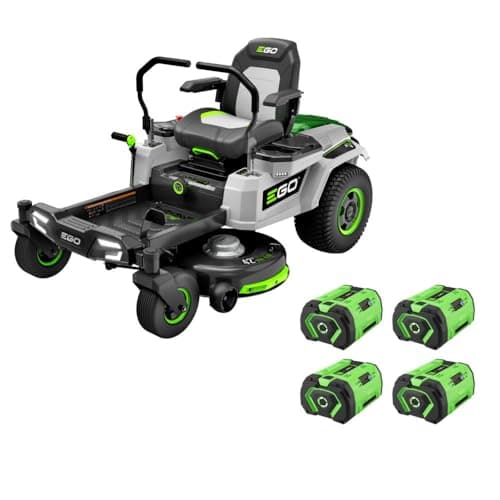
Best Electric Riding Mower
Best electric riding mower for 2026
Electric zero turns ranked on installed watt-hours and the energy-per-acre figure.
Top pick
EGO Power+ Z6 42" Zero Turn ZT4204L
#ad Affiliate link. How we're funded
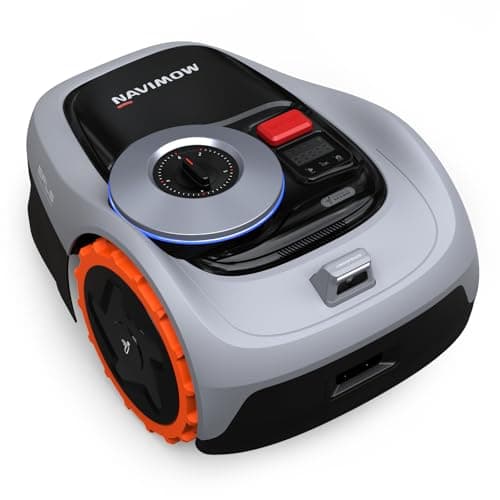
Best Robot Mower
Best robot lawn mower (and the limits nobody puts on the box)
Coverage, slope limit and duty cycle -- the three published numbers that decide if a robot mower fits.
Top pick
Segway Navimow i105N Robot Mower
#ad Affiliate link. How we're funded
guide
How many acres can an electric mower cut on one charge?
About 1,120Wh per acre on a 42-inch deck. How to size any electric mower to your acreage.
Top pick
EGO Power+ Z6 42" Zero Turn ZT4204L
#ad Affiliate link. How we're funded
guide
Seven things to measure before you buy a robot mower
Area, slope, passage width, cut height and duty cycle -- the checks that decide before you spend.
Top pick
Segway Navimow i105N Robot Mower
#ad Affiliate link. How we're funded
guide
Is a robot mower worth it?
The hours-per-season arithmetic, and the published limits that decide it before price does.
Top pick
Segway Navimow i105N Robot Mower
#ad Affiliate link. How we're funded
Best for Two Acres
Best electric mower for two acres
One machine publishes two acres per charge. What it carries, and what the fallbacks cost in time.
Top pick
EGO Power+ Z6 42" Zero Turn ZT4204L
#ad Affiliate link. How we're funded
guide
How long does it take to mow an acre?
Deck width x ground speed = square feet per minute. Worked out for 20, 21 and 42 inch decks.
Top pick
EGO Power+ Z6 42" Zero Turn ZT4204L
#ad Affiliate link. How we're funded
Head-to-head
Zero turn or walk-behind: where does riding start to pay?
42 inches against 21 on the same battery platform. Coverage, energy per acre and time per acre.
Top pick
EGO Power+ Z6 42" Zero Turn ZT4204L
#ad Affiliate link. How we're funded

Best for One Acre
Best electric mower for one acre
The crossover lot size. A published one-acre walk-behind, or a rider in a third of the time.
No photoTop pick
Kobalt 80V Max 21" Self-Propelled (dual-port)
#ad Affiliate link. How we're funded
Head-to-head
Robot mower or riding mower: two answers to different problems
1/8 acre run continuously against 2 acres in an afternoon. Rarely a real choice.
Top pick
Segway Navimow i105N Robot Mower
#ad Affiliate link. How we're funded
guide
Setting up a wire-free robot mower
No wire to bury. Base siting, RTK reception and the 40% duty cycle to schedule around.
Top pick
Segway Navimow i105N Robot Mower
#ad Affiliate link. How we're funded
guide
Riding mower battery bays: what filling them actually buys
2,240Wh installed, 3,360Wh at full bays, and the same 56V packs your handhelds use.
Top pick
EGO Power+ Z6 42" Zero Turn ZT4204L
#ad Affiliate link. How we're funded
guide
Electric riding mower maintenance: what is left to do
Deck, blades, tires, packs and storage -- the five things a gas schedule leaves behind.
Top pick
EGO Power+ Z6 42" Zero Turn ZT4204L
#ad Affiliate link. How we're funded
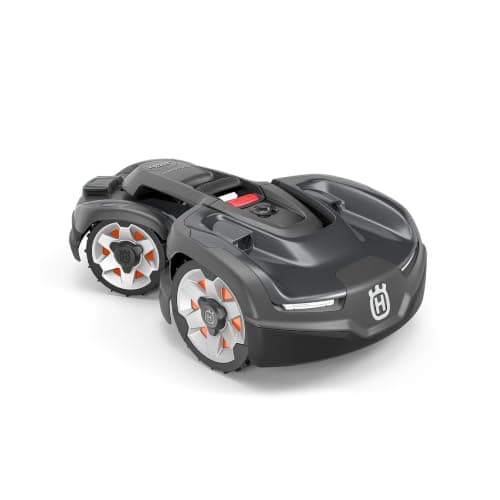
Best for Slopes
Best robot mower for hills
Published slope limits in percent and degrees, including the separate limit at the boundary.

Best Zero Turn
Best electric zero turn mower
Deck, battery capacity and acreage for three electric zero turns, converted to watt-hours per acre.
No photoTop pick
RYOBI ZR3 80V HP Brushless 42" Zero Turn Riding Mower
#ad Affiliate link. How we're funded
Closest to an Acre
Best robot mower for 1 acre
Published working area, mow time and cutting width for robots sized at or near an acre.
Best Wire-Free Robot
Best wire-free robot mower
Wire-free RTK navigation against a buried boundary wire, on published specs and install reality.
Top pick
Segway Navimow i105N Robot Mower
#ad Affiliate link. How we're funded
Best Small-Yard Robot
Best robot mower for a small yard
Working area, duty cycle and noise for a small lawn, against the machine built for four times the ground.
Top pick
Segway Navimow i105N Robot Mower
#ad Affiliate link. How we're funded
guide
What does a robot mower cost to run?
Why robot electricity costs cannot be computed from published specs, and what bounds them.
Top pick
Segway Navimow i105N Robot Mower
#ad Affiliate link. How we're funded
roundup
Segway Navimow i105N review
A specification review: 1/8 acre, 58 dB(A), 24 lb, and the 40% duty cycle nobody else lets you compute.
Top pick
Segway Navimow i105N Robot Mower
#ad Affiliate link. How we're funded
guide
Storing an electric riding mower over winter
Published weights and footprints for winter storage, and the pack guidance makers leave blank.
No photoTop pick
Greenworks 60V 42" CrossoverZ Zero Turn (CRZ4262)
#ad Affiliate link. How we're funded
Head-to-head
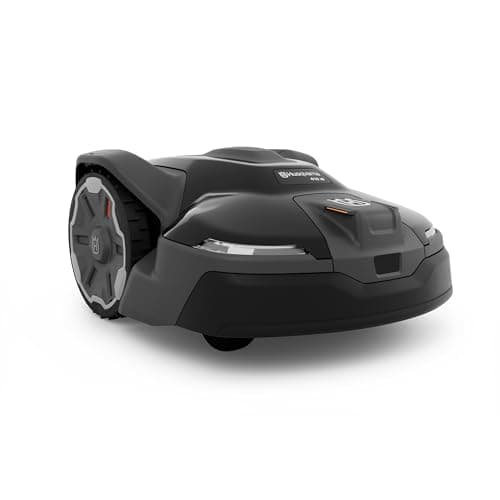
Segway Navimow i105N vs Husqvarna Automower 410 iQ
An eighth of an acre wire-free against half an acre on a boundary, with both duty cycles computed from published figures.
Head-to-head
Husqvarna Automower 410 iQ vs 435X AWD
0.9 acre and 70% slope against 0.5 acre and a wider blade, with the boundary limits that decide most real gardens.
Head-to-head
Greenworks CrossoverZ vs RYOBI ZR3
1,120Wh per acre against 1,280Wh, a published runtime against none, and the only per-minute energy figure in the class.
No photoTop pick
RYOBI ZR3 80V HP Brushless 42" Zero Turn Riding Mower
#ad Affiliate link. How we're funded
roundup
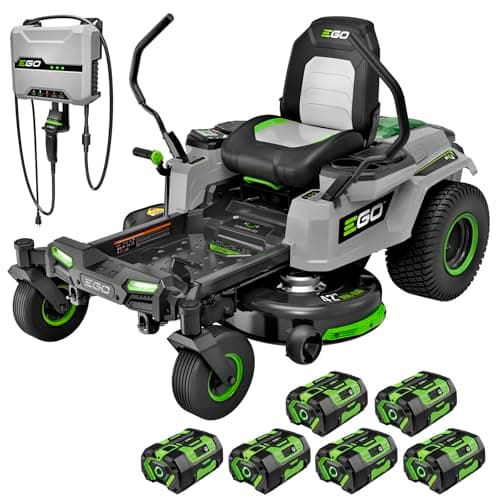
EGO Power+ Z6 ZT4214L review
A specification review: 2,016Wh across six packs, 1.5 acres, the best-documented rider spec sheet here and the highest energy per acre.
Top pick
EGO Power+ Z6 42" Zero Turn ZT4214L
#ad Affiliate link. How we're funded
Watt-hours per acre: the number that sizes a rider
That internal consistency is what a spec sheet looks like when the numbers come from somewhere real. Multiply your acreage by 1,120Wh and you know how much battery the job needs — the sizing table is here.
Where a walk-behind stops making sense
Half the distance at nearly three times the speed. The batteries make it possible; the afternoon you get back is what makes it worth buying. Below an acre, a dual-battery walk-behind is the cheaper and entirely defensible answer, and nobody selling riding mowers will say so.
The riding mower is a platform argument too
The EGO Z6 runs the same 56V ARC Lithium packs as EGO's handheld tools. That is unusual and it changes the economics: four 10.0Ah packs bought for the mower also run your blower, trimmer and chainsaw. The batteries are never stranded in one machine.
Six bays rather than four also means range is a purchase decision rather than a fixed limit, which matters on a property that grows a little every year.
Robot mowers, and their three hard limits
| Spec | Navimow i105N | What it rules out |
|---|---|---|
| Coverage | Up to 1/8 acre | Anything approaching a quarter acre |
| Max slope | 16 degrees | Banks and terraced gardens |
| Duty cycle | 60 min run / 90 min charge = ~40% | Fast growth, if run only in daylight |
| Noise | 58 dB(A) | Nothing -- quiet enough to run overnight |
Segway's 16-degree figure is the only published maximum gradient we found from any mower manufacturer, of any type, anywhere on this site. Full detail here.
The duty cycle is the calculation nobody shows you: at 40% uptime, a 12-hour daytime window is about 4.8 hours of actual cutting. That is what the eighth-acre rating is built on, and it is why the 58 dB figure matters — overnight running roughly doubles the available hours.
What we cannot tell you about either
Slope handling on a rider, cut quality against a gas machine, and ten-year durability are all outside what documentation can answer, and these machines are too new for anyone to have the last one. Riding mowers also reverse the walk-behind slope rule — they are generally driven up and down rather than across, because of rollover risk. Follow the operator's manual for your machine, not a general article.