Battery Platforms
Pick the system once and the next four tools are decided for you. Start here.
Affiliate disclosure: we earn a commission if you buy through our links, at no extra cost to you. It never changes which product we rank first — here is how we're funded.
Picking a battery platform is a ten-year decision disguised as a mower purchase. The first tool costs what it costs. The next four are locked to whatever battery you started with, which is why this page compares the systems rather than the machines.
There are three systems most American homeowners actually choose between — EGO 56V, Ryobi 40V and Greenworks 80V — plus two that show up often enough to matter: Toro 60V Max and Kobalt 80V Max. They are not interchangeable in any direction, no adapter exists, and once your shed has three tools on one of them, switching means writing off the batteries as well as the tools.
The whole decision comes down to three questions, in this order: how many watt-hours do you need for your largest job, how many tools will you own in ten years, and how long does each brand warrant the component that actually wears out. Everything below answers those.
In this section
29 pages under Battery Platforms. Every recommendation is built from published specifications and arithmetic you can redo — we have not tested these units.
Head-to-head
EGO 56V vs Ryobi 40V: which platform should you start on?
420Wh in one pack against 480Wh in two, with the warranty and build-out cost worked out.
Top pick
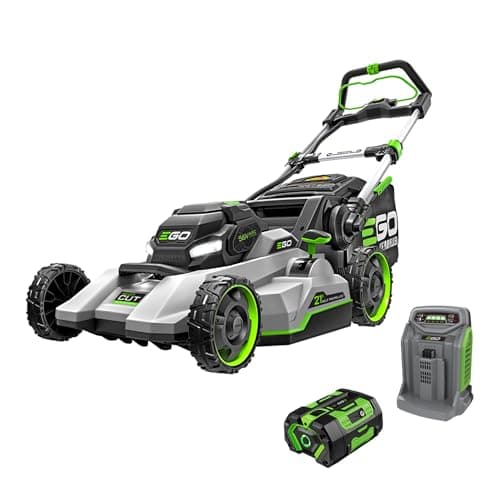
EGO Power+ 21" Select Cut LM2135SP
#ad Affiliate link. How we're funded
Head-to-head
EGO 56V vs Greenworks 80V: higher voltage, smaller pack
80V beats 56V on paper. The included pack sizes reverse the result, and here is the math.
Top pick
EGO Power+ 21" Select Cut LM2135SP
#ad Affiliate link. How we're funded
Head-to-head
Greenworks 80V vs Kobalt 80V: same voltage, different bets
Same 80V sticker, double the installed energy on one of them. The comparison is about packs, not volts.
No photoTop pick
Kobalt 80V Max 21" Self-Propelled (dual-port)
#ad Affiliate link. How we're funded
guide
40V vs 80V: what the voltage on the sticker actually buys you
Volts x amp-hours = watt-hours. The one calculation that makes every battery spec comparable.
No photoTop pick
Ryobi 40V HP Brushless 21" Self-Propelled
#ad Affiliate link. How we're funded
guide
Are EGO batteries interchangeable? And will they work with Ryobi?
Which packs fit which tools, stated plainly, plus the one place brands quietly break their own rule.
Top pick
EGO Power+ 21" Select Cut LM2135SP
#ad Affiliate link. How we're funded
guide
How long do electric lawn mower batteries last?
Runtime per charge is arithmetic. Lifespan in years is mostly warranty terms and honest uncertainty.
Top pick
EGO Power+ 21" Select Cut LM2135SP
#ad Affiliate link. How we're funded
guide
What a battery platform really costs over ten years
The four-line cost model for a decade of cordless yard tools, with the battery replacement nobody counts.
Top pick
EGO Power+ 21" Select Cut LM2135SP
#ad Affiliate link. How we're funded
Head-to-head
EGO 56V vs Toro 60V Max: the honest watt-hour comparison
420Wh nameplate against 324Wh published, and what Toro's own number says about everyone else's.
Top pick
EGO Power+ 21" Select Cut LM2135SP
#ad Affiliate link. How we're funded
guide
How long do yard tool batteries take to charge?
Every published charge time converted to watt-hours per minute, and the mow-wait-mow arithmetic.
Top pick
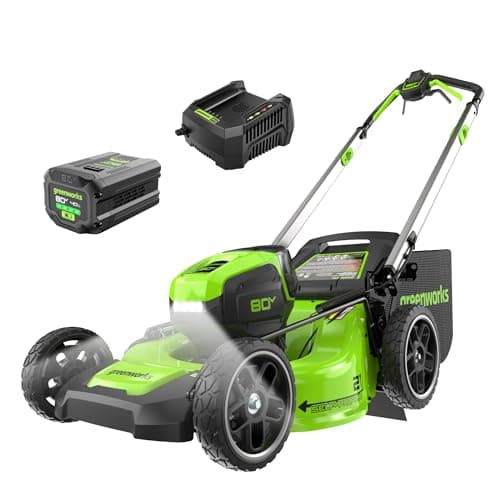
Greenworks 80V 21" 4-in-1 LM2108S
#ad Affiliate link. How we're funded
guide
Yard tool warranties compared: count the battery years, not the tool years
Every published tool and battery warranty term, and which brand covers the part that actually fails.
Top pick
EGO Power+ 21" Select Cut LM2135SP
#ad Affiliate link. How we're funded
Head-to-head
EGO 56V vs Kobalt 80V Max: more energy now, or more platform later
640Wh installed against 420Wh, and a one-retailer platform against a nine-tool one.
No photoTop pick
Kobalt 80V Max 21" Self-Propelled (dual-port)
#ad Affiliate link. How we're funded
Head-to-head
Ryobi 40V vs Greenworks: one battery family against four
One 40V line against four incompatible Greenworks voltages. Mower, blower and trimmer compared.
No photoTop pick
Ryobi 40V HP Brushless 21" Self-Propelled
#ad Affiliate link. How we're funded
guide
Watt-hours explained: the one number that compares any two battery tools
Volts x amp-hours = watt-hours. Every pack in the registry converted, and why max volts overstates it.
No photoTop pick
Toro 60V Max 21" Recycler Self-Propel (21356)
#ad Affiliate link. How we're funded
guide
Bare tool or kit: which should you actually buy?
Which tools ship bare, which ship with packs, and how to size the battery yourself.
Top pick
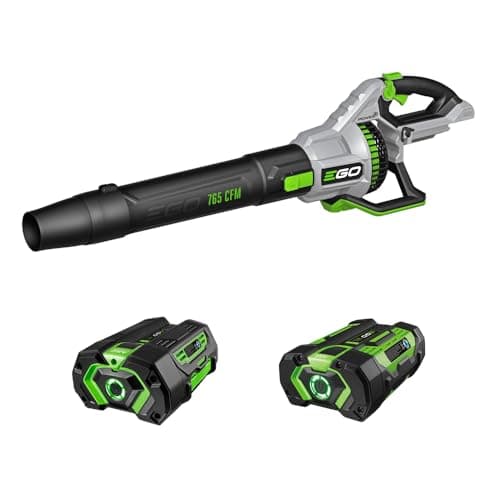
EGO Power+ 765 CFM Blower LB7650
#ad Affiliate link. How we're funded
Head-to-head
Toro 60V vs Greenworks 80V: same energy, opposite answers
324Wh against 320Wh, 45 minutes against 33. Two opposite answers to the same energy budget.
No photoTop pick
Toro 60V Max 21" Recycler Self-Propel (21356)
#ad Affiliate link. How we're funded
Head-to-head
Ryobi 40V vs Kobalt 80V: two batteries, two completely different strategies
Both ship two packs and claim 80 minutes. 480Wh sequential against 640Wh installed.
No photoTop pick
Kobalt 80V Max 21" Self-Propelled (dual-port)
#ad Affiliate link. How we're funded
guide
The EGO 56V platform, tool by tool
Ten tools on one pack family, from a 140Wh trimmer to a 2,240Wh zero turn.
Top pick
EGO Power+ 21" Select Cut LM2135SP
#ad Affiliate link. How we're funded
guide
The Ryobi 40V platform, tool by tool
One outdoor family, two-pack kits, a 57 dB blower -- and the thinnest published specs.
No photoTop pick
Ryobi 40V HP Brushless 21" Self-Propelled
#ad Affiliate link. How we're funded
guide
The Greenworks platforms: four battery families wearing one brand
Best spec sheets, fastest charging, 4-year battery warranty -- across four incompatible voltages.
Top pick
Greenworks 80V 21" 4-in-1 LM2108S
#ad Affiliate link. How we're funded
guide
Switching battery platforms: what it actually costs
What is stranded when you leave a platform, what is not, and when switching is still right.
Top pick
EGO Power+ 21" Select Cut LM2135SP
#ad Affiliate link. How we're funded
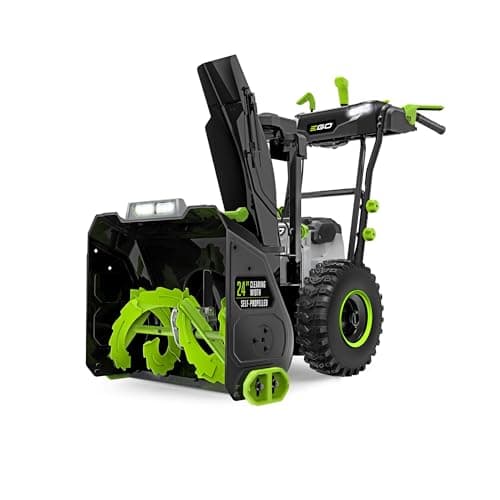
guide
EGO Peak Power: what running two batteries actually buys
Two packs at once, on any 56V batteries you own. What it does to energy and to sizing.
Top pick
EGO Power+ 24" Two-Stage Snow Blower SNT2400
#ad Affiliate link. How we're funded
guide
Which battery platform should you pick if you need a snow blower?
Two platforms make a snow blower. Only one shares its packs with the summer kit.
Top pick
EGO Power+ 24" Two-Stage Snow Blower SNT2400
#ad Affiliate link. How we're funded
guide
How many volts for an electric lawn mower?
Why watt-hours, not volts, decide mower runtime -- worked through four real machines.
Top pick
EGO Power+ 21" Select Cut LM2135SP
#ad Affiliate link. How we're funded
comparison
40V vs 80V, tool by tool
Matched 40V and 80V pairs across mowers, blowers and trimmers, on published watt-hours and output.
Top pick
Greenworks 80V 21" 4-in-1 LM2108S
#ad Affiliate link. How we're funded

Head-to-head
Ryobi 40V vs Toro 60V Max
480Wh of nameplate against 324Wh of published, and why those two numbers are not measured the same way.
No photoTop pick
Ryobi 40V HP Brushless 21" Self-Propelled
#ad Affiliate link. How we're funded
Head-to-head
Kobalt 80V vs Toro 60V Max
640Wh installed against 324Wh published, an acre rating against none, and a 60 minute recharge against 150.
No photoTop pick
Kobalt 80V Max 21" Self-Propelled (dual-port)
#ad Affiliate link. How we're funded
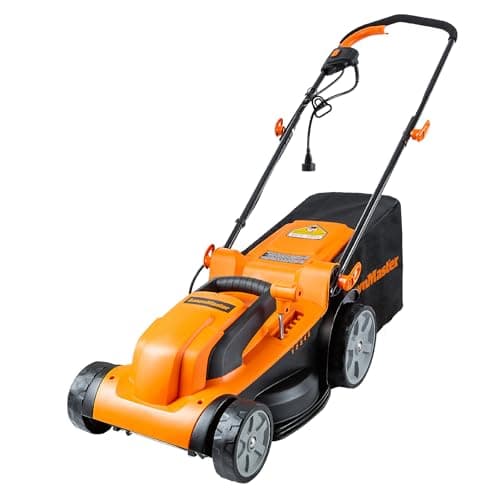
guide
The best yard tool platform for renters
Why the platform argument weakens when you may move, and the three machines that suit a rented yard.
Top pick
LawnMaster MEB1114K 15" 11-Amp Corded Electric Lawn Mower
#ad Affiliate link. How we're funded
guide
The Kobalt 80V Max platform, honestly
640Wh installed, a published one-acre rating, a 40-minute charge claim -- and a spec sheet that exists only on a retailer's website.
No photoTop pick
Kobalt 80V Max 21" Self-Propelled (dual-port)
#ad Affiliate link. How we're funded
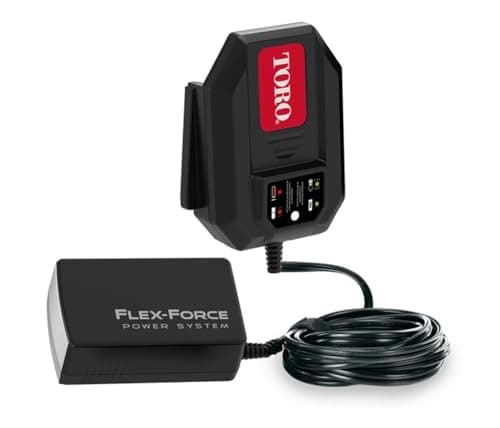
guide
The Toro 60V Max Flex-Force platform, and the only honest watt-hour on this site
108Wh, 216Wh and 324Wh published outright, 75+ interchangeable tools, and the 54V figure that exposes every nameplate number on this site.
Top pick
Toro 60V MAX Flex-Force 1-Amp Battery Charger (88901)
#ad Affiliate link. How we're funded
Volts are marketing. Watt-hours are the spec.
Almost every platform argument you will read online is about voltage. It is the wrong variable. Voltage describes how hard a tool can pull; watt-hours — volts multiplied by amp-hours — describe how long it can keep pulling. Those are different questions and only one of them determines whether you finish the lawn.
Read that list and the ranking has nothing to do with the number on the sticker. The 40V platform carries more energy than either 80V one in the configurations they actually ship. That is the single most useful thing on this page, and the full explanation is here — including why Toro's published 324Wh proves every other brand's nameplate figure is roughly 10% optimistic.
Read the battery warranty, not the tool warranty
Brushless motors in outdoor tools rarely fail inside a decade. Lithium packs degrade from the day they are manufactured, and that degradation is what ends a cordless tool's useful life. So the number that matters is the one covering the battery.
| Platform | Tool warranty | Battery warranty |
|---|---|---|
| EGO 56V (LM2135SP) | 5 years | 3 years |
| Greenworks 80V (LM2108S) | 4 years | 4 years |
| Greenworks 40V (LM2054) | 3 years | 3 years |
| Greenworks 80V (ST80L210 trimmer) | 3 years | 4 years |
| Ryobi 40V | Not published on the product page | Not published |
| Kobalt 80V | Not published on the listing | Not published |
From each manufacturer's own product pages, checked 3 September 2026. Terms vary by product within a brand, so check the specific tool rather than assuming the brand.
EGO warranting the tool for five years and the pack for three is the industry telling you which component it expects to fail. Greenworks matching four and four is a more expensive promise on the part that wears out.
Tool range, and the trap inside one brand
Cross-brand incompatibility surprises nobody. What catches people out is incompatibility inside a brand. Greenworks runs 24V, 40V, 60V and 80V as four separate platforms that share nothing but a logo. Ryobi runs 18V ONE+ and 40V as two. "I'll stick with Greenworks" is not a platform decision at all — the compatibility guide untangles it.
EGO is the simplest of the five: one outdoor platform, one pack family, everything fits — from a string trimmer up to a 42-inch zero turn running the same 56V packs. That simplicity is a real part of what you are buying, and it is why the platform reaches further than the others at the top end.
What a platform costs over ten years
Not one of the ten competitor pages we read while building this site works out the ten-year cost of a platform, despite most of them calling it a long-term decision. When you do run it, roughly a third of the total turns out to be batteries — bought, spared and replaced.
That single fact reframes everything: you are not choosing a mower brand, you are choosing whose packs you will buy four or five times. The full model is here, expressed in ratios rather than prices so it does not go stale.
How to decide, in four steps
- Work out your watt-hour requirement. Time one mow, multiply by 7.5Wh per minute for a 21-inch self-propelled deck, add 30%. That number eliminates most of the market before you read a single review.
- Count the tools you will genuinely own. Two or three and the mower decides; five or six and the platform decides.
- Check the battery warranty on the specific tool. It varies within brands, and it is the clearest signal a manufacturer gives about how long its own packs survive.
- Buy every tool after the first one bare. Kits bundle a pack and charger you already own, and this is the largest avoidable cost there is.