
Affiliate disclosure: we earn a commission if you buy through our links, at no extra cost to you. It never changes which product we rank first — here is how we're funded.
Two numbers decide a battery mower. Deck width sets how long you spend walking; watt-hours set whether you finish at all. Everything else on the spec sheet is secondary to those two, and most listings lead with neither.
The category has settled into a narrow band: nearly every flagship is a 21-inch brushless self-propelled machine, and they differ mainly in how much energy they carry and how fast they spend it. The spread we measured across six current mowers runs from 4.0 to 9.7 watt-hours per minute — a factor of more than two, entirely invisible in the marketing.
Below: how to size a mower to your lawn, what the published runtime claims actually mean once you convert them, and where the honest gaps are — including the fact that three of six manufacturers will not tell you what their mower weighs.
In this section
45 pages under Mowers. Every recommendation is built from published specifications and arithmetic you can redo — we have not tested these units.
Best Battery Mower
Best battery lawn mowers of 2026
Six flagship battery mowers ranked on watt-hours in the box and energy spent per minute.
Top pick
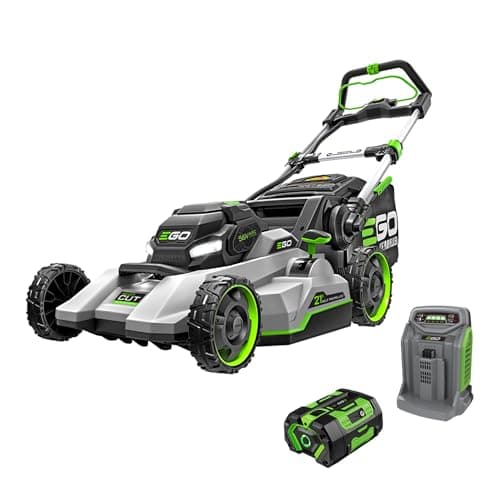
EGO Power+ 21" Select Cut LM2135SP
#ad Affiliate link. How we're funded
Best for Small Yards
Best battery lawn mower for a small yard
Under a third of an acre, weight and storage beat watt-hours. The numbers that actually matter, ranked.

Best for Large Yards
Best electric mower for a half acre to an acre
Half an acre and up, runtime is the whole problem. Ranked on installed watt-hours and acreage rating.
No photoTop pick
Kobalt 80V Max 21" Self-Propelled (dual-port)
#ad Affiliate link. How we're funded
comparison
Battery vs gas lawn mower: which should you actually buy?
Runtime, running cost, maintenance and noise compared, including where gas still wins.
Top pick
EGO Power+ 21" Select Cut LM2135SP
#ad Affiliate link. How we're funded
comparison
EGO vs Ryobi vs Greenworks vs Toro: the mowers compared
Every published spec from four flagship 21-inch mowers, converted so it is comparable.
Top pick
EGO Power+ 21" Select Cut LM2135SP
#ad Affiliate link. How we're funded
guide
Do I need a self-propelled lawn mower?
Slope and weight decide this, not lawn size. What the drive motor costs in watt-hours and pounds.

Best for Hills
Best electric mower for hills and slopes
Drive speed control and weight decide slope performance. Ranked on both, with the unpublished gaps named.
No photoTop pick
Kobalt 80V Max 21" Self-Propelled (dual-port)
#ad Affiliate link. How we're funded

Quietest Pick
What is the quietest electric lawn mower?
No manufacturer publishes mower decibels. What the specs do let you infer, and what they don't.
No photoTop pick
Ryobi 40V HP Brushless 21" Self-Propelled
#ad Affiliate link. How we're funded
Best Lightweight Mower
Best lightweight battery lawn mower
Ranked on published weight, with pounds per inch of deck and the brands that publish nothing.
Best for Thick Grass
Best battery mower for thick, tall grass
Published torque and blade speed, plus what a 20-50% heavier cutting load does to runtime.
Top pick
EGO Power+ 21" Select Cut LM2135SP
#ad Affiliate link. How we're funded
guide
Mulching vs bagging: which should you actually do?
The extension research on returning clippings, and what each deck mode costs you in runtime.
Top pick
EGO Power+ 21" Select Cut LM2135SP
#ad Affiliate link. How we're funded
guide
What height should you mow your lawn?
The one-third rule, the 3-inch recommendation, and every published cut-height range checked against them.
Top pick
EGO Power+ 21" Select Cut LM2135SP
#ad Affiliate link. How we're funded
guide
Push, self-propelled, riding or robot: which class of mower fits your lot
Published acreage ratings and slope limits for all four mower classes, and where each one stops.
Best for Leaves
Best battery mower for mulching leaves
Half an inch of leaves is the workable layer. Which decks shred it, and the cross pass that finishes the job.
Top pick
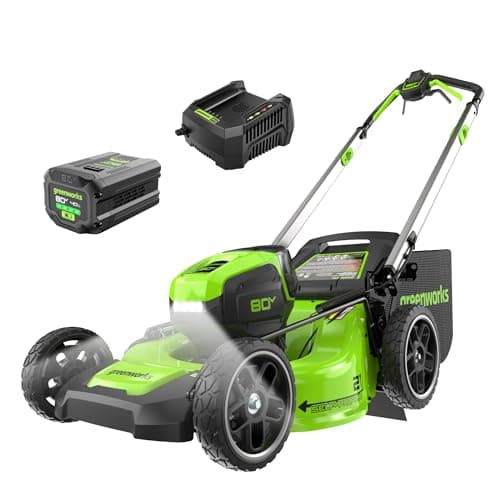
Greenworks 80V 21" 4-in-1 LM2108S
#ad Affiliate link. How we're funded
guide
Mower blades: mulching, high-lift, and when to change them
Mulching against high-lift, what a dull blade costs the lawn, and the multi-blade systems.
Top pick
EGO Power+ 21" Select Cut LM2135SP
#ad Affiliate link. How we're funded
guide
Storing a battery mower when the garage is already full
Vertical storage, folding handles and published weights, and how to handle the pack over winter.
No photoTop pick
Toro 60V Max 21" Recycler Self-Propel (21356)
#ad Affiliate link. How we're funded
Best Self-Propelled
Best self-propelled battery lawn mower
Four self-propelled machines on installed watt-hours, drive speed and acreage rating.
Top pick
EGO Power+ 21" Select Cut LM2135SP
#ad Affiliate link. How we're funded
Best Push Mower
Best battery push mower
57.5 lb and about 4.0 watt-hours a minute -- the most frugal mower in our registry.
guide
How often should you mow your lawn?
Mow by height, not by calendar: cut at 3 in, mow before 4.5 in, never take more than a third.
Top pick
EGO Power+ 21" Select Cut LM2135SP
#ad Affiliate link. How we're funded
guide
Should you mow wet grass?
Delay if you can: footing, clumping and disease spread are the published reasons.
Top pick
EGO Power+ 21" Select Cut LM2135SP
#ad Affiliate link. How we're funded
guide
Mowing patterns: stripes, ruts and the fastest route round a lawn
Alternate direction to avoid ruts, and the pass arithmetic for the fastest route round a lawn.
Top pick
EGO Power+ 21" Select Cut LM2135SP
#ad Affiliate link. How we're funded
guide
Cordless mower troubleshooting, symptom by symptom
Won't start, cuts out, uneven cut, short runtime -- what each symptom actually points to.
Top pick
EGO Power+ 21" Select Cut LM2135SP
#ad Affiliate link. How we're funded
Best for Mulching
Best battery mower for mulching grass clippings
Swappable mulching blades against a 4-in-1 mode selector, and what mulching is worth.
Top pick
EGO Power+ 21" Select Cut LM2135SP
#ad Affiliate link. How we're funded
Best for Bagging
Best battery mower for bagging
High-lift blades against 4-in-1 bag modes, and the three cases where bagging is right.
Top pick
EGO Power+ 21" Select Cut LM2135SP
#ad Affiliate link. How we're funded
Easiest to Use
Easiest cordless lawn mowers to use
Weight, drive control and storage -- the specs that decide how hard a mower is to live with.
Best for Bermudagrass
Best mower for bermuda grass
Which cordless mowers publish a cut height low enough for bermudagrass, and which do not.
Top pick
EGO Power+ 21" Select Cut LM2135SP
#ad Affiliate link. How we're funded
Best RWD Mower
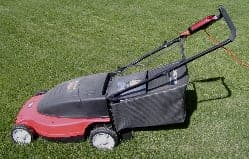
Best rear-wheel drive mower
Published rear-wheel drive systems compared on control, watt-hours and energy per minute.
No photoTop pick
Kobalt 80V Max 21" Self-Propelled (dual-port)
#ad Affiliate link. How we're funded
Best for Medium Yards
Best mower for a medium yard
Published acreage ratings and watt-hours checked against the real mowing time for a quarter to half acre.
Top pick
Greenworks 80V 21" 4-in-1 LM2108S
#ad Affiliate link. How we're funded
Best for Uneven Ground
Best mower for uneven ground
Cut-height steps, machine weight and drive control -- the published specs that matter on bumpy lawns.
Top pick
EGO Power+ 21" Select Cut LM2135SP
#ad Affiliate link. How we're funded
Best for Wet Grass
Best mower for wet grass
Published torque, blade speed and deck build for the days you cannot wait for the lawn to dry.
Top pick
EGO Power+ 21" Select Cut LM2135SP
#ad Affiliate link. How we're funded
Best Platform Pairing
Best mower and trimmer combo
Three mower-and-trimmer pairings on one platform each, with shared watt-hours worked out.
Top pick
EGO Power+ 21" Select Cut LM2135SP
#ad Affiliate link. How we're funded
Best for Warm-Season Lawns
Best mower for warm-season grass
Cut-height ranges against Clemson's published mowing heights for St. Augustine, centipede and zoysia.
Top pick
EGO Power+ 21" Select Cut LM2135SP
#ad Affiliate link. How we're funded
guide
When to sharpen and replace mower blades
The four published sharpening intervals, converted into mows for your own lawn, and when a blade is past sharpening.
Top pick
EGO Power+ 21" Select Cut LM2135SP
#ad Affiliate link. How we're funded
comparison
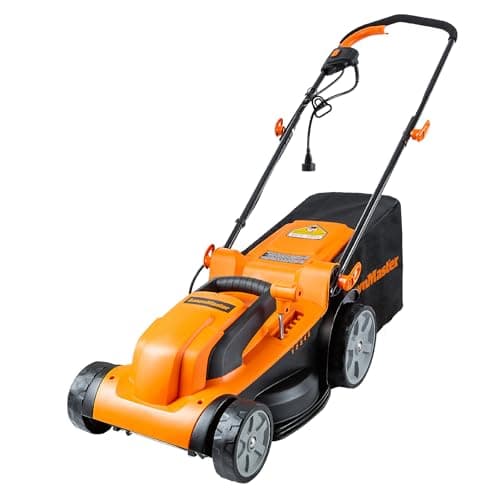
Battery vs corded electric mowers
Weight per inch of cut, cut-height range and practical reach for a corded mower against two cordless.
Top pick
LawnMaster MEB1114K 15" 11-Amp Corded Electric Lawn Mower
#ad Affiliate link. How we're funded
roundup
EGO POWER+ LM2135SP review
A specification review: 420Wh in the kit, the widest cut-height range in our registry, and no published weight.
Top pick
EGO Power+ 21" Select Cut LM2135SP
#ad Affiliate link. How we're funded
roundup
Greenworks 80V LM2108S review
A specification review: every figure published, 320Wh in the kit, and a half-acre rating you can buy against.
Top pick
Greenworks 80V 21" 4-in-1 LM2108S
#ad Affiliate link. How we're funded

comparison
Poly vs steel mower decks
What each deck material trades, and which mowers in our registry actually publish theirs.
No photoTop pick
Toro 60V Max 21" Recycler Self-Propel (21356)
#ad Affiliate link. How we're funded
Best for New Grass
Best mower for a new lawn
Top-end cut height, weight and blade condition for the first mow on newly established grass.
Top pick
EGO Power+ 21" Select Cut LM2135SP
#ad Affiliate link. How we're funded
Head-to-head
EGO LM2135SP vs Greenworks LM2108S
420Wh against 320Wh, 60 claimed minutes against 33, and the acreage rating only one of them publishes.
Top pick
EGO Power+ 21" Select Cut LM2135SP
#ad Affiliate link. How we're funded
Best for Limited Strength
Best lawn mowers for seniors
Why a 66 lb self-propelled mower takes less effort than a 57.5 lb push mower, and the three machines that suit limited strength.
No photoTop pick
Toro 60V Max 21" Recycler Self-Propel (21356)
#ad Affiliate link. How we're funded
Best for Tight Access
Best mowers for a narrow gate
Published cut widths from 15 to 21 inches, the overall width no maker states, and the measurement to take before you buy.
Top pick
LawnMaster MEB1114K 15" 11-Amp Corded Electric Lawn Mower
#ad Affiliate link. How we're funded
roundup
Greenworks 40V LM2054 review
A specification review: 160Wh, 57.5 lb, 4.0 watt-hours a minute, and a runtime claim that does not quite reach its own acreage rating.
Best Value Mower
Best battery lawn mower for the money
Minutes per watt-hour, watt-hours per inch of deck and the acreage rating each maker will actually sign its name to.
comparison
EGO LM2135SP vs Ryobi RY40HPLM01B: one big pack or two smaller ones
480Wh across two packs against 420Wh in one, and the 20 extra minutes that come with a battery swap.
Top pick
EGO Power+ 21" Select Cut LM2135SP
#ad Affiliate link. How we're funded
roundup
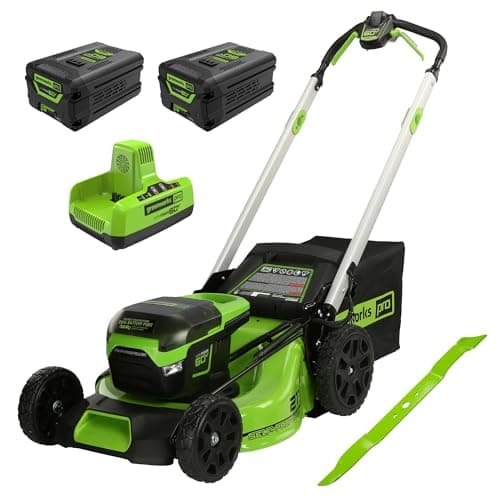
Greenworks 60V 21" self-propelled mower review (MO60L424)
A specification review: 480Wh, a published 3/4-acre rating, IPX4, a 40-minute-per-battery charge claim, and the hour that needs both packs.
Top pick
Greenworks 60V 21" 4-in-1 Self-Propelled (MO60L424)
#ad Affiliate link. How we're funded
Sizing a mower, in one calculation
Time one mow with whatever you own now. Multiply the minutes by 7.5 watt-hours for a 21-inch self-propelled deck (or 4.0 for a 20-inch push mower), then add 30% for the weeks when the grass is wet or has got ahead of you.
That single number eliminates most of the market before you read a review. Full tables by lawn area are in what size mower do I need.
Why the same deck size uses different energy
| Mower | Energy aboard | Claimed runtime | Wh per minute |
|---|---|---|---|
| Greenworks LM2054 (20 in, push) | 160Wh | 40 min | 4.0 |
| Ryobi 40V HP (21 in, SP) | 480Wh | 80 min | 6.0 |
| EGO LM2135SP (21 in, SP) | 420Wh | 60 min | 7.0 |
| Toro 21356 (21 in, SP) | 324Wh | 45 min | 7.2 |
| Kobalt 80V (21 in, SP) | 640Wh | 80 min | 8.0 |
| Greenworks LM2108S (21 in, SP) | 320Wh | 33 min | 9.7 |
Watt-hours are nameplate (advertised volts x amp-hours) except Toro, which publishes 324Wh directly. The per-minute column is our division of each manufacturer's own two published numbers.
The push mower uses less than half the energy per minute of the hungriest self-propelled machine. Some of that is the drive motor and some is the deck — a 4-in-1 deck with turbo leaf pickup legitimately draws more than a simple one. What matters practically is that a small deck on a small lawn is not a compromise; it is the correct specification.
The gaps in this category
We transcribed thirteen specifications across four flagship mowers for the brand comparison. Seventeen of the fifty-two cells came back "not published". Three of six brands do not publish the weight of a mower you have to steer, and not one of the six publishes a decibel figure.
That is why every other comparison in this category is written in adjectives — frequently there is no number to write about. Where a manufacturer has not published something, we leave the cell empty and say so, including on a page about the quietest mower where the honest finding was that nobody publishes the number at all.
What else decides a mower
- Slope, not lawn size, decides self-propel. On flat ground a drive motor is weight and battery draw you cannot use — the reasoning is here.
- Cut height range matters more than people expect. EGO publishes 1 to 4 inches across eight positions, the widest here. Most cool-season lawns want the top half of that range.
- Recharge time is a published spec on only three of six. Greenworks says 40 minutes, Greenworks 40V says 120, Toro says 150. That is a real difference in how you use the tool.
- The battery is most of the price. Which makes the mower a platform decision as much as a machine one — start there if you own nothing yet.