Leaf Blowers
CFM moves the pile. MPH lifts what's stuck. Almost nobody explains which you need.
Affiliate disclosure: we earn a commission if you buy through our links, at no extra cost to you. It never changes which product we rank first — here is how we're funded.
Blower listings are dominated by peak CFM, which is the least useful number on the page. Peak is turbo, and turbo empties a battery roughly ten times faster than the setting you will actually work at.
The specifications that decide whether you like a cordless blower are the bottom of its variable range, whether the manufacturer publishes honest per-setting runtimes, what it weighs in your hand, and whether anyone will commit to a decibel figure. On all four, the brands separate sharply.
There is also a genuine technical question underneath all of it — CFM moves volume, MPH dislodges what is stuck — and matching those two to your actual debris matters more than either peak number.
In this section
30 pages under Leaf Blowers. Every recommendation is built from published specifications and arithmetic you can redo — we have not tested these units.
Best Leaf Blower
Best cordless leaf blowers of 2026
Five cordless blowers ranked on usable airflow range, published noise and real turbo runtime.
Top pick
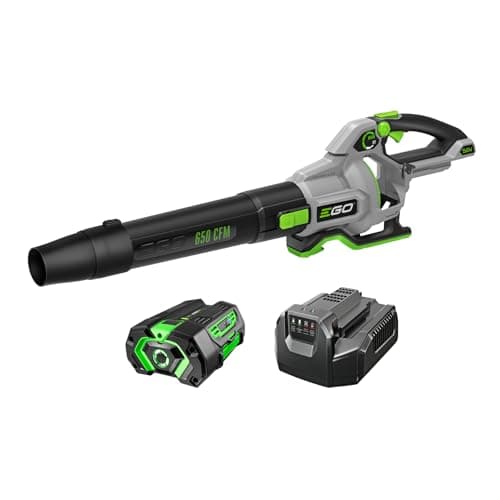
EGO Power+ 650 CFM Blower LB6504
#ad Affiliate link. How we're funded

Best Backpack Blower
Best battery backpack leaf blower (and when a handheld beats it)
The harness buys comfort, not efficiency. The watt-hours-per-minute math that shows why.
No photoTop pick
EGO Power+ 600 CFM Backpack Blower LB6000
#ad Affiliate link. How we're funded
guide
Leaf blower CFM vs MPH: which is better?
CFM moves volume, MPH dislodges. Which spec predicts clearing power for which job.
Top pick
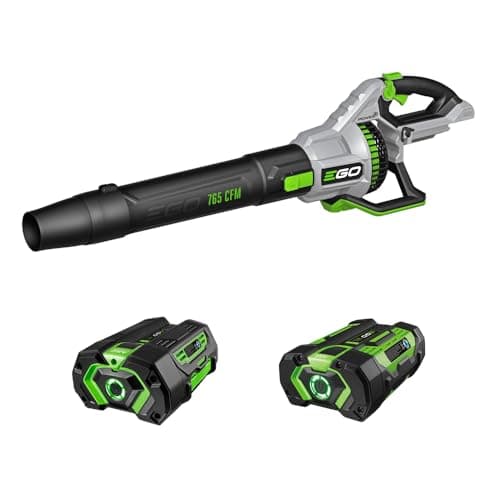
EGO Power+ 765 CFM Blower LB7650
#ad Affiliate link. How we're funded
guide
What to look for in a cordless leaf blower
Six blower specs in priority order, with published figures. Peak CFM is not first.
Top pick
EGO Power+ 650 CFM Blower LB6504
#ad Affiliate link. How we're funded

Quietest Blower
Quietest cordless leaf blower: the published decibel figures
57 dB vs 64 dB, what the gap means, and which brands publish no figure at all.
No photoTop pick
Ryobi 40V HP Whisper Series 730 CFM RY404100
#ad Affiliate link. How we're funded

Best Blower for Big Yards
Best cordless leaf blower for a large yard
On a big property the constraint is watt-hours, not airflow. Ranked on sustained runtime.
No photoTop pick
EGO Power+ 600 CFM Backpack Blower LB6000
#ad Affiliate link. How we're funded
Best Blower for a Small Yard
Best cordless leaf blower for a small yard
Ranked on minimum usable CFM, published noise and weight -- the specs a small yard actually needs.
Top pick
EGO Power+ 650 CFM Blower LB6504
#ad Affiliate link. How we're funded
guide
Leaf cleanup, in the order that actually works
Mulch what the lawn can take, blow the rest, and the energy cost of each stage.
Top pick
EGO Power+ 765 CFM Blower LB7650
#ad Affiliate link. How we're funded
guide
How long will a cordless leaf blower actually run?
Turbo costs about ten times low, per minute. Every published blower runtime converted.
Top pick
EGO Power+ 765 CFM Blower LB7650
#ad Affiliate link. How we're funded
Best for Wet Leaves
Best cordless leaf blower for wet and matted leaves
Wet leaves are an air-speed job. The published MPH figures ranked, and what turbo costs you.
Top pick
EGO Power+ 765 CFM Blower LB7650
#ad Affiliate link. How we're funded
guide
Can you clear snow with a cordless leaf blower?
No maker rates a blower for snow. What CFM, MPH and IPX4 do and do not support.
Top pick
EGO Power+ 765 CFM Blower LB7650
#ad Affiliate link. How we're funded
Head-to-head
Leaf blower, rake or leaf vacuum: which do you need?
Move, gather or collect -- three different jobs, and most yards need two tools at most.
Top pick
EGO Power+ 650 CFM Blower LB6504
#ad Affiliate link. How we're funded
Best for Hard Surfaces
Best cordless blower for driveways, patios and paths
The bottom of the variable range is the spec that matters on hard surfaces.
Top pick
EGO Power+ 650 CFM Blower LB6504
#ad Affiliate link. How we're funded
Best for Pine Needles
Best cordless blower for pine needles
Needles interlock into turf, so air speed clears them where volume does not.
Top pick
EGO Power+ 765 CFM Blower LB7650
#ad Affiliate link. How we're funded
Best for Clippings
Best cordless blower for clearing grass clippings
A low-output, high-control job: clear the hard surfaces and leave the lawn alone.
Top pick
EGO Power+ 650 CFM Blower LB6504
#ad Affiliate link. How we're funded
guide
Leaf blower nozzles: what the tube on the end actually does
A nozzle trades volume for speed. What each tip does, and the published figures behind it.
No photoTop pick
Ryobi 40V HP Whisper Series 730 CFM RY404100
#ad Affiliate link. How we're funded
guide
Spring yard cleanup, in the order that works
Debris first, then assess, then mow high. The spring sequence that avoids doing jobs twice.
Top pick
EGO Power+ 650 CFM Blower LB6504
#ad Affiliate link. How we're funded
Best for Car Drying
Best cordless leaf blower for drying a car
A touchless dry: the lowest published airflow settings, ranked for paintwork.
Top pick
EGO Power+ 650 CFM Blower LB6504
#ad Affiliate link. How we're funded
Lightest Blower
Best lightweight cordless leaf blower
4.6 lb to 12.5 lb published, on a tool held out at arm's length for an hour.
Top pick
EGO Power+ 765 CFM Blower LB7650
#ad Affiliate link. How we're funded
Best Leaf Vacuum
Best leaf vacuum mulcher
Mulch ratios converted to a common unit, plus airflow and weight for two corded vacuums.
Top pick
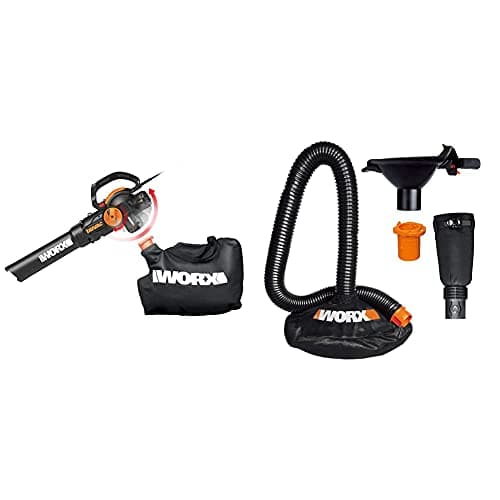
WORX WG512 TRIVAC 12A Blower / Mulcher / Vacuum
#ad Affiliate link. How we're funded
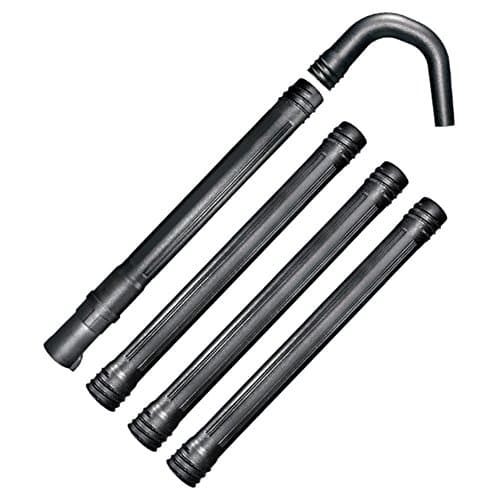
Best for Gutters
Best blower for gutter cleaning
Gutter kit reach and weight, plus the lightest blowers to hold at full extension.
comparison
Cordless leaf blower brands compared
EGO, Ryobi and Greenworks flagships on published CFM, MPH, noise, weight and runtime.
Top pick
EGO Power+ 765 CFM Blower LB7650
#ad Affiliate link. How we're funded
Best Blower/Vac Combo
Best blower vacuum combo
Cordless against corded blower-vacs on mulch ratio, airflow and watt-hours per minute.
No photoTop pick
RYOBI 40V HP Brushless 600 CFM Blower/Vacuum (RY404150)
#ad Affiliate link. How we're funded
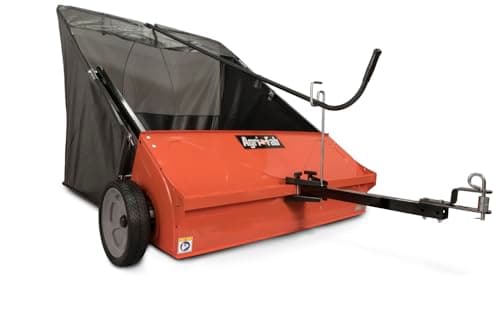
comparison
Leaf blower vs lawn sweeper
Collection versus movement, on published CFM, hopper capacity and watt-hours per minute.
Top pick
Agri-Fab 44" Tow-Behind Lawn Sweeper (45-0492)
#ad Affiliate link. How we're funded
Best Value Blower
Best leaf blower for the money
Watt-hours per minute, air per unit of drain and the ten-times turbo tax -- the value arithmetic for a blower.
Top pick
WORX WG512 TRIVAC 12A Blower / Mulcher / Vacuum
#ad Affiliate link. How we're funded
Highest Published Output
Most powerful cordless leaf blower
Highest published CFM and MPH in our registry, and why multiplying the two overstates every machine.
Top pick
EGO Power+ 765 CFM Blower LB7650
#ad Affiliate link. How we're funded
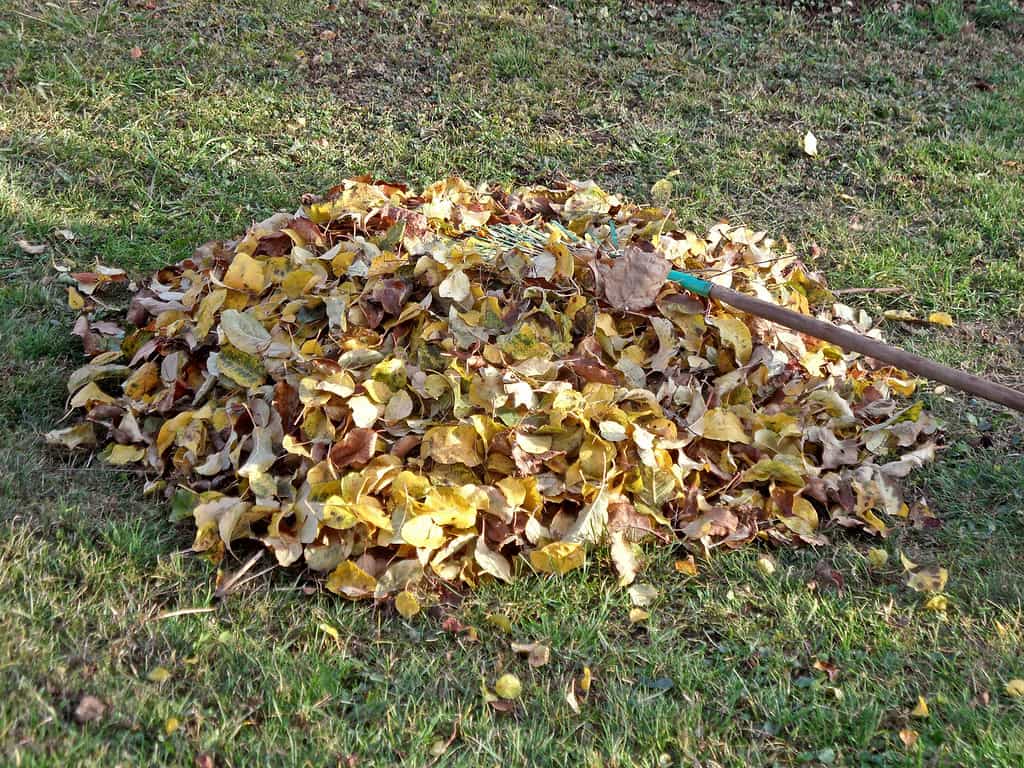
comparison
Jet fan vs axial leaf blowers
Fan geometry against published CFM, MPH and noise, and which shape of output suits which debris.
No photoTop pick
Ryobi 40V HP Whisper Series 730 CFM RY404100
#ad Affiliate link. How we're funded
Best for Beds
Best leaf blower for mulch beds
The lowest published variable setting on each blower, and why that is the number that matters in a bed.
Top pick
EGO Power+ 650 CFM Blower LB6504
#ad Affiliate link. How we're funded
roundup
EGO POWER+ LB7650 review
A specification review: 765 CFM, 200 MPH, 280Wh, and the ten-to-one gap between turbo and low.
Top pick
EGO Power+ 765 CFM Blower LB7650
#ad Affiliate link. How we're funded
Head-to-head
EGO LB7650 vs LB6504
765 CFM against 650, 260-580 against 225-470 on the dial, and the 15-minute turbo figure only one model admits to.
Top pick
EGO Power+ 765 CFM Blower LB7650
#ad Affiliate link. How we're funded
The 10:1 ratio nobody puts on the box
So the headline CFM figure describes about a tenth of the time you spend holding the tool. That is why we rank on the published variable range instead: the EGO LB6504 dials from 225 to 470 CFM, and the bottom of that range is what lets you clear a flowerbed without rearranging the mulch.
It is also why brands that publish separate turbo and low runtimes are telling you something real. EGO and Ryobi do. Greenworks publishes one figure for low and nothing else.
CFM or MPH?
CFM is how much air moves; MPH is how fast it travels. Dry leaves on open ground are a volume problem. Wet leaves matted into turf are a speed problem — air speed is what breaks the surface bond holding them down.
| Your debris | Prioritize | Note |
|---|---|---|
| Dry leaves, open lawn | CFM | 400-500 CFM sustained is plenty |
| Wet leaves in grass | MPH | The published range here runs 145 to 200 MPH |
| Pine needles in turf | MPH | Air speed does all the work |
| Gravel or mulch beds | Low CFM | Use the bottom of a variable range or you will redistribute it |
Full explanation, including why the two peak figures on a box are usually measured with different nozzles, in CFM vs MPH.
The one category where noise figures exist
Blowers are the tool your neighbors notice, and unlike mowers, several manufacturers publish a decibel rating. Ryobi publishes 57 dB on its Whisper Series at 730 CFM; EGO publishes 64 dB on both its flagship handhelds; Greenworks publishes nothing.
Decibels are logarithmic, so 7 dB is roughly a fivefold difference in sound intensity and reads as about half as loud. Each brand measures under its own conditions, so treat the gap as directional — but a company that built a named noise-engineering program has made a decision a company publishing nothing has not. The full comparison is here.
A blower is transformed by the pack you already own
Three times the runtime from a battery already in your shed. It is the strongest practical argument for buying the bare tool on a platform you are already on, and the reason we treat the platform decision as the one that comes first.