Lawn Care
Milorganite vs Scotts Turf Builder
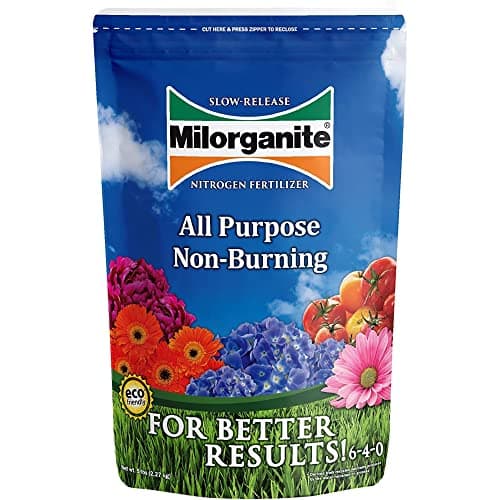
One of these bags tells you how much nitrogen you are applying. The other does not publish the weight it would take to work it out.
Affiliate disclosure: we earn a commission if you buy through our links, at no extra cost to you. It never changes which product we rank first — here is how we're funded.
We have not tested these units. Every spec on this page comes from the manufacturer's own documentation and is linked to it. Every computed figure is arithmetic you can redo. Prices are checked daily — last verified September 27, 2026. Here is exactly how we pick.
These are the two bags a homeowner most often stands between, and the comparison is not really about which grows better grass. It is about which one tells you what you are putting on your lawn, because only one of them publishes enough to find out.
The short answer
The two labels, side by side
| Spec | Milorganite | Scotts Turf Builder | Notes |
|---|---|---|---|
| Analysis | 6-4-0 | 32-0-4 | Very different products |
| Iron | 2.5% | Not published | Iron is what greens without pushing growth |
| Coverage | 32 lb covers 2,500 sq ft | Up to 5,000 sq ft; 15,000 size also sold | Both published |
| Bag weight | 32 lb and 5 lb | Not published on the product page | This is the missing term |
| Nitrogen per 1,000 sq ft | 0.77 lb (our arithmetic) | Not computable | Milorganite |
| Product per 1,000 sq ft | 12.8 lb | Not computable | Milorganite is bulkier to carry |
| Feeding duration | 8-10 weeks | Not published as a figure | Milorganite |
| Application frequency | Not published directly | Every 6-8 weeks, up to 4x a year | Scotts |
| Slow-release share | Not published | Not published | Neither |
| Phosphate | 4% | 0% | State rules may decide this for you |
| Grass types | Not restricted on the page | Any grass type | Scotts states it |
Transcribed from each manufacturer's own specification page, cited below. Rates marked 'our arithmetic' are computed from the published coverage, bag weight and analysis.
The nitrogen rate, and why only one can be checked
University of Minnesota Extension publishes a ceiling of one pound of nitrogen per 1,000 square feet in any single application. That is the number every fertilizer decision should be measured against, and measuring needs three figures: bag weight, coverage and analysis.
What a low analysis actually buys
Six percent against thirty-two percent sounds like Milorganite is five times weaker. It is — per pound of product — and that is the safety feature.
The price is bulk: 12.8 lb of product per 1,000 square feet is roughly four times what a high-analysis bag puts down for the same nitrogen. More bags, more carrying, more refills. Getting the spreader right either way is covered in spreader settings.
The phosphorus question may decide it for you
Milorganite is 4% phosphate. Scotts Turf Builder is zero. Several states restrict phosphorus on established lawns unless a soil test shows a deficiency, and that is a legal question rather than an agronomic one.
If you do not know your soil's phosphorus status, the honest first purchase is not a fertilizer at all — it is a test. We cover that in the soil testing guide and rank the kits in best soil test kits.
Who should buy Milorganite
New lawns, beginners, and anyone who would rather under-feed than over-feed. 6-4-0 with 2.5% iron produces color without pushing growth, the published 8 to 10 week feeding window is longer than most, and the bag rate sits under the Extension ceiling without measuring.
Buy it knowing you will carry four times the product, that it contains phosphate your state may restrict, and that the specification page publishes no slow-release percentage.
#ad Check the Milorganite Slow-Release Nitrogen Fertilizer (6-4-0) price on Amazon — how we're funded.
Who should buy Scotts Turf Builder
Established lawns on a schedule, phosphorus-restricted states, and anyone who needs a bag this weekend. 32-0-4 is a high-nitrogen, zero-phosphate analysis that suits most established turf, it covers 5,000 square feet, it is sold in two sizes nearly everywhere, and it publishes an application frequency and an annual cap.
Buy it knowing the bag weight is not published, so the nitrogen rate cannot be derived, and that four applications a year is a lot of nitrogen to follow without a soil test.
#ad Check the Scotts Turf Builder Lawn Food (32-0-4) price on Amazon — how we're funded.
Choosing, in order
- Check your state's phosphorus rule. If it restricts phosphate on established lawns, the decision is made.
- Test the soil if you have never done it. Both bags are guesses until you have.
- New lawn or nervous spreader: Milorganite, for the margin.
- Established lawn, on a schedule, with a soil test behind it: either works, and Scotts is easier to buy.
What the three numbers on every bag mean is in fertilizer numbers explained, and the wider field is in best lawn fertilizers.
What we cannot tell you
We have not run a side-by-side trial and we have no turf plots. Neither maker publishes a slow-release percentage, which is the figure that would explain the difference in feeding duration. Scotts publishes no bag weight, no iron content and no feeding duration, so three rows above are blank on its side. And no fertilizer label can tell you what your soil already has in it — only a test does that.
The products discussed
Specs are the manufacturer's own and linked to the page they came from. Prices come from a live daily check; where we have no verified price we say so rather than print a stale one.
Milorganite Slow-Release Nitrogen Fertilizer (6-4-0)
Milorganite · Fertilizer (no power) · Our score 8.4/10
#ad Price as of September 27, 2026. Prices change; we check daily. How we're funded.
A 6-4-0 analysis with 2.5% iron that puts 0.77 lb of nitrogen per 1,000 sq ft down at the bag rate -- under the Extension ceiling by arithmetic, not by luck.
Published specs
| Guaranteed analysis | 6-4-0 (6.0% N, 4.0% P, 0.0% K) |
|---|---|
| Iron | 2.5% |
| Bag sizes | 32 lb and 5 lb |
| Coverage | 32 lb covers 2,500 sq ft |
| Feeding duration | 8-10 weeks |
| Bag dimensions | 22 x 13.25 x 4.75 in |
| Slow-release share | Not published on the specification page |
| Application rate per 1,000 sq ft | Not published directly |
Source: Product Specifications, milorganite.com
32 lb over 2,500 sq ft is 32 / 2.5 = 12.8 lb of product per 1,000 sq ft. At a 6% nitrogen analysis that is 12.8 x 0.06 = 0.77 lb of nitrogen per 1,000 sq ft. University of Minnesota Extension publishes a ceiling of 1 lb of nitrogen per 1,000 sq ft in any single application, so the bag rate lands under it with room to spare -- which is the whole argument for a low-analysis slow-release product.
What the numbers favor
- 0.77 lb N per 1,000 sq ft at the bag rate, inside the Extension ceiling without measuring anything
- 2.5% iron, which is what produces color without pushing growth
- Feeds 8-10 weeks on a published figure
- Low analysis means a spreader misfire is far less costly than with a 32-0-4
What they don't
- 12.8 lb of product per 1,000 sq ft is four times the bulk of a high-analysis fertilizer -- more bags, more carrying
- Contains 4% phosphate, which several states restrict on established lawns unless a soil test calls for it
- The specification page publishes no slow-release percentage and no rate per 1,000 sq ft
your soil test shows adequate phosphorus or your state restricts phosphorus on established lawns. Read the label against your local rule before buying.
How it scores
Scores are our editorial weighting of the published specs above, not a test result. They are deliberately kept out of this page's structured data.
Scotts Turf Builder Lawn Food (32-0-4)
Scotts · Fertilizer (no power) · Our score 7.6/10
#ad Price as of September 27, 2026. Prices change; we check daily. How we're funded.
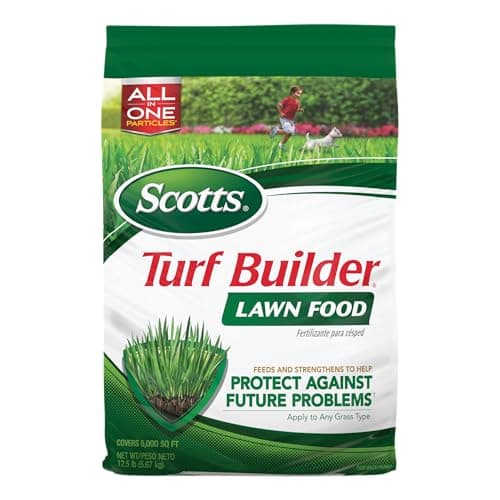
A 32-0-4 analysis and a 5,000 sq ft bag on every big-box shelf -- but no published bag weight, so the nitrogen rate cannot be checked.
Published specs
| Guaranteed analysis | 32-0-4 |
|---|---|
| Coverage | Up to 5,000 sq ft; a 15,000 sq ft size is also sold |
| Application frequency | Every 6-8 weeks, up to 4 times per year |
| Grass types | Any grass type |
| Timing | Any time during the growing season |
| Bag weight | Not published on the product page |
| Feeding duration | Not published as a figure |
| Slow-release share | Not published |
Source: Scotts Turf Builder Lawn Food, scottsmiraclegro.com
Nitrogen per 1,000 sq ft is (bag weight / thousands of sq ft covered) x analysis. Scotts publishes the coverage (5,000 sq ft) and the analysis (32%) but not the bag weight on the product page, so the middle term is missing and the rate cannot be derived. Milorganite and Jonathan Green both publish enough to compute it. That gap is the reason this bag ranks third here despite being the easiest to buy.
What the numbers favor
- 32-0-4 is a high-nitrogen, zero-phosphate analysis, which suits most established lawns
- Stocked nearly everywhere, in two sizes
- Publishes an application frequency and an annual cap (4 times per year)
- Suitable for any grass type, which removes a decision
What they don't
- No published bag weight, so nitrogen per 1,000 sq ft cannot be computed from the page
- No published feeding duration or slow-release percentage
- Up to 4 applications a year is a lot of nitrogen if you follow it without a soil test
you want to know how much nitrogen you are applying. Two of the three bags on this page let you work it out; this one does not.
How it scores
Scores are our editorial weighting of the published specs above, not a test result. They are deliberately kept out of this page's structured data.
Where to buy the tools on this page
Every link below is an Amazon affiliate link. We show no price we have not verified today, so where there is no live figure the link says "check price" and takes you to the listing to read it there.
Best low-burn option
Milorganite Slow-Release Nitrogen Fertilizer (6-4-0)
Milorganite · Fertilizer (no power)
Most available
Scotts Turf Builder Lawn Food (32-0-4)
Scotts · Fertilizer (no power)
#ad As an Amazon Associate we earn from qualifying purchases, at no extra cost to you. How we're funded.
Common questions
Is Milorganite better than Scotts Turf Builder?
Why can you not work out the Scotts nitrogen rate?
Which one is safer to over-apply?
Does Milorganite contain phosphorus?
How much product do you carry with each?
Which should a beginner buy?
Sources
Read next
- Lawn Care
Cutting the grass is a third of the job. This is the other two thirds.
- Best lawn fertilizer
Analysis and coverage converted to pounds of nitrogen per 1,000 sq ft, against the Extension limit.
- What the three numbers on a fertilizer bag mean
N-P-K decoded, UMN's published nitrogen rates, and the maths that turns a bag into pounds.
- Spreader settings: how to calibrate instead of guessing
Calibrate a spreader by weight in twenty minutes, with the passes and rate arithmetic.
- Soil testing for lawns, step by step
4 inches deep, 8 to 10 locations, every three to five years. What the report tells you.
- Doing your own lawn care: what to do, and when
Four jobs, the right order, the right season. The sequence matters more than the equipment.