Riding & Robot Mowers
Best robot lawn mower (and the limits nobody puts on the box)
Three published numbers decide whether a robot mower suits your lawn. Two of them are limits.
Affiliate disclosure: we earn a commission if you buy through our links, at no extra cost to you. It never changes which product we rank first — here is how we're funded.
We have not tested these units. Every spec on this page comes from the manufacturer's own documentation and is linked to it. Every computed figure is arithmetic you can redo. Prices are checked daily — last verified October 19, 2026. Here is exactly how we pick.
Quick picks
Ranked on the published specs and the arithmetic below. Tap any row to jump to the full write-up. We have not tested these units -- here is exactly how we pick.
| # | Product | Best for | Score | Price |
|---|---|---|---|---|
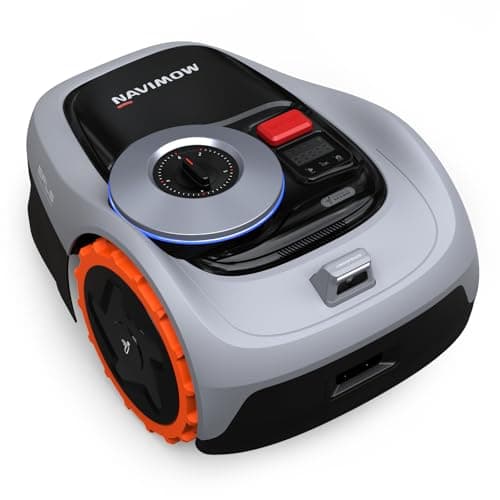
| 1 | Segway Navimow i105N Robot Mower No perimeter wire, 58 dB published, and an eighth of an acre it will cut while you are at work. | Best wire-free robot for a small lawn | 8.0 | |
| 2 | 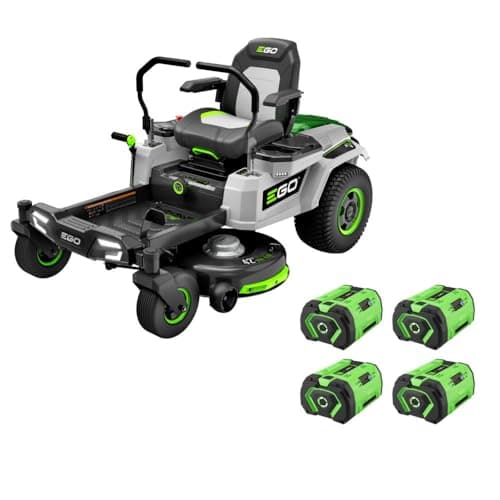 EGO Power+ Z6 42" Zero Turn ZT4204L 2,240Wh of the same 56V packs that run the rest of your yard, and a published two acres on a charge. | Best overall | 8.8 | |
| 3 | No photo Kobalt 80V Max 21" Self-Propelled (dual-port) Two 4Ah bays, 80 published minutes and an acre rating -- the most runtime per purchase of any 80V walk-behind here. | Best two-bay runtime | 8.4 |
#ad Buy links are affiliate links. Prices come from a live daily check; where we have no verified price we say "check price" rather than print a stale one.
Robot mowers are sold on the idea that you never mow again. Whether that is true for you comes down to three published numbers, and two of them are hard limits that a lot of gardens fail.
The three numbers
| Spec | Navimow i105N | What it rules out |
|---|---|---|
| Coverage | Up to 1/8 acre (~5,400 sq ft) | Anything approaching a quarter acre. This is a small-lawn machine. |
| Max slope | 16 degrees | Banks, terraced gardens, anything you would describe as a hill. |
| Duty cycle | 60 min run / 90 min charge | Fast-growing lawns in peak season, if run only during the day. |
| Cutting width | 7.1 in | Nothing, but it means many passes. |
| Cut height | 2 to 3.6 in | Very short cuts. 2 in is the floor. |
| Noise | 58 dB(A) | Nothing -- this is quiet enough to run around people. |
| Weight | 24 lb | Nothing -- easy to carry to storage. |
From the Navimow i105N product page, checked 3 September 2026.
Duty cycle: the calculation nobody shows you
This matters most in peak growing season, when a lawn can put on real height in a week. A robot mower works by cutting a little constantly rather than a lot occasionally, so if the duty cycle cannot keep pace with growth, you get a lawn that looks progressively less cut. The 58 dB figure is what makes overnight running plausible — and overnight running is what makes the duty cycle work.
Wire-free navigation is the real advance
Older robot mowers needed a perimeter wire buried or pegged around the lawn: hours of installation, and a repair job every time an aerator or a spade found it. The i105N uses RTK satellite positioning plus vision, with boundaries and no-mow zones drawn in an app.
That converts installation from an afternoon of trenching into a walk around the garden, and it makes changing the boundary — a new bed, a trampoline moved — a thirty-second job. For a small lawn it is the difference between a machine you would install and one you would not.
The 16-degree limit is the strictest published spec on this site
Across every product page we read building this site — mowers, blowers, trimmers, chainsaws, riding mowers — Segway's 16 degrees is the lowest published maximum gradient we found from any manufacturer; the only others are Husqvarna's Automower robot limits.
16 degrees is roughly a 29% grade. That is a noticeable bank, and plenty of gardens have a section that exceeds it. Because the machine is autonomous, there is no operator to notice it losing traction, which is presumably why Segway is willing to state a number that a walk-behind manufacturer never does. If part of your lawn is steeper, that section still needs a person — and a mower chosen for slope.
The honest alternatives on this page
We have put two non-robot machines on this page deliberately, because "robot mower" is often the wrong answer to the question people are actually asking.
If your lawn is bigger than an eighth of an acre
A robot mower rated for 5,400 square feet cannot be scaled up by running it longer past a point. At a half acre to an acre, the Kobalt 80V walk-behind is the practical answer; at two acres and up it is the EGO Z6 zero turn.
If what you want is to stop pushing a mower
That impulse has two answers at opposite ends of the size range. On a small flat lawn, automate it. On a large one, sit down. What does not work is buying a robot mower for a lawn twice its rating and hoping.
What we cannot tell you
- Cut quality. A 7.1-inch three-blade robot cuts differently from a 21-inch rotary deck, and only a real lawn shows you how differently.
- How it copes with rough ground. No ground-clearance spec is published.
- Reliability of the vision system against obstacles, pets and garden furniture. Manufacturer claims exist; independent verification is what you want, and it needs someone who ran one.
- Winter storage and battery longevity. Same open question as every other lithium tool — we say what is known and what is not.
The picks in full
Specs are the manufacturer's own and linked to the page they came from. Prices come from a live daily check; where we have no verified price we say so rather than print a stale one.
Segway Navimow i105N Robot Mower
Segway · Navimow (self-contained) · Our score 8.0/10
#ad Price as of October 19, 2026. Prices change; we check daily. How we're funded.
No perimeter wire, 58 dB published, and an eighth of an acre it will cut while you are at work.
Published specs
| Coverage | Up to 1/8 acre |
|---|---|
| Cutting width | 7.1 in |
| Cut height | 2-3.6 in |
| Runtime / charge | 60 min run / 90 min charge |
| Navigation | RTK + Vision, wire-free |
| Max slope | 16 degrees |
| Noise | 58 dB(A) |
| Weight | 24 lb |
Source: Navimow i105N, navimow.com
60 minutes of run against 90 minutes of charge is a 60/150 duty cycle -- about 40%. Over a 12-hour window that is roughly 4.8 hours of actual cutting, which is the number that decides whether 1/8 acre is realistic for your grass growth rate.
What the numbers favor
- No perimeter wire to bury, cut or repair -- boundaries are set in the app
- 58 dB published, quiet enough to run while people are outside
- Publishes both runtime and charge time, so the duty cycle is computable
- 24 lb, light enough to carry to storage single-handed
What they don't
- 1/8 acre is a genuinely small lawn; Segway's own 0.15 acre figure is layout-dependent
- 7.1 in cutting width means many passes
- 16 degree maximum slope rules out a lot of real gardens
your lawn has slopes over 16 degrees or is over an eighth of an acre. Both are hard published limits, not soft ones.
How it scores
Scores are our editorial weighting of the published specs above, not a test result. They are deliberately kept out of this page's structured data.
EGO Power+ Z6 42" Zero Turn ZT4204L
EGO · EGO 56V ARC Lithium · Our score 8.8/10
#ad Price as of October 19, 2026. Prices change; we check daily. How we're funded.
2,240Wh of the same 56V packs that run the rest of your yard, and a published two acres on a charge.
Published specs
| Deck | 42 in |
|---|---|
| Power claim | 22 HP gas equivalent |
| Top speed | 8 MPH |
| Batteries included | 4 x 56V 10.0Ah |
| Bay capacity | Up to 6 packs |
| Coverage | Up to 2 acres per charge |
| Warranty | 5-yr tool, battery and charger |
Source: POWER+ 42" Z6 Zero Turn Riding Mower (ZT4204L), egopowerplus.com
56V x 10.0Ah = 560Wh per pack. Four packs = 2,240Wh; six bays filled = 3,360Wh. Against the published 2 acres on four packs, that is roughly 1,120Wh per acre -- the number to size any electric riding mower against.
What the numbers favor
- Uses the identical 56V ARC Lithium packs as EGO's handheld tools -- the batteries are not stranded
- Six battery bays, so range is a purchase decision rather than a fixed limit
- 5-year warranty covering tool, battery AND charger
- 32 published LED lights, which matters more than it sounds for dusk mowing
What they don't
- Four 10.0Ah packs is a substantial share of the purchase price on its own
- EGO's published watt-hour figure for this configuration does not reconcile with 56V x 10.0Ah x 4; we publish our own arithmetic (2,240Wh) and show the working rather than repeat a number we cannot verify
your lot is under an acre. A 21 in walk-behind finishes a half acre in the time it takes to get a zero turn out of the shed, and costs a fifth as much.
How it scores
Scores are our editorial weighting of the published specs above, not a test result. They are deliberately kept out of this page's structured data.
Kobalt 80V Max 21" Self-Propelled (dual-port)
Kobalt · Kobalt 80V Max · Our score 8.4/10
#ad No verified live price right now, so we show none rather than a stale one. How we're funded.
Two 4Ah bays, 80 published minutes and an acre rating -- the most runtime per purchase of any 80V walk-behind here.
Published specs
| Deck | 21 in, steel |
|---|---|
| Motor | Brushless |
| Batteries included | 2 x 80V 4.0Ah (dual port) |
| Runtime claim | Up to 80 min |
| Rated for | Up to 1 acre |
| Drive | Self-propelled RWD, 7 speed settings |
| Recharge | Approx. 60-90 min |
Source: Kobalt 80-Volt 21-in Self-propelled Battery Mower (2 batteries), lowes.com
80V x 4.0Ah = 320Wh per pack; two bays = 640Wh installed. Kobalt's listing does not state whether the two ports discharge simultaneously or in sequence, so we do not claim either -- what is verifiable is that 640Wh is on the machine when you start.
What the numbers favor
- 640Wh installed across two bays, the most of any walk-behind on this page
- Rated to 1 acre, twice the Greenworks 80V flagship's half-acre rating
- Seven published speed settings on the self-propel drive
- All Kobalt 80V packs are cross-compatible across the 80V outdoor line
What they don't
- Sold through Lowe's only, so availability and price track one retailer
- The listing does not publish weight, cut-height range or a noise figure
- Kobalt's 80V outdoor range is narrower than EGO's or Ryobi's
you want a platform rather than a mower. Kobalt is a single-retailer house brand -- fine for the tool, thinner as a decade-long ecosystem bet.
How it scores
Scores are our editorial weighting of the published specs above, not a test result. They are deliberately kept out of this page's structured data.
Where to buy the tools on this page
Amazon affiliate links, except where a product has no Amazon listing — those go direct to the maker and earn us nothing, and the button says so. We show no price we have not verified today, so where there is no live figure the link says "check price" and takes you to the listing to read it there.
Best wire-free robot for a small lawn
Segway Navimow i105N Robot Mower
Segway · Navimow (self-contained)
Best overall
EGO Power+ Z6 42" Zero Turn ZT4204L
EGO · EGO 56V ARC Lithium
Best two-bay runtime
Kobalt 80V Max 21" Self-Propelled (dual-port)
Kobalt · Kobalt 80V Max
#ad As an Amazon Associate we earn from qualifying purchases, at no extra cost to you. How we're funded.
Common questions
What is the best robot lawn mower without a perimeter wire?
How big a lawn can a robot mower handle?
How steep a slope can a robot mower manage?
How often does a robot mower need to run?
Are robot mowers quiet enough to run during the day?
Do robot mowers work on uneven ground?
Sources
Read next
- Riding & Robot Mowers
Above an acre the question stops being which mower and starts being how many watt-hours.
- Best electric riding mower for 2026
Electric zero turns ranked on installed watt-hours and the energy-per-acre figure.
- Best battery lawn mower for a small yard
Under a third of an acre, weight and storage beat watt-hours. The numbers that actually matter, ranked.
- Best electric mower for hills and slopes
Drive speed control and weight decide slope performance. Ranked on both, with the unpublished gaps named.
- What size mower do I need for my yard?
Deck width and watt-hours by lawn size, with the mowing-time arithmetic for each.
- Best robot mower for hills
Published slope limits in percent and degrees, including the separate limit at the boundary.
- Best robot mower for 1 acre
Published working area, mow time and cutting width for robots sized at or near an acre.
- Best wire-free robot mower
Wire-free RTK navigation against a buried boundary wire, on published specs and install reality.
- Best robot mower for a small yard
Working area, duty cycle and noise for a small lawn, against the machine built for four times the ground.
- Segway Navimow i105N review
A specification review: 1/8 acre, 58 dB(A), 24 lb, and the 40% duty cycle nobody else lets you compute.