Yard Tools
Best chainsaw sharpeners, and which one your volume justifies
A grinder sets the angle fast, a jig sets the tooth length, a file kit fits in the saw case. The choice is volume, not quality.
Affiliate disclosure: we earn a commission if you buy through our links, at no extra cost to you. It never changes which product we rank first — here is how we're funded.
We have not tested these units. Every spec on this page comes from the manufacturer's own documentation and is linked to it. Every computed figure is arithmetic you can redo. Prices are checked daily — last verified October 19, 2026. Here is exactly how we pick.
Quick picks
Ranked on the published specs and the arithmetic below. Tap any row to jump to the full write-up. We have not tested these units -- here is exactly how we pick.
| # | Product | Best for | Score | Price |
|---|---|---|---|---|
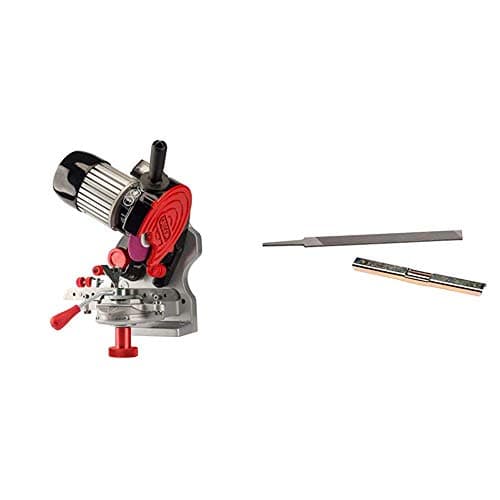
| 1 | Oregon Professional Compact 120V Bench Chain Grinder (410-120) The only sharpener here with a published motor spec, and the only one that sharpens a chain in minutes instead of a quarter of an hour. | Best for more than one chain | 8.5 | |
| 2 | 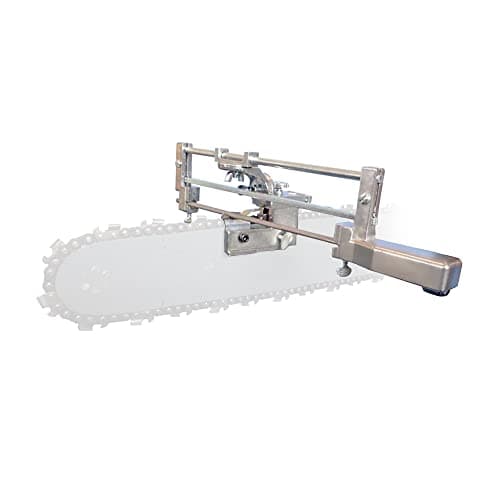 Granberg G106B File-N-Joint Bar-Mounted File Guide The only tool here that sets tooth LENGTH as well as angle, which is the reason a hand-filed chain cuts in a curve and a jigged one does not. | Best for consistent tooth length | 8.3 | |
| 3 | 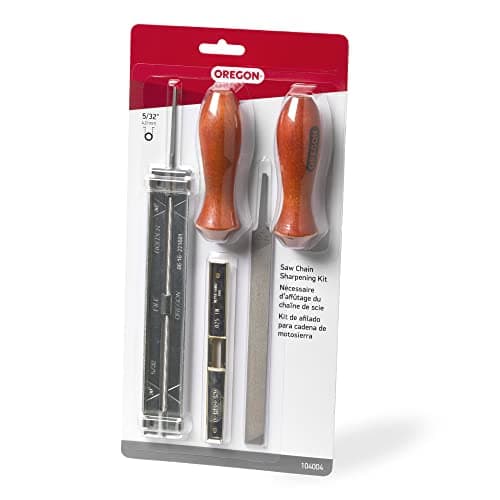 Oregon Chainsaw Sharpening Kit, 5/32 in (104004) An assembled file guide, the right round file, a flat file and a depth gauge tool for under twenty dollars -- and the only one of the three that fits in a pocket. | Best under $25 | 8.1 |
#ad Buy links are affiliate links. Prices come from a live daily check; where we have no verified price we say "check price" rather than print a stale one.
There is no best chainsaw sharpener in general, which is why most roundups of them are useless. There is a cheapest way to get a sharp chain at your volume, and the three tools here sit at three completely different points: a 17 lb bench grinder with a published motor spec, a bar-mounted jig that controls something the grinder does not, and a file kit that weighs ten ounces and costs under twenty dollars. The arithmetic that picks between them is on this page, and it is about how many chains you own.
The short answer
What each tool actually controls
A sharp chain is four things done right, and no single tool here does all four equally.
- Angle. The top-plate and side-plate angles on each cutter. All three tools control this; the grinder does it fastest.
- Tooth length. Every cutter the same length, so the chain tracks straight. The Granberg jig controls this explicitly. A plain file guide does not.
- Depth gauge height. How deep the cutter can bite. All three can do it — the 104004 includes a .025 in tool, the 410-120 a 6.0 mm flat disc, the G106B does it with the same jig.
- File or wheel diameter matched to pitch. Not a preference. The wrong diameter cuts the wrong profile into the tooth. See the pitch section.
- Where you can do it. Bench, or in the woods. This is the thing that most often decides the purchase and almost never gets mentioned.
The three approaches, side by side
| Oregon 410-120 | Granberg G106B | Oregon 104004 | |
|---|---|---|---|
| Type | 120V bench grinder | Bar-mounted file jig | File guide kit |
| Power | 120V, 2.1A, 220W, 0.29 HP, 3,150 RPM | None | None |
| Sets angle | Yes | Yes | Yes |
| Sets tooth length | No | Yes | No |
| Depth gauge tool | 6.0 mm flat disc included | Jig lowers gauges | .025 in tool included |
| Max chain pitch | .404 in | All standard pitches | 5/32 in file (pitch-specific) |
| Weight | 17 lb, 16 in tall | 3 lb shipping | 0.64 lb |
| Works in the field | No | Yes | Yes |
| Files included | n/a (wheels included) | No | Yes |
All figures from oregonproducts.com and granberg.com (cited below). Note that Granberg states plainly that no file is included with the G106B, which is more than most sharpener listings manage.
The arithmetic: what volume justifies a grinder
Oregon 410-120 at today's price: $279.26
Typical shop chain sharpening: about $15
279.26 / 15 = 18.6, so about 19 chains to break even
One saw, three sharpenings a season = 6.2 seasons
Two saws, six sharpenings a season = 3.1 seasons
Firewood cutting, two saws, ten sharpenings a season = 1.9 seasons
Against the file kit the comparison is starker: $19.39 is 7% of the grinder's price, and it sharpens the same chain. The grinder buys you speed and repeatability, not a sharper chain — a well-filed tooth is at least as good as a ground one and removes less metal.
Before you buy anything: match the pitch
This is the one mistake that makes a sharpener useless rather than merely slow, and it is specific to the file-based tools.
- Find your chain's pitch. It is stamped on the drive link, and our chainsaw chain guide walks through reading it. Common pitches are 1/4 in, 3/8 in low profile, .325 in, 3/8 in and .404 in.
- Match the round file diameter to it. The Oregon 104004 kit on this page is 5/32 in, which is for 1/4 in and 3/8 in low-profile chain. Oregon sells 3/16 in and 7/32 in kits for the others. A 5/32 in file on .325 in chain cuts the wrong hook and will not sharpen it.
- The grinder is the exception. The 410-120 ships 3.2 mm and 4.7 mm wheels and handles everything up to .404 in pitch, so pitch-matching is a wheel change rather than a different purchase.
- So is the Granberg. It holds all file sizes for standard pitches — you just buy the right file for your chain, which you have to do anyway.
1. Oregon 410-120 — best for more than one chain
The only sharpener on this page with a motor specification, and Oregon publishes all of it: 120V, 60Hz, 2.1A, 220W, 0.29 HP, single phase, 3,150 RPM, one-way rotation, 5-3/4 in wheel, maximum .404 in pitch, 17 lb, 16 in tall. In the box: three wheels (3.2 mm, 4.7 mm and a 6.0 mm flat disc for depth gauges), a dressing brick, a profile guide and instructions. A built-in light, and one-way motor rotation, which Oregon names as a safety feature.
What you are buying is repeatability. A grinder sets the angle with a stop, so the thirty-second tooth is filed to the same geometry as the first, and it does a whole chain in minutes instead of a quarter of an hour. What you are not buying is a sharper tooth; a careful file job is at least as good and removes less metal, so it uses the chain up more slowly.
Two data notes. Oregon's own page says "two grinding wheels" in one bullet and "three grinding wheels" in the next. And its spec table publishes Weight (with Packaging) 17.59 lb alongside Net Weight Carton 70.34 lb — the second is plainly a case or pallet figure, not this grinder. We publish the 17 lb figure from the product copy because it is the only one that is consistent with a 16 in benchtop tool.
#ad Check the Oregon Professional Compact 120V Bench Chain Grinder (410-120) price on Amazon — how we're funded.
2. Granberg G106B File-N-Joint — best for a chain that pulls
If your chain cuts in a curve after you sharpen it, this is the tool that fixes it, and it fixes it for a reason the other two cannot. The G106B clamps to the saw bar and sets angle, file height and tooth length with calibrated swivel markings. Uneven tooth length is what makes a chain pull to one side — the longer cutters take a bigger bite — and no angle guide addresses it, because angle and length are different variables. Cast aluminum and zinc-plated steel, made in the USA, and a design Granberg dates to Elof Granberg more than sixty years ago.
It also works at the stump with no power at all, which the grinder cannot. The honest costs: no file in the box, so budget about $70 to start rather than $62; it is slower per chain than a grinder because it is still filing; and it has several adjustments to get right the first time, which is the recurring note in Granberg's own customer reviews. Clamping to the bar also means unclamping it before you cut again.
#ad Check the Granberg G106B File-N-Joint Bar-Mounted File Guide price on Amazon — how we're funded.
3. Oregon 104004 kit — best under $25
An assembled 5/32 in file guide, a 5/32 in round file, a flat file, a .025 in drop-center depth gauge tool and two wooden handles, for under twenty dollars and under eleven ounces. It is complete: nothing else to buy to get a sharp chain, including the depth gauge tool that most cheap kits leave out and most people therefore never use. And at 0.64 lb it lives in the saw case, which is where a sharpener earns its keep — a chain gets dull in the middle of a job, not on a bench.
The limits are real and they are the same limits hand filing has always had. It is pitch-specific: 5/32 in is wrong for .325 in chain and Oregon sells other sizes for a reason. A file guide sets angle but not length, so over many sharpenings your cutters drift apart and you end up wanting the Granberg. The files and wooden handles are consumables. And filing a badly dulled chain by hand takes real time and a steady wrist.
#ad Check the Oregon Chainsaw Sharpening Kit, 5/32 in (104004) price on Amazon — how we're funded.
What is missing from this page, and why
The STIHL 2-in-1 Easy File is the obvious fourth entry here — it is the best-known combined tooth-and-depth-gauge filing tool in the category. It is not ranked because STIHL publishes no US product page for it: stihlusa.com returns 404 for the product, its public sitemap lists only guide articles, and the retailer listings that do exist disagree about which chain pitches it fits (one lists five pitches, another lists two). On a page whose whole premise is pitch-matching, we are not going to publish a compatibility list we cannot source to STIHL. If you already own one, the filing principle is the same as the Oregon kit's; just confirm the pitch marked on the holder matches your chain.
Verdict
Buy on volume, not on price. Under about five chains a season, the Oregon 104004 kit is the right purchase and the grinder is nineteen shop visits of money sitting on a bench. Over that, the Oregon 410-120 pays for itself and gives you a repeatability a file cannot. The Granberg G106B is the specialist answer to one specific symptom — a chain that cuts in a curve — and the only tool here that addresses its cause. Whatever you buy, file the depth gauges; a sharp tooth on a tall raker still will not cut.
The picks in full
Specs are the manufacturer's own and linked to the page they came from. Prices come from a live daily check; where we have no verified price we say so rather than print a stale one.
Oregon Professional Compact 120V Bench Chain Grinder (410-120)
Oregon · Corded · Our score 8.5/10
#ad Price as of October 19, 2026. Prices change; we check daily. How we're funded.
The only sharpener here with a published motor spec, and the only one that sharpens a chain in minutes instead of a quarter of an hour.
Published specs
| Motor | 120V, 60Hz, 2.1A, 220W, 0.29 HP, single phase |
|---|---|
| Speed | 3,150 RPM, one-way rotation |
| Grinding wheel | 5-3/4 in |
| Max chain pitch | .404 in |
| Supplied wheels | 3.2 mm, 4.7 mm, plus 6.0 mm flat for depth gauges |
| Also supplied | Dressing brick, profile guide, operator instructions |
| Weight | 17 lb; 16 in tall |
| Part number | 410-120 |
$279.26 at a typical $15 shop sharpening = 18.6 chains. If you run one saw and sharpen three times a season, that is six seasons. If you run two saws or cut firewood for the winter, it is one or two.
What the numbers favor
- Publishes volts, hertz, amps, watts, horsepower, phase and RPM -- the only sharpener on this page with a motor spec at all
- Sharpens every pitch up to .404 in, so it covers any saw chain you are likely to own
- Three wheels supplied, including the flat disc for depth gauges, which is the step hand filers skip
- Built-in light and one-way motor rotation, both named by Oregon as safety features
- Sets a repeatable angle mechanically, so tooth 32 matches tooth 1
What they don't
- Oregon's own page says two grinding wheels in one bullet and three in the next
- Its spec table lists Weight (with Packaging) 17.59 lb and Net Weight Carton 70.34 lb -- the second figure is a case or pallet weight, not this grinder
- Bench-mounted, so it sharpens at home and never in the woods
- Four times the price of the Granberg and fourteen times the price of the file kit
you own one saw and cut a few branches a year. You will not pay this off, and a $19 file kit sharpens the same chain.
How it scores
Scores are our editorial weighting of the published specs above, not a test result. They are deliberately kept out of this page's structured data.
Granberg G106B File-N-Joint Bar-Mounted File Guide
Granberg · Manual · Our score 8.3/10
#ad Price as of October 19, 2026. Prices change; we check daily. How we're funded.
The only tool here that sets tooth LENGTH as well as angle, which is the reason a hand-filed chain cuts in a curve and a jigged one does not.
Published specs
| Type | Bar-mounted file guide, clamps to the saw bar |
|---|---|
| Construction | Cast aluminum and zinc-plated steel |
| Angle setting | Calibrated swivel guide markings |
| Also sets | File height, tooth length, depth gauge lowering |
| Chain compatibility | Holds all file sizes for standard chain pitches |
| File included | No -- round files sold separately (G427 / G428 / G429) |
| Shipping size | 15 x 7 x 5 in, 3 lb |
| Origin | Made in the USA |
Source: G106B File-N-Joint bar-mounted file guide system, granberg.com
$62.00 for the jig plus a Granberg round file in your chain's size. Budget about $70 to start cutting, not $62 -- Granberg states plainly that the file is not included, which is more than most sharpener listings manage.
What the numbers favor
- Sets tooth length, not just angle. Uneven tooth length is why a hand-filed chain pulls to one side on a long bar
- Works on the saw, at the stump, with no power of any kind
- Cast aluminum and zinc-plated steel, and Granberg has been making this design for over sixty years
- Handles any standard pitch and lowers depth gauges with the same tool
- Made in the USA
What they don't
- No file in the box, so the sticker price is not the price to get started
- Slower per chain than a grinder: this is filing with a guide, not grinding
- Setup has several adjustments to get right the first time, which is the common complaint in Granberg's own reviews
- Clamping to the bar means unclamping it every time you want to cut
you want one-pass speed on a pile of chains. A guided file is more accurate per tooth than a grinder and much slower per chain.
How it scores
Scores are our editorial weighting of the published specs above, not a test result. They are deliberately kept out of this page's structured data.
Oregon Chainsaw Sharpening Kit, 5/32 in (104004)
Oregon · Manual · Our score 8.1/10
#ad Price as of October 19, 2026. Prices change; we check daily. How we're funded.
An assembled file guide, the right round file, a flat file and a depth gauge tool for under twenty dollars -- and the only one of the three that fits in a pocket.
Published specs
| Round file diameter | 5/32 in |
|---|---|
| Supplied | Assembled 5/32 in file guide, 5/32 in round file |
| Also supplied | Flat file, .025 in drop-center depth gauge tool |
| Handles | Two wooden file handles |
| Weight | 0.64 lb with packaging |
| Part number | 104004 |
$19.39 against $279.26 = 6.9%. For one saw sharpened a few times a season, the kit does the same job to a lower standard of repeatability for a fourteenth of the money.
What the numbers favor
- Complete out of the box: guide, round file, flat file, depth gauge tool and handles, nothing else to buy
- Includes the .025 in depth gauge tool, so the raker gets set and not just the tooth
- 0.64 lb -- it rides in the saw case, which is where a sharpener earns its keep
- Cheapest route to a sharp chain of anything on this page
What they don't
- Pitch-specific: 5/32 in is the wrong file for .325 in pitch chain, and Oregon sells 7/32 in and 3/16 in kits for the others. Check your chain before you buy
- A file guide sets angle but not tooth length, so cutters drift in length over many sharpenings
- Wooden handles and a bare file wear out; this is a consumable kit, not a tool
- Hand filing a badly dulled chain takes real time and a steady hand
your chain is .325 in pitch. Buy the 7/32 in or 3/16 in Oregon kit instead -- the wrong file diameter cuts the wrong hook into the tooth and will not sharpen at all.
How it scores
Scores are our editorial weighting of the published specs above, not a test result. They are deliberately kept out of this page's structured data.
Where to buy the tools on this page
Amazon affiliate links, except where a product has no Amazon listing — those go direct to the maker and earn us nothing, and the button says so. We show no price we have not verified today, so where there is no live figure the link says "check price" and takes you to the listing to read it there.
Best for more than one chain
Oregon Professional Compact 120V Bench Chain Grinder (410-120)
Oregon · Corded
Best for consistent tooth length
Granberg G106B File-N-Joint Bar-Mounted File Guide
Granberg · Manual
Best under $25
Oregon Chainsaw Sharpening Kit, 5/32 in (104004)
Oregon · Manual
#ad As an Amazon Associate we earn from qualifying purchases, at no extra cost to you. How we're funded.
Common questions
What is the best chainsaw sharpener?
Is an electric chainsaw sharpener worth it?
Why does my chain cut in a curve after I sharpen it?
What file size do I need for my chainsaw?
Do I need to file the depth gauges too?
Can I sharpen a chain in the field?
How many times can a chain be sharpened?
Sources
- Oregon Professional Compact 120-Volt Bench Grinder, Universal Saw Chain Sharpener (410-120), oregonproducts.com
- G106B File-N-Joint bar-mounted file guide system, granberg.com
- Oregon Chainsaw Sharpening Kit, includes file guide, 5/32 in round file, flat file and depth gauge adjustment tool (104004), oregonproducts.com
Read next
- Yard Tools
The tools you buy third and fourth. This is where a platform choice pays off or bites.
- Chainsaw chain explained: pitch, gauge and drive links
Pitch, gauge and drive link count -- the three numbers that decide what fits your saw.
- Cordless chainsaw maintenance
Chain tension, bar lubrication and sharpness -- the whole job, and all three are safety items.
- Best cordless chainsaw for homeowners
Cuts per charge beats minutes on a chainsaw. The published figures and the energy-per-cut math.
- Best mini chainsaw
Bar length, cut capacity and cuts per charge for compact pruning saws, converted to energy per cut.
- Best chainsaw safety gear
Protective layers, shell denier and the four named standards behind two sets of chainsaw chaps.
- Best splitting axes, ranked on the specs makers will admit to
Four manual splitting tools on published head weight, edge width and length, with the head-to-total weight ratio worked out and the sourcing wall named.