Yard Tools
Best snow melting mats, and the part the price does not include
Two inches of snow an hour, 2.5 amps a mat, thirteen amps a circuit. One maker publishes all three. None of them publishes the electricity bill.
Affiliate disclosure: we earn a commission if you buy through our links, at no extra cost to you. It never changes which product we rank first — here is how we're funded.
We have not tested these units. Every spec on this page comes from the manufacturer's own documentation and is linked to it. Every computed figure is arithmetic you can redo. Prices are checked daily — last verified October 19, 2026. Here is exactly how we pick.
Quick picks
Ranked on the published specs and the arithmetic below. Tap any row to jump to the full write-up. We have not tested these units -- here is exactly how we pick.
| # | Product | Best for | Score | Price |
|---|---|---|---|---|
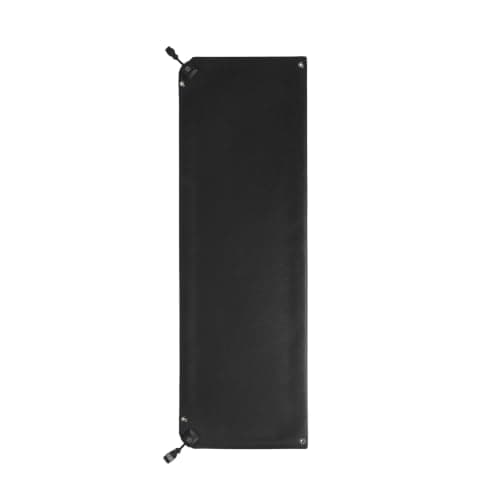
| 1 | HeatTrak Heated Walkway Mat, 20 in x 60 in (HR20-60) A published melt rate, a published amp draw per size and a two-year warranty -- and it does nothing at all until you buy the power unit separately. | Best overall | 8.2 | |
| 2 | 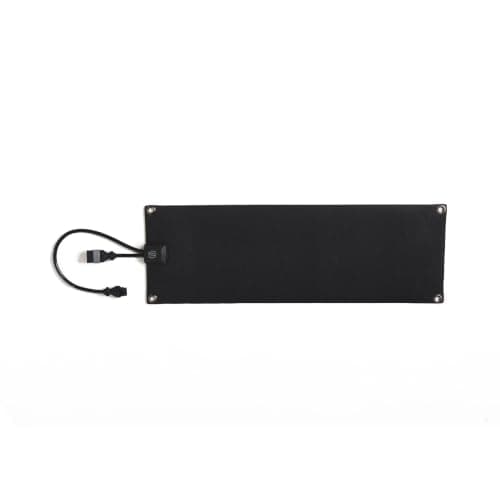 HeatTrak Heated Stair Mat, 10 in x 30 in (HR10-30) Steps are where people fall and where a shovel cannot work cleanly, and at 0.7 A per tread this is the cheapest square foot of heat HeatTrak sells. | Best for steps | 8.0 |
#ad Buy links are affiliate links. Prices come from a live daily check; where we have no verified price we say "check price" rather than print a stale one.
A heated mat is the only snow tool on this site that does the job while you are asleep. It is also the only one sold as a component rather than a product: the mat you put in your basket does nothing at all until you buy the power unit separately, and almost every listing in this category is an unbranded import with no manufacturer page, no published amp draw and no melt rate. One maker publishes all of it, so this page ranks its two mats and tells you plainly what the price does not cover.
The short answer
What actually decides a heated mat
- Melt rate. Inches of snow per hour. The only measure of whether the mat keeps up with the weather. HeatTrak publishes 2 in/hr; the unbranded listings publish numbers with no source behind them.
- Amp draw per mat. Decides how many you can run, what the cord has to carry and what it costs to run. HeatTrak publishes it per size.
- The circuit ceiling. 13 A per power unit, published. This is what actually limits your layout.
- Whether the power unit is included. It is not. See below — this is the single biggest surprise in the category.
- Size against what you are covering. A stair mat is 10 in deep; a tread deeper than that leaves ice at the nose, which is the worst possible place for it.
The thing the price does not include
HeatTrak is explicit about it and it still catches people: a mat is not a working product. A Power Unit with a built-in GFCI breaker is required and sold separately. The power unit is what connects the mats to a 120V outdoor outlet and warms them. Buying one mat gets you a rubber mat with a cable on it.
There is a second separately sold part that bites on mixed runs: if a stair mat leads to a walkway mat, counting outward from the power unit, you need a 20 in cable extender between them. So price a system, not a mat: power unit, plus mats, plus extenders where a stair run meets a path. HeatTrak also sells bundles that include the power unit, and those are the listings worth comparing against each other.
The two mats, side by side
| Walkway mat | Stair mat | |
|---|---|---|
| SKU | HR20-60 | HR10-30 |
| Size | 20 in x 60 in | 10 in x 30 in |
| Current draw | 2.5 A | 0.7 A per tread |
| Melt rate | 2 in / hour | 2 in / hour |
| Other sizes published | 20x30 (1.3 A), 30x30 (2.0 A), 30x60 (3.5 A) | 10x48 (1.0 A), 10x60 (1.3 A) |
| Power at 120V (ours) | 300 W | 84 W |
| Max per power unit | 5 mats (13 A ceiling) | 18 treads (13 A ceiling) |
| Power unit | Required, sold separately | Required, sold separately |
| Warranty | 2 years | 2 years |
Sizes, amps, melt rate, ceiling and warranty from heattrak.com (cited below). Watts and mats-per-unit are ours: watts = amps x 120 V, and mats = 13 A divided by the published draw.
The arithmetic: planning a run in amps
Published ceiling: 13 A per power unit
Walkway mats at 2.5 A: 13 / 2.5 = 5.2, so five mats = 25 ft of path
Stair treads at 0.7 A: 13 / 0.7 = 18.5, so eighteen treads
A realistic mixed run: 4 stair treads (2.8 A) + 3 walkway mats (7.5 A) = 10.3 A
That leaves 2.7 A of headroom, which is one more walkway mat or three more treads. Because stair mats draw so little, a flight of stairs almost never uses up a power unit on its own — design the stairs first and spend the remaining amps on the path.
One walkway mat: 2.5 A x 120 V = 300 W = 0.3 kW
Five walkway mats: 1.5 kW
At an illustrative $0.18/kWh: 1.5 x 0.18 = $0.27 per hour
A 24-hour storm cycle: 24 x 0.27 = about $6.50
Ten such storms in a winter: about $65
Substitute your own rate — the point is the order of magnitude. A heated path is not free the way a shovel is free, and no listing in this category prints this number. Against it, set the de-icer you do not buy and the chloride that does not go on your concrete.
1. HeatTrak Walkway Mat, 20 x 60 in — best overall
Sixty inches of path per mat, 2.5 A, and a published 2 in per hour melt rate. HeatTrak publishes amp figures for all four walkway sizes — 20x30 at 1.3 A, 20x60 at 2.5 A, 30x30 at 2.0 A, 30x60 at 3.5 A — which means you can design the whole run before you spend anything. That is genuinely unusual: in a category otherwise made of unbranded listings, HeatTrak is the only maker whose data lets you do arithmetic.
The power unit carries the GFCI breaker, which is the right place for it on a wet outdoor circuit, and the two-year manufacturer warranty on a product that lives outside all winter is reasonable. The honest costs are the three above: the power unit is separate, the cable extender is separate where a stair run meets a path, and 300 W per mat continuous is a real line on a bill. HeatTrak's own restrictions are worth repeating: never cover the mats, not for indoor use, not for pet enclosures.
#ad Check the HeatTrak Heated Walkway Mat, 20 in x 60 in (HR20-60) price on Amazon — how we're funded.
2. HeatTrak Stair Mat, 10 x 30 in — best for steps
If you buy one thing in this category, buy it for the steps. Steps are where people slip and where a shovel does its worst work — you cannot push a blade down a flight, so they get the least clearing and the most traffic. At 0.7 A per tread these are also the cheapest heat HeatTrak sells, and eighteen of them fit inside one power unit's 13 A ceiling, which is more treads than any house has.
Same published 2 in per hour melt rate, same two-year warranty, same separately sold power unit. The one thing to get right before buying is the size: 10 x 30 in fits a standard tread and nothing wider or deeper, and HeatTrak publishes 10x48 and 10x60 lengths for exactly that reason. An undersized tread mat leaves ice at the edges, which is where feet land.
#ad Check the HeatTrak Heated Stair Mat, 10 in x 30 in (HR10-30) price on Amazon — how we're funded.
The rest of this category, and why it is not here
Search for snow melting mats and you will find a wall of listings at a third of HeatTrak's price: unbranded 10 x 30 in treads, multi-packs, 10 ft runs with melt rates printed as "3 in/h" or "4 in/h". We checked for manufacturer pages behind them and found none — no spec sheet, no published amp draw, no company page stating a warranty. On a product that is a 120V resistive heater lying in standing water on a path people walk on, an unsourced amp figure is not a spec we are willing to publish, and a GFCI arrangement we cannot verify is not one we will recommend. That is why this page ranks two mats from one maker rather than six from six.
Mats, de-icer or a shovel
| Approach | Up-front | Per winter | Leaves behind |
|---|---|---|---|
| Heated mats | High (mats + power unit) | Electricity, by the hour it snows | Nothing |
| De-icer | Low | A bag or two | Chloride on the slab, grit to sweep |
| Shovel or blower | Low to moderate | Nothing | Your time, every storm |
Most households that buy mats use all three: mats on the steps and the path to the door, a shovel or blower for the drive, and de-icer only when it glazes. See our ice melt page and snow shovels page for those sides.
Verdict
The HeatTrak walkway mat and stair mat are the only snow melting mats we can rank, because HeatTrak is the only maker in the category that publishes a melt rate, an amp draw and a circuit ceiling. Buy the stairs first — cheapest amps, biggest risk reduction. Price the power unit as part of the purchase, because without it a mat is a rubber mat. And run the electricity arithmetic above with your own rate before you commit: this is the one winter tool on this site with an ongoing bill attached.
The picks in full
Specs are the manufacturer's own and linked to the page they came from. Prices come from a live daily check; where we have no verified price we say so rather than print a stale one.
HeatTrak Heated Walkway Mat, 20 in x 60 in (HR20-60)
HeatTrak · Corded 120V · Our score 8.2/10
#ad Price as of October 19, 2026. Prices change; we check daily. How we're funded.
A published melt rate, a published amp draw per size and a two-year warranty -- and it does nothing at all until you buy the power unit separately.
Published specs
| Size | 20 in x 60 in (50.8 x 152.4 cm) |
|---|---|
| Current draw | 2.5 A |
| Melt rate | 2 in (5 cm) of snow per hour |
| Supply | 120V outdoor outlet, via a HeatTrak Power Unit |
| Power unit | Required, sold separately, built-in GFCI breaker |
| Max mats per power unit | 13 A total |
| Warranty | 2 years |
| SKU | HR20-60 |
Source: HeatTrak Residential Heated Walkway Mat (HR20-60), heattrak.com
13 A per power unit divided by 2.5 A per mat = 5.2, so five mats. That is 25 ft of walkway from one outlet. Mix in stair mats at 0.7 A each and the arithmetic changes -- it is amps, not mats, that the limit is written in.
What the numbers favor
- Publishes a melt rate as a number (2 in per hour), which is the only way to judge whether a mat keeps up with a storm
- Publishes current draw per size, so you can plan a run before you buy instead of after
- The power unit carries a built-in GFCI breaker, which is the right place for it on a wet outdoor circuit
- Two-year manufacturer warranty on a product that lives outdoors in winter
- Leaves nothing to shovel and no de-icer on the concrete
What they don't
- The mat alone is not a working product: HeatTrak requires a Power Unit, sold separately, and the listing price does not include it
- Connecting a stair mat to a walkway mat needs a 20 in cable extender, also sold separately
- HeatTrak states plainly: never cover the mats, do not use indoors, not for pet enclosures
- Running cost is real -- 2.5 A at 120V is 300 W per mat, continuous, for as long as it snows
you have no outdoor GFCI outlet near the path. The whole system hangs off one 120V outdoor receptacle and there is no battery version of this idea.
How it scores
Scores are our editorial weighting of the published specs above, not a test result. They are deliberately kept out of this page's structured data.
HeatTrak Heated Stair Mat, 10 in x 30 in (HR10-30)
HeatTrak · Corded 120V · Our score 8.0/10
#ad Price as of October 19, 2026. Prices change; we check daily. How we're funded.
Steps are where people fall and where a shovel cannot work cleanly, and at 0.7 A per tread this is the cheapest square foot of heat HeatTrak sells.
Published specs
| Size | 10 in x 30 in (25.4 x 76.2 cm) |
|---|---|
| Current draw | 0.7 A per tread |
| Melt rate | 2 in (5 cm) of snow per hour |
| Other sizes | 10 x 48 in at 1.0 A, 10 x 60 in at 1.3 A |
| Power unit | Required, sold separately |
| Max mats per power unit | 13 A total |
| Warranty | 2 years |
| SKU | HR10-30 |
Source: HeatTrak Heated Snow and Ice Melting Stair Mat 10 in x 30 in (HR10-30), heattrak.com
13 A divided by 0.7 A per tread = 18.5, so eighteen treads from one outlet. No residential flight needs that, which means a stair run almost always leaves headroom for a walkway mat on the same power unit.
What the numbers favor
- Covers the part of the path that actually injures people, and that a shovel clears worst
- 0.7 A per tread, so a whole flight plus a walkway mat fits inside one 13 A power unit
- Same published 2 in per hour melt rate as the walkway mat
- Published amp figures for all three stair sizes, so you can size the run exactly
- Cheapest entry point into the system
What they don't
- Needs the same separately sold power unit, so one stair mat alone is not a purchase you can make
- A walkway mat downstream of a stair mat needs a 20 in cable extender as well
- 10 x 30 in fits a standard tread and nothing wider; measure first
- Never cover it, never use it indoors -- HeatTrak's own restriction
your steps are wider than 30 in or deeper than 10 in. HeatTrak publishes 48 in and 60 in lengths for exactly that reason, and an undersized tread mat leaves ice at the edges where people step.
How it scores
Scores are our editorial weighting of the published specs above, not a test result. They are deliberately kept out of this page's structured data.
Where to buy the tools on this page
Amazon affiliate links, except where a product has no Amazon listing — those go direct to the maker and earn us nothing, and the button says so. We show no price we have not verified today, so where there is no live figure the link says "check price" and takes you to the listing to read it there.
Best overall
HeatTrak Heated Walkway Mat, 20 in x 60 in (HR20-60)
HeatTrak · Corded 120V
Best for steps
HeatTrak Heated Stair Mat, 10 in x 30 in (HR10-30)
HeatTrak · Corded 120V
#ad As an Amazon Associate we earn from qualifying purchases, at no extra cost to you. How we're funded.
Common questions
What is the best snow melting mat?
Do snow melting mats include the power supply?
How many snow melting mats can I connect together?
How fast do heated mats melt snow?
What does it cost to run snow melting mats?
Are snow melting mats better than ice melt?
Can I leave heated mats outside all winter?
Sources
Read next
- Yard Tools
The tools you buy third and fourth. This is where a platform choice pays off or bites.
- Best ice melt, ranked on the one number that decides it
Three de-icers compared on published lowest working temperature, chemistry and cost per pound -- plus the one whose maker publishes no temperature at all.
- Best snow shovels, and why this category cannot be shopped on specs
Three manual snow tools whose makers publish something, the lift-versus-push arithmetic, and the spec contradictions we found on the manufacturers' own pages.
- Best electric snow shovel
Clearing width, depth, throw and weight for two cordless shovels, and what the replacement model stopped publishing.
- Best cordless snow blower
Clearing width, intake height and driveway coverage, converted to watt-hours per car-space.
- The winter yard tool handover, in order
Summer kit away, winter kit ready, and the last lawn jobs on their published timings.
- Best outdoor extension cords, by the numbers makers actually print
Three outdoor cords on published cold rating, gauge and amp capacity, with the 14-gauge-versus-12-gauge derate at 100 ft shown from the maker's own table.