Guides
Best gifts for a lawn perfectionist
They do not need another tool. They need to know what their soil is actually doing, and a spreader that puts the bag down evenly.
Affiliate disclosure: we earn a commission if you buy through our links, at no extra cost to you. It never changes which product we rank first — here is how we're funded.
We have not tested these units. Every spec on this page comes from the manufacturer's own documentation and is linked to it. Every computed figure is arithmetic you can redo. Prices are checked daily — last verified October 11, 2026. Here is exactly how we pick.
Quick picks
Ranked on the published specs and the arithmetic below. Tap any row to jump to the full write-up. We have not tested these units -- here is exactly how we pick.
| # | Product | Best for | Score | Price |
|---|---|---|---|---|
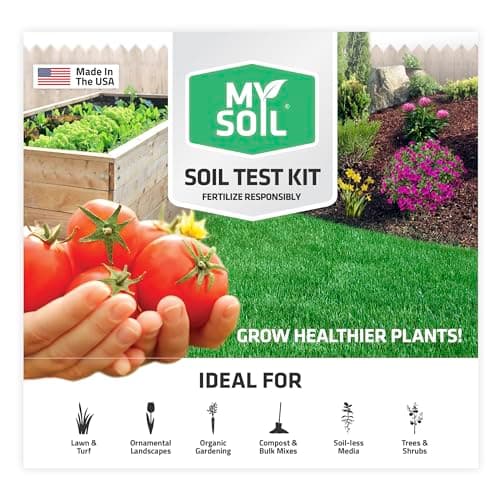
| 1 | MySoil Soil Test Kit Thirteen plant-available nutrients plus pH, with the only published turnaround time of any kit here -- six to eight days. | Best turnaround | 8.9 | |
| 2 | 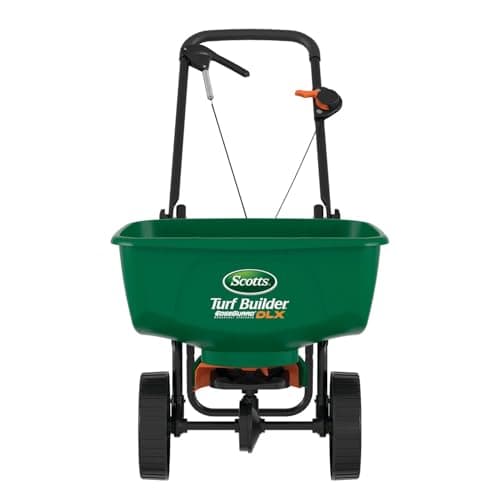 Scotts Turf Builder EdgeGuard DLX Broadcast Spreader The only spreader in our registry that arrives calibrated and can block one side of its own pattern -- and the one whose maker publishes no spread width at all. | Best hopper for the money | 8.7 | |
| 3 | 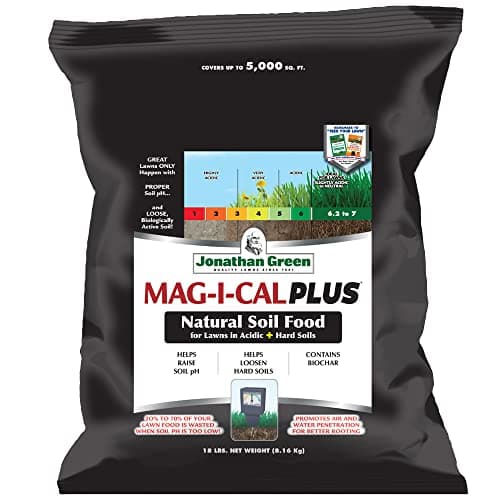 Jonathan Green Mag-I-Cal Plus for Lawns in Acidic & Hard Soil, 18 lb The only product here whose application frequency is published as a function of your measured pH -- which is the correct way to sell a soil amendment. | Best for a soil test under 6.7 | 8.5 | |
| 4 | 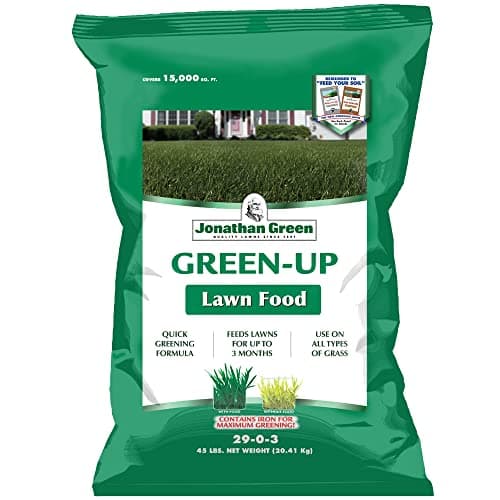 Jonathan Green Veri-Green Nitrogen Rich Lawn Fertilizer (29-0-3) 29-0-3 with 40% slow release and 4% iron, and the only bag here whose published coverage lands almost exactly on 1 lb of nitrogen. | Best documented rate | 8.8 |
#ad Buy links are affiliate links. Prices come from a live daily check; where we have no verified price we say "check price" rather than print a stale one.
The person who mows diagonally and knows their cut height to the eighth of an inch is the easiest person on your list to buy for and the one most people get wrong. They do not want another tool. They want to close the gap between what they are doing and what they can prove — and almost everything in that gap is cheap, unglamorous and the sort of thing they keep not buying.
The short answer
Buy in this order, and only this order
- The soil test. Everything downstream is conditional on it. A pH of 5.5 and a pH of 7.5 call for opposite products.
- The spreader. Application evenness is worth more than product choice. A good bag spread badly looks worse than a mediocre bag spread well.
- The fertilizer. Once they know the soil and can spread evenly, feeding is the easy part.
- The pH amendment, last and only with the number in hand. This is the one gift on the page that can actively do harm bought blind.
Who each pick is for, and who should skip it
| Pick | What it gives them | Skip it if |
|---|---|---|
| MySoil Soil Test Kit | A lab nutrient panel and a pH number they can act on | They tested this season. A second test the same year tells them nothing new. |
| Scotts EdgeGuard DLX spreader | Factory calibration and a one-sided pattern block | Their lawn is under about 2,000 sq ft, or they already own a calibrated spreader. |
| Jonathan Green Veri-Green (29-0-3) | 0.87 lb of nitrogen per 1,000 sq ft, computable from published figures | Their soil test flagged high nitrogen, or they are mid-way through another program. |
| Mag-I-Cal Plus, Acidic & Hard Soil | A pH correction with frequency published by measured pH band | You have not seen their soil test. This one can make a measured problem worse. |
Analysis, coverage, rate and calibration figures transcribed from each maker's own published page, all four cited below. The nitrogen rate is our arithmetic from Jonathan Green's published bag weight, coverage and analysis.
Why the test is the gift
A keen lawn owner is already doing most things right. What they usually cannot tell you is their pH, and pH is not a detail — it decides how much of the fertilizer they buy the grass can actually take up.
MySoil returns a lab panel rather than a color card, which is the difference between a number and an impression. The alternative is ranked beside it in best soil test kits, which compares what each one actually reports and how long it takes.
#ad Check the MySoil Soil Test Kit price on Amazon — how we're funded.
The spreader, and why calibration is the whole point
Scotts publishes SKU 76232B, a hopper rated to hold up to 15,000 sq ft of product, full factory calibration with no assembly, EdgeGuard blocking of the right side of the spread pattern, plastic open-spoke wheels and suitability for fertilizer, seed, granular controls, ice melt and salt.
Who it is for: a careful lawn owner with 2,000 to 15,000 sq ft. The pre-calibration matters more than it sounds: the dial numbers correspond to the settings printed on Scotts bags, which removes the single largest source of error in spreading. The honest gap is that Scotts publishes no spread width at all, so pass spacing still has to be established by walking it — the full accounting is in our EdgeGuard DLX review.
Who should skip it: anyone under about 2,000 sq ft, where a hand-held spreader is faster and stores smaller, and anyone who already owns a spreader they trust.
#ad Check the Scotts Turf Builder EdgeGuard DLX Broadcast Spreader price on Amazon — how we're funded.
The fertilizer, chosen because its rate can be checked
Jonathan Green publishes a 29-0-3 analysis, 40% slow release from polymer-coated urea, 4% iron, and a 15 lb bag covering 5,000 sq ft. Those three figures together are what makes it giftable to this particular person: 15 / 5 = 3 lb of product per 1,000 sq ft, and 3 x 0.29 = 0.87 lb of nitrogen — just under the 1 lb per application ceiling University of Minnesota Extension publishes.
Who it is for: someone who wants to know what they are applying. A perfectionist handed a bag that publishes no weight cannot compute their own rate, which is exactly the frustration this avoids. The full three-way comparison is in best lawn fertilizers, and what the numbers on a bag mean is in fertilizer numbers explained.
Who should skip it: anyone whose soil test came back high on nitrogen, and anyone part-way through a different maker's annual program — mixing programs mid-season is how people double-apply.
#ad Check the Jonathan Green Veri-Green Nitrogen Rich Lawn Fertilizer (29-0-3) price on Amazon — how we're funded.
The pH amendment, with the one condition attached
Jonathan Green publishes 3.6 lb per 1,000 sq ft on an established lawn and 7.2 on a new one, an 18 lb bag covering up to 5,000 sq ft, once-a-year application from pH 5.9 to 6.7 and twice a year at 5.9 or below, derivation from gypsum, calcium carbonate, iron humate and soy protein hydrolysate, and biochar in the mix.
Who it is for: someone whose test came back under 6.7, which across much of the eastern United States is most people. The rate-by-measured-pH table is why it is the pick: it treats their number as an input rather than decoration.
Who should skip it: anyone above pH 7.0, who needs the alkaline version instead, and anyone who has not tested. Said twice on purpose.
#ad Check the Jonathan Green Mag-I-Cal Plus for Lawns in Acidic & Hard Soil, 18 lb price on Amazon — how we're funded.
What we cannot tell you
We have not used any of these four and we have run no soil samples. MySoil publishes what its panel covers but no accuracy tolerance and no comparison against a state lab, so we cannot tell you how its numbers would compare with an extension test. Scotts publishes no spread width, no weight and no hopper capacity in pounds for the spreader. Neither Jonathan Green product publishes a calcium percentage or a time to effect, so a pH shift cannot be predicted from either label. And the biggest unknown on a gift page is the recipient: the pH amendment is the only item here that can do harm bought blind, and whether it is the right or the wrong bag depends entirely on a number we have no way of knowing.
The picks in full
Specs are the manufacturer's own and linked to the page they came from. Prices come from a live daily check; where we have no verified price we say so rather than print a stale one.
MySoil Soil Test Kit
MySoil · Mail-in lab test · Our score 8.9/10
#ad Price as of October 11, 2026. Prices change; we check daily. How we're funded.
Thirteen plant-available nutrients plus pH, with the only published turnaround time of any kit here -- six to eight days.
Published specs
| Nutrients reported | 13 plus pH |
|---|---|
| Nitrogen forms | Nitrate and ammonium, reported separately |
| Also reported | P, K, Ca, Mg, S, Fe, Mn, B, Cu, Zn, Na |
| Turnaround | 6-8 days |
| Return postage | Prepaid |
| In the box | Sample jar with resin capsule, scoop |
| Recommendations | Custom fertilizer recommendations included |
| Samples per kit | Not specified |
Source: MySoil Test Kit, mysoiltesting.com
MySoil publishes 6-8 days; Soil Savvy's own how-it-works page publishes no turnaround at all, and the figure quoted for it elsewhere is 7-10 days. Taking the published windows at face value, MySoil's worst case (8 days) matches Soil Savvy's best case, and its best case is 4 days ahead of the alternative's worst. For a fall seeding window that closes in mid-October, days matter.
What the numbers favor
- Splits nitrogen into nitrate and ammonium rather than reporting one number
- 6-8 day turnaround published outright
- Prepaid return postage in the box
- Resin-capsule method measures what the plant can actually take up, not total soil content
- Custom fertilizer recommendations come with the report
What they don't
- Does not publish how many samples one kit covers
- No published lab accreditation
- Thirteen nutrients to Soil Savvy's fourteen -- aluminum is the one missing
- A mail-in test is a snapshot; it cannot show you how the soil changes through the season
you need an answer this afternoon. Every mail-in kit costs you a week before you can act on it.
How it scores
Scores are our editorial weighting of the published specs above, not a test result. They are deliberately kept out of this page's structured data.
Scotts Turf Builder EdgeGuard DLX Broadcast Spreader
Scotts · Push broadcast spreader · Our score 8.7/10
#ad Price as of October 11, 2026. Prices change; we check daily. How we're funded.
The only spreader in our registry that arrives calibrated and can block one side of its own pattern -- and the one whose maker publishes no spread width at all.
Published specs
| SKU | 76232B |
|---|---|
| Type | Broadcast (rotary) spreader |
| Hopper | Holds up to 15,000 sq ft of product |
| EdgeGuard | Blocks the right side of the spread pattern |
| Calibration | Fully calibrated out of the box; no assembly |
| Wheels | Plastic, open-spoke design |
| Spreads | Fertilizer, grass seed, granular weed/insect/disease controls, ice melt, salt |
| Guarantee | ScottsMiracle-Gro No-Quibble Money Back Guarantee |
| Spread width | Not published by Scotts |
| Weight and hopper capacity in pounds | Not published by Scotts |
| Scotts list price | $114.99 |
Source: Scotts Turf Builder EdgeGuard DLX Broadcast Spreader (76232B), scottsmiraclegro.com
Scotts rates the hopper at 15,000 sq ft of product and publishes Halts at 10,000 sq ft per 20.12 lb bag. 15,000 / 10,000 x 20.12 = about 30 lb. Scotts publishes the hopper only in square feet, never in pounds, so this conversion is ours and it holds only for the specific product you are spreading -- grass seed and ice melt have different densities entirely.
What the numbers favor
- Arrives calibrated, which removes the single largest source of error in spreading
- EdgeGuard blocks one side of the pattern, so a bed edge or a driveway does not get fertilized
- The largest published hopper rating of any spreader in our registry at 15,000 sq ft
- Rated for ice melt and salt as well as lawn product, so it works twice a year
- Scotts publishes a list price, which gives the live Amazon figure something to be checked against
What they don't
- Scotts publishes no spread width, so pass spacing has to come from a retailer listing or from walking it
- No published weight and no hopper capacity in pounds
- Plastic open-spoke wheels, and no wheel diameter is published
- The guarantee is a refund window, not a mechanical warranty
your lawn is under about 2,000 sq ft. A 15,000 sq ft hopper on a small lawn is a storage problem, and a hand-held spreader finishes the job faster.
How it scores
Scores are our editorial weighting of the published specs above, not a test result. They are deliberately kept out of this page's structured data.
Jonathan Green Mag-I-Cal Plus for Lawns in Acidic & Hard Soil, 18 lb
Jonathan Green · Soil amendment (raises pH) · Our score 8.5/10
#ad Price as of October 11, 2026. Prices change; we check daily. How we're funded.
The only product here whose application frequency is published as a function of your measured pH -- which is the correct way to sell a soil amendment.
Published specs
| Direction | Raises soil pH |
|---|---|
| Coverage, 18 lb bag | Up to 5,000 sq ft established, or 2,500 sq ft new |
| Coverage, 54 lb bag | Up to 15,000 sq ft established |
| Rate, existing lawn | 3.6 lb per 1,000 sq ft |
| Rate, new lawn | 7.2 lb per 1,000 sq ft |
| Frequency at pH 5.9-6.7 | Once per year |
| Frequency at pH 5.9 or below | Twice per year, at least one month apart |
| Derived from | Calcium sulfate dihydrate (gypsum), calcium carbonate, iron humate, soy protein hydrolysate |
| Also published | Contains biochar; helps loosen hard soils |
| Nutrients named | Calcium, sulfur and iron |
| Calcium percentage | Not published on the product page |
Source: Mag-I-Cal Plus for Lawns in Acidic & Hard Soil, jonathangreen.com
Jonathan Green publishes 3.6 lb per 1,000 sq ft to shift pH on an established lawn. Espoma publishes 12 lb per 1,000 sq ft to raise pH. That is 3.33x the material for the same stated direction of travel, from two makers' own published rates. Neither publishes a calcium percentage, so the difference cannot be traced to the chemistry -- only to the instruction.
What the numbers favor
- Application frequency is published as a function of measured pH, so a soil test result maps straight onto a rate
- Publishes separate rates for an existing lawn and a new one
- The lowest application rate of any pH product here at 3.6 lb per 1,000 sq ft
- Names three nutrients and a four-item derived-from list
- Publishes a biochar and soil-loosening claim separately from the pH claim
What they don't
- No calcium percentage and no calcium carbonate equivalent, so the pH shift cannot be computed
- No stated time to effect -- Espoma publishes 6 to 8 weeks and this does not
- The 18 lb bag covers only 2,500 sq ft on a new lawn, half its established-lawn figure
- Useless, and possibly harmful, without a soil test first
you have not tested your soil. Every figure on this product is conditional on a pH number you do not have yet, and the alkaline version of the same product does the exact opposite -- guessing has a 50% chance of making the problem worse.
How it scores
Scores are our editorial weighting of the published specs above, not a test result. They are deliberately kept out of this page's structured data.
Jonathan Green Veri-Green Nitrogen Rich Lawn Fertilizer (29-0-3)
Jonathan Green · Fertilizer (no power) · Our score 8.8/10
#ad Price as of October 11, 2026. Prices change; we check daily. How we're funded.
29-0-3 with 40% slow release and 4% iron, and the only bag here whose published coverage lands almost exactly on 1 lb of nitrogen.
Published specs
| Guaranteed analysis | 29-0-3 |
|---|---|
| Slow release | 40%, from polymer-coated urea |
| Iron | 4% |
| Feeding duration | 3 months |
| Coverage | 15 lb covers 5,000 sq ft; 45 lb covers 15,000 sq ft |
| Application window | Mid-August to mid-October, or mid-March to mid-May |
| Phosphate | 0% |
Source: Veri-Green Nitrogen Rich Lawn Fertilizer, jonathangreen.com
15 lb over 5,000 sq ft is 15 / 5 = 3 lb of product per 1,000 sq ft. At 29% nitrogen that is 3 x 0.29 = 0.87 lb of nitrogen per 1,000 sq ft -- just under the 1 lb per application ceiling UMN Extension publishes, and 13% more nitrogen per pass than Milorganite's 0.77 lb. Both bags are inside the rule; this one gets there carrying a quarter of the product weight.
What the numbers favor
- 0.87 lb N per 1,000 sq ft at the bag rate -- close to the Extension ceiling without exceeding it
- 40% slow release published as a percentage, which almost no consumer bag states
- 4% iron for color
- Zero phosphate, so it sidesteps state phosphorus restrictions on established lawns
- 3 lb per 1,000 sq ft means a 15 lb bag covers a typical front lawn
What they don't
- A 29% analysis is unforgiving of a miscalibrated spreader; overlap stripes will show
- The product page does not state the rate per 1,000 sq ft directly -- it has to be derived from the coverage table
- Only two bag sizes
you have never calibrated your spreader. At this analysis, a double pass is a burn, not a blemish.
How it scores
Scores are our editorial weighting of the published specs above, not a test result. They are deliberately kept out of this page's structured data.
Where to buy the tools on this page
Every link below is an Amazon affiliate link. We show no price we have not verified today, so where there is no live figure the link says "check price" and takes you to the listing to read it there.
Best turnaround
MySoil Soil Test Kit
MySoil · Mail-in lab test
Best hopper for the money
Scotts Turf Builder EdgeGuard DLX Broadcast Spreader
Scotts · Push broadcast spreader
Best for a soil test under 6.7
Jonathan Green Mag-I-Cal Plus for Lawns in Acidic & Hard Soil, 18 lb
Jonathan Green · Soil amendment (raises pH)
Best documented rate
Jonathan Green Veri-Green Nitrogen Rich Lawn Fertilizer (29-0-3)
Jonathan Green · Fertilizer (no power)
#ad As an Amazon Associate we earn from qualifying purchases, at no extra cost to you. How we're funded.
Common questions
What do you buy someone obsessed with their lawn?
Is a soil test a good gift?
What is the best gift for someone who already has a nice lawn?
Should you buy fertilizer as a gift?
What should you not buy a lawn perfectionist?
Sources
Read next
- Guides
The questions that come before the shopping. Answered in the first paragraph, then explained.
- Best soil test kit
Two mail-in lab kits on nutrients reported, nitrogen detail, turnaround and recommendations.
- Scotts Turf Builder EdgeGuard DLX review: calibrated, capacious, undocumented
Everything Scotts publishes about its best-selling spreader, the three figures it does not, and what a 15,000 sq ft hopper weighs when full.
- Best lawn lime, and the one product that goes the other way
Published rates by measured pH, 3.6 against 12 lb per 1,000 sq ft, and the only published time to effect in the category.
- Best lawn fertilizer
Analysis and coverage converted to pounds of nitrogen per 1,000 sq ft, against the Extension limit.
- What the three numbers on a fertilizer bag mean
N-P-K decoded, UMN's published nitrogen rates, and the maths that turns a bag into pounds.
- Spreader settings: how to calibrate instead of guessing
Calibrate a spreader by weight in twenty minutes, with the passes and rate arithmetic.