Lawn Care
Best lawn aerator for clay and compacted soil
On hard ground the knives bounce. Weight is what makes them bite, and exactly one machine in our registry publishes a figure for it.
Affiliate disclosure: we earn a commission if you buy through our links, at no extra cost to you. It never changes which product we rank first — here is how we're funded.
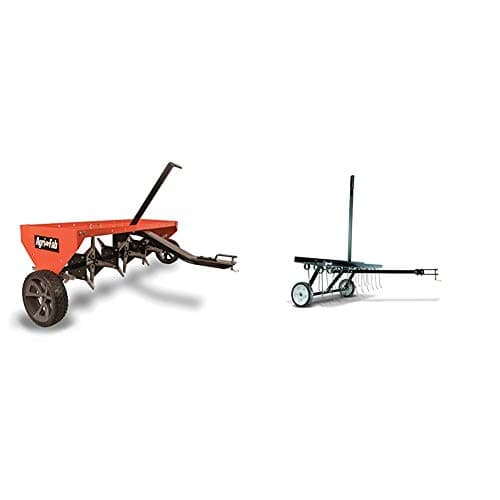
We have not tested these units. Every spec on this page comes from the manufacturer's own documentation and is linked to it. Every computed figure is arithmetic you can redo. Prices are checked daily — last verified October 24, 2026. Here is exactly how we pick.
Quick picks
Ranked on the published specs and the arithmetic below. Tap any row to jump to the full write-up. We have not tested these units -- here is exactly how we pick.
| # | Product | Best for | Score | Price |
|---|---|---|---|---|
| 1 | Agri-Fab 48" Tow-Behind Plug Aerator (45-0299) 32 galvanized knives pulling 3 in plugs across 48 in -- the only tool here that actually relieves compaction. | Best real aeration | 8.0 | |
| 2 | No photo Sun Joe AJ801E Dethatcher + Scarifier Two swappable cylinders and five depth settings -- but read the depth numbers before you assume this aerates. | Best for thatch, not compaction | 7.6 | |
| 3 | No photo Scotts Elite Spreader A 6 ft dual-rotor pattern over 20,000 sq ft, with EdgeGuard to keep product off the sidewalk. | Best overall | 8.5 |
#ad Buy links are affiliate links. Prices come from a live daily check; where we have no verified price we say "check price" rather than print a stale one.
Aeration advice is written for soil that cooperates. On clay it mostly does not: the knives skip, the plugs come up short, and people conclude the machine is no good when the real missing specification is downforce.
The short answer
Why weight is the clay specification
A core aerator works by pushing hollow knives into the ground and pulling a plug out. The only thing driving those knives down is mass. On soft ground the machine's own weight is plenty; on dry clay it is not, and the knives ride across the surface instead of entering it.
The pick: Agri-Fab 45-0299
| Spec | Published figure | Why it matters on clay |
|---|---|---|
| Weight tray capacity | 175 lb | The specification that forces depth in hard ground |
| Unit weight | 94 lb | Baseline downforce before you add anything |
| Knives | 32, galvanized | Galvanized matters where soil holds moisture |
| Plug depth | Up to 3 in | Genuine core aeration, not surface pricking |
| Working width | 48 in | Covers ground fast, which matters because this is slow work |
| Tires | 10 in flat-proof | No flat to discover the weekend you need it |
From the Agri-Fab 45-0299 product page, checked 3 September 2026.
The honest con is the one that disqualifies it for most households: it is a tow-behind and needs a lawn tractor or riding mower. Without one it does nothing at all, and 94 lb empty is awkward to move and store by hand.
#ad Check the Agri-Fab 48" Tow-Behind Plug Aerator (45-0299) price on Amazon — how we're funded.
If you do not own a tow vehicle
Rent a walk-behind core aerator for a weekend. It reaches the same published depth range and it is the standard answer for a suburban lot, because these are heavy, expensive machines used once or twice a year.
The three-question test — how often, where will it live, does it need something else you do not own — puts the tow-behind aerator at three unfavorable answers out of three for most households. The reasoning is in renting versus buying.
The two tools that will not help
- A dethatcher or scarifier. The Sun Joe AJ801E publishes a raking depth of 0 to 0.4 inches and a scarifying depth of -0.4 to 0 inches. Compaction lives at 2 to 3 inches. This is a factor of seven, and no setting closes it.
- A spike aerator or spike roller. A spike pushes soil aside and compresses it further around the hole. On clay, which is where compaction is usually worst, that is the wrong direction.
#ad Check the Sun Joe AJ801E Dethatcher + Scarifier price on Amazon — how we're funded.
Timing and moisture, which matter more on clay
- Aerate in the extension window: late August through early October, which is also the optimum seeding window.
- Moist, not wet, not bone dry. Dry clay will not release a plug; saturated clay smears rather than coring. Clay has a narrower usable window than loam.
- Load the tray before the first pass, not after you find the knives are skipping.
- Leave the plugs on the surface. They break down and return to the lawn.
- Overseed straight into the holes. Seed-to-soil contact is exactly what an aerated surface provides for free — see how to overseed a lawn.
- Feed afterward. The spreader arithmetic is in the spreader roundup.
#ad Check the Scotts Elite Spreader price on Amazon — how we're funded.
Confirming it is clay at all
A routine soil test reports estimated soil texture alongside pH, organic matter, phosphorus and potassium. That answers the clay question directly rather than by inference, and extension guidance is to test every three to five years anyway.
Low organic matter often accompanies compaction problems, and it is on the same report. The sampling method — a core 4 inches deep from 8 to 10 random locations, mixed in a plastic bucket — is in soil testing for lawns.
What we cannot tell you
Nobody publishes a soil-hardness rating, a required downforce for a given soil type, or a plug-quality figure. The per-knife downforce above is our arithmetic on Agri-Fab's published weights, not a manufacturer specification. We hold cited specs for one tow-behind aerator and have used none of this equipment.
What is published and decisive: a 175 lb weight tray, 94 lb of machine, 32 galvanized knives and up to 3 inches of plug depth — against 0.4 inches for the tool people most often buy by mistake.
The picks in full
Specs are the manufacturer's own and linked to the page they came from. Prices come from a live daily check; where we have no verified price we say so rather than print a stale one.
Agri-Fab 48" Tow-Behind Plug Aerator (45-0299)
Agri-Fab · Tow-behind (needs a tractor) · Our score 8.0/10
#ad Price as of October 24, 2026. Prices change; we check daily. How we're funded.
32 galvanized knives pulling 3 in plugs across 48 in -- the only tool here that actually relieves compaction.
Published specs
| Working width | 48 in |
|---|---|
| Knives | 32, galvanized |
| Plug depth | Up to 3 in |
| Weight tray capacity | 175 lb |
| Unit weight | 94 lb |
| Tires | 10 in flat-proof |
Source: 48" Tow Behind Plug Aerator (45-0299), agri-fab.com
10,000 sq ft at a 48 in (4 ft) working width needs 2,500 linear feet. On a 48 ft run that is about 52 passes -- an hour or so behind a tractor, against a full day with a walk-behind core aerator.
What the numbers favor
- Pulls genuine 3 in cores, which is what aeration means
- 48 in width covers ground fast
- 175 lb weight tray lets you force depth in hard soil
- Flat-proof tires
What they don't
- Needs a lawn tractor or riding mower to tow it -- useless on its own
- 94 lb empty is awkward to move and store by hand
you have no tow vehicle. Without a tractor this is a 94 lb ornament; rent a walk-behind core aerator for the weekend instead.
How it scores
Scores are our editorial weighting of the published specs above, not a test result. They are deliberately kept out of this page's structured data.
Sun Joe AJ801E Dethatcher + Scarifier
Sun Joe · Corded 120V · Our score 7.6/10
#ad No verified live price right now, so we show none rather than a stale one. How we're funded.
Two swappable cylinders and five depth settings -- but read the depth numbers before you assume this aerates.
Published specs
| Motor | 12 A |
|---|---|
| Working width | 12.6 in |
| Depth settings | 5 |
| Raking depth | 0 to 0.4 in |
| Scarifying depth | -0.4 to 0 in |
| Speed | 2,990 RPM |
| Collection bag | 8 gal |
| Tines | 27-tine dethatching cylinder |
Source: Sun Joe AJ801E Electric Lawn Dethatcher + Scarifier, shopjoe.com
What the numbers favor
- Two cylinders in one machine -- dethatch and scarify without buying twice
- Five published depth settings with actual inch figures for each mode
- 8 gallon bag means fewer stops to rake up
- Corded, so no pack to size and no runtime limit
What they don't
- This is NOT an aerator. Maximum working depth is 0.4 in; core aeration needs 2-3 in
- 12.6 in working width makes a large lawn a long afternoon
- Corded, with the working-radius limit that implies
your problem is compacted soil rather than thatch. A 0.4 in scarifier cannot relieve compaction; you need a core aerator that pulls plugs.
How it scores
Scores are our editorial weighting of the published specs above, not a test result. They are deliberately kept out of this page's structured data.
Scotts Elite Spreader
Scotts · Manual (push) · Our score 8.5/10
#ad No verified live price right now, so we show none rather than a stale one. How we're funded.
A 6 ft dual-rotor pattern over 20,000 sq ft, with EdgeGuard to keep product off the sidewalk.
Published specs
| Type | Broadcast (rotary), dual rotor |
|---|---|
| Spread width | 6 ft |
| Coverage per fill | Up to 20,000 sq ft |
| Hopper capacity | 80 lb |
| Edge control | EdgeGuard (blocks right side) |
| Tires | 10 in, foam filled |
Source: Scotts Elite Spreader (75902), scotts.com
5,000 sq ft at a 6 ft spread width needs about 833 linear feet of walking. On a 60 ft run that is roughly 14 passes -- versus 17 passes at a standard 5 ft width. That is the whole practical difference the dual rotor buys.
What the numbers favor
- 6 ft pattern against the 5 ft standard -- about 20% fewer passes
- 80 lb hopper covers 20,000 sq ft without a refill
- EdgeGuard keeps fertilizer off hard surfaces, which is where runoff starts
- Foam-filled tires cannot go flat in the shed over winter
What they don't
- 80 lb loaded is heavy to push on soft or sloped ground
- Broadcast spreaders are harder to control near beds than a drop spreader
your lawn is under about 2,000 sq ft or heavily bordered by beds. A drop spreader puts product exactly where you steer it and nowhere else.
How it scores
Scores are our editorial weighting of the published specs above, not a test result. They are deliberately kept out of this page's structured data.
Where to buy the tools on this page
Amazon affiliate links, except where a product has no Amazon listing — those go direct to the maker and earn us nothing, and the button says so. We show no price we have not verified today, so where there is no live figure the link says "check price" and takes you to the listing to read it there.
Best real aeration
Agri-Fab 48" Tow-Behind Plug Aerator (45-0299)
Agri-Fab · Tow-behind (needs a tractor)
Best for thatch, not compaction
Sun Joe AJ801E Dethatcher + Scarifier
Sun Joe · Corded 120V
Best overall
Scotts Elite Spreader
Scotts · Manual (push)
#ad As an Amazon Associate we earn from qualifying purchases, at no extra cost to you. How we're funded.
Common questions
What aerator works on clay soil?
Why is clay soil harder to aerate?
Do spike aerators work on clay?
When should I aerate clay soil?
Can I aerate clay without a tractor?
How do I know my soil is the problem?
Sources
- Agri-Fab 48" Tow Behind Plug Aerator (45-0299), agri-fab.com
- Sun Joe AJ801E Electric Lawn Dethatcher + Scarifier, shopjoe.com
- How to control thatch in your lawn, University of Minnesota Extension
- Soil testing for lawns and gardens, University of Minnesota Extension
- Scotts Elite Spreader (75902), scotts.com
Read next
- Lawn Care
Cutting the grass is a third of the job. This is the other two thirds.
- Best lawn aerator (and why most of them are not aerators)
Core aeration pulls 2-3 inch plugs; dethatchers work at 0.4 inches. Which one you need.
- Dethatching vs aerating: they solve different problems
Thatch or compaction, how to tell which you have, and the published depths that decide the tool.
- Soil testing for lawns, step by step
4 inches deep, 8 to 10 locations, every three to five years. What the report tells you.
- Fall lawn care, in the order the guidance puts it
Aeration, seeding, weeds and most feeding all land between late August and mid-October.
- Which yard tools to rent instead of buying
Frequency, storage and whether you own a tow vehicle. The rent-or-buy test in three questions.
- Best lawn roller
Filled and empty weights, drum sizes and load per inch for two tow-behind lawn rollers.