Lawn Care
Best weed puller
We do not name herbicides or give application rates. We can rank the tools that take a taproot out of the ground.
Affiliate disclosure: we earn a commission if you buy through our links, at no extra cost to you. It never changes which product we rank first — here is how we're funded.

We have not tested these units. Every spec on this page comes from the manufacturer's own documentation and is linked to it. Every computed figure is arithmetic you can redo. Prices are checked daily — last verified October 25, 2026. Here is exactly how we pick.
Quick picks
Ranked on the published specs and the arithmetic below. Tap any row to jump to the full write-up. We have not tested these units -- here is exactly how we pick.
| # | Product | Best for | Score | Price |
|---|---|---|---|---|
| 1 | No photo Yard Butler Rocket Weeder (IRKT-1000) Thirty-seven inches of powder-coated steel with an ejector button, so you never touch the weed. | Best ejector | 8.5 | |
| 2 | 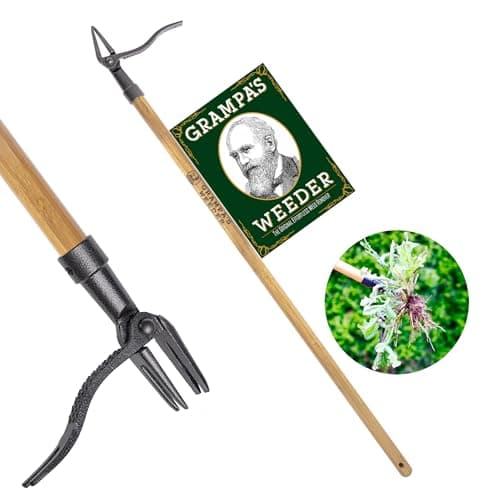 Grampa's Weeder Stand-Up Weed Puller Three pounds of bamboo and steel that takes a taproot out standing up, with no chemistry and no power. | Lightest to carry | 8.2 |
#ad Buy links are affiliate links. Prices come from a live daily check; where we have no verified price we say "check price" rather than print a stale one.
This is the one buyer's guide in the category that cannot be written about chemistry. We do not name herbicides, recommend brands of them or publish application rates — those are regulated, regionally specific and often restricted. What we can do is rank the tools that pull the plant out, and say honestly which weeds that works on.
The short answer
Does pulling weeds work?
The University of Minnesota Extension answers this plainly: "Hand-weeding or pulling weeds is also an effective way to get rid of weeds from small lawn areas. The best time to pull weeds is after a good rain or thorough watering." The same page calls the approach "low-cost but labor-intensive" and notes that it "avoids needlessly applying herbicides over the whole lawn for only a few weeds."
Two conditions are doing the work in that sentence. Small areas: this is a tool for the two dozen dandelions in a front lawn, not for a field. After rain: wet soil lets the root slide out rather than snap, and a snapped taproot is a weed you have pruned rather than removed.
The two, on published figures
| Spec | Yard Butler Rocket Weeder | Grampa's Weeder |
|---|---|---|
| Type | Stand-up puller with ejector | Stand-up 4-claw puller |
| Height | 37 in | Not published |
| Width | 7 in | Not published |
| Weight | 4 lb | 3 lb |
| Handle | Powder-coated steel | Bamboo |
| Head | Steel extractor forks | Heavy-duty steel |
| Claw count | Not published | Four |
| Ejection | Ejector button | Not published as a mechanism |
| Warranty | Guaranteed for life against defects | Not published as a term |
Transcribed from the Yard Butler Rocket Weeder and Grampa's Weeder product pages, fetched 9 September 2026.
1. Yard Butler Rocket Weeder — best documented
Thirty-seven inches tall, seven inches wide, four pounds, powder-coated steel, lifetime defect guarantee. In a category where most makers publish a photograph and a paragraph, that list is the reason it ranks first.
The height figure earns its place. At a little over three feet, the handle lands between mid-thigh and hip for most adults, which is what lets the tool be worked with a straight back and a foot on the bar rather than by stooping. That is the entire ergonomic argument for a stand-up weeder, and Yard Butler is the only one of the two that gives you the number to check it against your own height.
The ejector button is the second real feature: it clears the claws without you touching the weed or bending down. Over fifty dandelions that is fifty avoided stoops.
#ad Check the Yard Butler Rocket Weeder (IRKT-1000) price on Amazon — how we're funded.
2. Grampa's Weeder — lightest to carry
Three pounds of bamboo and steel, in a design the maker states has been in production since 1913. The bamboo shaft absorbs the shock when a root lets go suddenly, which is more pleasant than it sounds after the fortieth weed.
A pound less than the Rocket Weeder is a real difference over a long session, and weight is the one specification Grampa's does publish.
The gaps are the rest of the specification. No published overall length, so tall and short users cannot check fit before buying. No stated warranty term, despite durability being the central marketing claim. And no described ejection mechanism.
#ad Check the Grampa's Weeder Stand-Up Weed Puller price on Amazon — how we're funded.
Which weeds these actually beat
A four-claw puller grips a crown and lifts a root. That maps onto weed biology unevenly.
- Taproot weeds. Dandelion, plantain, dock. A single thick root, and the whole plant comes with it when the soil is wet. This is the job the tool was designed for.
- Spreading and creeping weeds. Anything that runs sideways underground or over the surface leaves material behind when the crown lifts. You will be back.
- Grassy weeds. Fibrous roots with no single anchor. The claws pull a tuft and leave the rest, so mechanical removal is at best a partial answer.
Who should skip both
- Anyone with a lawn that is more weed than grass. At that point the problem is the stand, not the individual plants — start with weed control basics and a soil test.
- Bed and gravel weeding. These are lawn tools. They need turf to push against and soil that gives.
- Dry, compacted ground. Water it first or the claws will not close around the root. Compaction itself is worth addressing — see aerators.
What we cannot tell you
We have not counted weeds pulled per hour with either tool, and neither maker publishes a claw material grade, a jaw opening dimension or a maximum root diameter. Grampa's publishes no length at all. We also do not publish herbicide recommendations, product names or application rates anywhere on this site, so if the honest answer to your weed problem is a regulated product, your state extension service is the right source and not us.
The picks in full
Specs are the manufacturer's own and linked to the page they came from. Prices come from a live daily check; where we have no verified price we say so rather than print a stale one.
Yard Butler Rocket Weeder (IRKT-1000)
Yard Butler · Hand tool (no power) · Our score 8.5/10
#ad No verified live price right now, so we show none rather than a stale one. How we're funded.
Thirty-seven inches of powder-coated steel with an ejector button, so you never touch the weed.
Published specs
| Type | Stand-up weed puller with ejector |
|---|---|
| Height | 37 in |
| Width | 7 in |
| Weight | 4 lb |
| Construction | Powder-coated steel |
| Ejection | Ejector button |
| Claw count | Not published |
| Warranty | Guaranteed for life against defects |
Source: Rocket Weeder IRKT-1000, yardbutler.com
37 inches is a little over 3 feet. For most adults that puts the handle between mid-thigh and hip height, so the tool is worked with a straight back and a foot on the bar rather than by stooping. Yard Butler publishes the number; the comparable tool from Grampa's does not, which is the practical difference between the two.
What the numbers favor
- Publishes height, width and weight -- rare in hand tools
- Ejector button means no bending to clear the claws
- Lifetime defect guarantee stated as a term
- All-steel construction with a powder coat
What they don't
- 4 lb, a pound heavier than the bamboo-handled alternative
- Claw count and material grade not published
- 37 in is fixed -- no adjustment for very tall or very short users
you want the lightest tool in the shed. A pound sounds trivial until the fiftieth dandelion.
How it scores
Scores are our editorial weighting of the published specs above, not a test result. They are deliberately kept out of this page's structured data.
Grampa's Weeder Stand-Up Weed Puller
Grampa's Gardenware · Hand tool (no power) · Our score 8.2/10
#ad Price as of October 25, 2026. Prices change; we check daily. How we're funded.
Three pounds of bamboo and steel that takes a taproot out standing up, with no chemistry and no power.
Published specs
| Type | Stand-up 4-claw taproot puller |
|---|---|
| Handle | Bamboo |
| Head | Heavy-duty steel |
| Weight | 3 lb |
| Overall length | Not published |
| Design in production since | 1913 |
| Warranty | Not published as a term |
Source: Grampa's Weeder - The Original Stand Up Weed Puller, grampasweeder.com
What the numbers favor
- 3 lb, the lightest tool of its type we hold specs for
- No bending or kneeling, which is the entire point
- Bamboo shaft absorbs the shock of a root letting go
- Nothing to charge, mix, spray or store as a regulated product
What they don't
- No published length, so tall and short users cannot check fit before buying
- No stated warranty term despite the durability marketing
- Four claws struggle on fibrous, spreading weeds with no single taproot
your weed problem is creeping or rhizomatous rather than a taproot. Pulling the crown off a spreading weed leaves the runners in the ground.
How it scores
Scores are our editorial weighting of the published specs above, not a test result. They are deliberately kept out of this page's structured data.
Where to buy the tools on this page
Amazon affiliate links, except where a product has no Amazon listing — those go direct to the maker and earn us nothing, and the button says so. We show no price we have not verified today, so where there is no live figure the link says "check price" and takes you to the listing to read it there.
Best ejector
Yard Butler Rocket Weeder (IRKT-1000)
Yard Butler · Hand tool (no power)
Lightest to carry
Grampa's Weeder Stand-Up Weed Puller
Grampa's Gardenware · Hand tool (no power)
#ad As an Amazon Associate we earn from qualifying purchases, at no extra cost to you. How we're funded.
Common questions
What is the best weed puller?
Does pulling weeds actually work?
When is the best time to pull weeds?
Do stand-up weeders work on crabgrass?
Why does this site not recommend weed killers?
Sources
Read next
- Lawn Care
Cutting the grass is a third of the job. This is the other two thirds.
- Lawn weed control starts with the lawn
Weeds signal a condition. The cultural fixes, and the published timing windows.
- Doing your own lawn care: what to do, and when
Four jobs, the right order, the right season. The sequence matters more than the equipment.
- How to overseed a lawn
Published extension seeding rates, the late-summer window, and the passes-per-lawn arithmetic.
- Cool-season grass types, and how to tell which you have
Published mowing heights, nitrogen rates and tolerances for each cool-season species.