Lawn Care
Best crabgrass preventer, by what it actually asks of you
Same job, same season, and ten times the material between the first product and the last. The rate is the whole comparison.
Affiliate disclosure: we earn a commission if you buy through our links, at no extra cost to you. It never changes which product we rank first — here is how we're funded.
We have not tested these units. Every spec on this page comes from the manufacturer's own documentation and is linked to it. Every computed figure is arithmetic you can redo. Prices are checked daily — last verified October 7, 2026. Here is exactly how we pick.
Quick picks
Ranked on the published specs and the arithmetic below. Tap any row to jump to the full write-up. We have not tested these units -- here is exactly how we pick.
| # | Product | Best for | Score | Price |
|---|---|---|---|---|
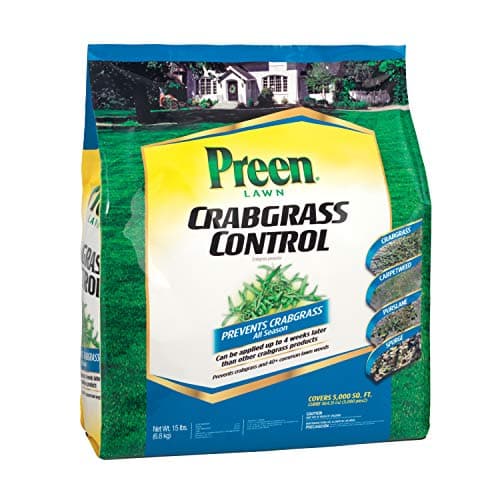
| 1 | Preen Lawn Crabgrass Control, 15 lb The only one of the three that publishes a percentage for its active ingredient and a window that still works four weeks after the crabgrass has come up. | Best second chance | 9.0 | |
| 2 | 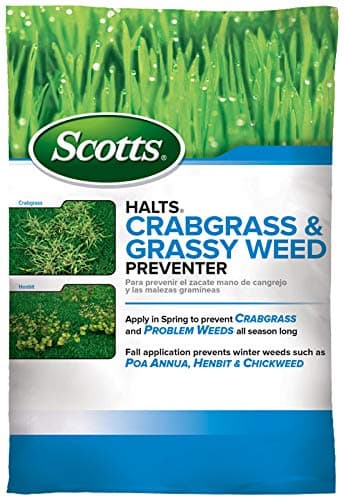 Scotts Halts Crabgrass & Grassy Weed Preventer Pendimethalin at the lowest material volume of the three, with a published fall application window neither of the others matches. | Best coverage per dollar | 8.6 | |
| 3 |  Espoma Organic Weed Preventer Plus Lawn Food, 25 lb 100% corn gluten meal, children and pets on the lawn the same day -- at ten times the material through the spreader. | Best if no synthetic herbicide is allowed | 7.2 |
#ad Buy links are affiliate links. Prices come from a live daily check; where we have no verified price we say "check price" rather than print a stale one.
Most lawns with a crabgrass problem do not have a crabgrass product problem. They have a mowing height problem, a thin-turf problem or a watering problem, and our weed control guide puts those first on purpose. This page is for the reader who has read that, fixed what they can and still wants the bag — and the useful comparison between the three bags is not what they kill. It is what they ask you to carry.
The short answer
The three, on published figures
| Product | Active material | Published coverage | Rate per 1,000 sq ft | Post-emergence window | Applications per year |
|---|---|---|---|---|---|
| Preen Lawn Crabgrass Control | 0.19% dithiopyr (Dimension) | 15 lb covers 5,000 sq ft | 3.0 lb | Up to 4 weeks after germination | One, for up to 4 months of control |
| Scotts Halts | Pendimethalin, percentage not published | 20.12 lb covers 10,000 sq ft | About 2.01 lb | None -- does not control mature crabgrass | One in spring, optionally one in fall |
| Espoma Organic Weed Preventer | 100% corn gluten meal | 25 lb covers up to 1,250 sq ft at the weed rate | 20 lb | None -- prevents seed establishment only | Two: early spring and early fall |
Active ingredients, coverage figures, windows and application counts transcribed from each maker's own product page, all three cited below. Espoma publishes its rate directly; the Scotts rate is our division of its published coverage by area, and the Preen rate is the same arithmetic. No price appears here — prices move daily and the buttons carry the live ones.
Read the fourth column top to bottom. Three products sold on the same shelf for the same month of the year, asking for 3 lb, 2 lb and 20 lb of granules per thousand square feet. That spread is the finding, and it is the thing that decides how many trips to the car your Saturday involves.
What ten times the rate means in bags
1. Preen Lawn Crabgrass Control — the one with a second chance
Preen publishes 0.19% dithiopyr (Dimension), a 15 lb bag covering 5,000 sq ft, application in spring or fall before germination, post-emergence effectiveness up to four weeks after crabgrass has germinated, up to four months of control, a 40-plus weed list and a safe-grass list that runs to seven warm-season and five cool-season species including creeping bentgrass.
Who it is for: anyone who is not certain they will hit the window. Soil temperature moves with the weather and most people apply pre-emergent a week or two late; this is the only product here that is still worth putting down when you do. It is also the only one safe on creeping bentgrass, which the Scotts product explicitly excludes.
Who should skip it: anyone who tracks soil temperature and applies on time. You are paying for a post-emergence window you will not use, and Scotts treats a third more area per pound.
#ad Check the Preen Lawn Crabgrass Control, 15 lb price on Amazon — how we're funded.
2. Scotts Halts — the most area per pound, and a fall list
Scotts publishes pendimethalin as the active ingredient without a percentage, one 20.12 lb bag covering 10,000 sq ft, early spring application on a dry lawn for season-long control, a separate August-to-October fall window, safety on all lawns and grass types except Dichondra and Bentgrass, a seven-species spring weed list, a five-species fall list including moss (except in California) and Poa annua, and the plain statement that it does not control mature crabgrass or other existing weeds.
Who it is for: the reader with a larger lawn and a calendar. At about 2.01 lb per 1,000 sq ft it is the lowest material volume here, and the published fall window with its own distinct weed list is genuinely a second product inside the same bag — Poa annua and henbit are autumn germinators and neither of the other two makers names them.
Who should skip it: anyone with a bentgrass or Dichondra lawn, which Scotts excludes by name; and anyone who has already seen crabgrass this year, because Scotts tells you in writing that this bag will not help.
#ad Check the Scotts Halts Crabgrass & Grassy Weed Preventer price on Amazon — how we're funded.
3. Espoma Organic Weed Preventer — if no synthetic is allowed
Espoma publishes 100% corn gluten meal, a 25 lb bag, 20 lb per 1,000 sq ft for weed prevention (covering up to 1,250 sq ft) or 10 lb per 1,000 sq ft for feeding only (up to 2,500 sq ft), two applications a year in early spring and early fall, application to a dry recently mown lawn with a drop or broadcast spreader, light watering if no rain is expected within 24 hours, re-entry for children and pets after application, and a clear exclusion for seeding and over-seeding.
Who it is for: the reader for whom a synthetic pre-emergent is not an option — a household rule, a rental agreement, a certification, a conviction. On that basis it is not the third choice on this page; it is the only choice, and it is a real product rather than a gesture. It also adds nitrogen while it works, which neither other product does.
Who should skip it: anyone over about a quarter acre, for the reason in the arithmetic above — 218 lb of granules, twice a year. And anyone expecting herbicidal control: corn gluten suppresses seed establishment, Espoma does not claim more, and we will not claim more on its behalf.
#ad Check the Espoma Organic Weed Preventer Plus Lawn Food, 25 lb price on Amazon — how we're funded.
Who should not buy any of these
- Anyone overseeding this year. A pre-emergent and new seed are mutually exclusive in the same season on the same ground. Pick one.
- Anyone who has not raised their mowing height. Crabgrass is a sun germinator and a taller canopy shades it out. Free, and it works on next year's seed bank as well as this year's — the mowing height guide has the numbers.
- Anyone whose crabgrass is already seeding. By late summer the plant has done its damage and dropped next year's seed; a pre-emergent applied now is for next spring, not for the plant you are looking at.
- Anyone without a spreader. Every rate on this page assumes even distribution, and hand-scattering a pre-emergent produces stripes of overdose and gaps of nothing. See spreader settings and our EdgeGuard DLX review.
What we cannot tell you
We have not applied any of these products or measured a result. Two of the three publish no active-ingredient percentage, so for Scotts and Espoma we cannot tell you how much chemistry is actually reaching the soil — only how much granule. None of the three publishes a soil-temperature trigger, which is the only correct way to time a pre-emergent, so the timing advice on this page comes from our own weed control guide rather than from any maker. Neither Scotts nor Espoma publishes a tested time to effect. Scotts publishes no grass-type list beyond its two exclusions, and BioAdvanced-style re-entry statements appear only on the Espoma page. Crabgrass pressure also varies enormously with your own soil seed bank, which no product can know and no test we are aware of will tell you. And the dollar comparison that would finish this page properly is one we deliberately do not print, because prices move daily and a stale number is worse than none.
The picks in full
Specs are the manufacturer's own and linked to the page they came from. Prices come from a live daily check; where we have no verified price we say so rather than print a stale one.
Preen Lawn Crabgrass Control, 15 lb
Preen · Granular pre-emergent · Our score 9.0/10
#ad Price as of October 7, 2026. Prices change; we check daily. How we're funded.
The only one of the three that publishes a percentage for its active ingredient and a window that still works four weeks after the crabgrass has come up.
Published specs
| Active ingredient | 0.19% Dithiopyr (Dimension) |
|---|---|
| Bag and coverage | 15 lb covers 5,000 sq ft |
| Pre-emergent window | Spring or fall, before weed seed germination |
| Post-emergent window | Effective up to 4 weeks after crabgrass has germinated |
| Duration | Up to 4 months of crabgrass control |
| Warm-season grasses | Bermudagrass, centipedegrass, St. Augustinegrass, buffalograss, bahiagrass, carpetgrass, zoysiagrass |
| Cool-season grasses | Kentucky bluegrass, perennial ryegrass, tall fescue, fine fescue, creeping bentgrass |
| Weeds controlled | 40+ species including crabgrass, chickweed, henbit, yellow foxtail, spurge |
| Guarantee | Money back if not satisfied when used as directed |
Source: Preen Lawn Crabgrass Control, preen.com
15 lb over 5,000 sq ft = 3.0 lb per 1,000 sq ft, about 1.5x the Scotts rate and one-seventh the Espoma rate. At 0.19% dithiopyr that is 3.0 x 0.0019 = 0.0057 lb of active ingredient per 1,000 sq ft, or about 0.09 oz. Preen is the only one of the three that publishes enough to compute this at all.
What the numbers favor
- Publishes the active ingredient AND its percentage, so the rate is checkable
- A four-week post-emergence window -- the only forgiveness any of the three offers
- Safe on creeping bentgrass, which the Scotts product explicitly excludes
- Names both the warm and cool season grass lists rather than saying all lawns
- Up to four months of stated control from one application
What they don't
- 3.0 lb per 1,000 sq ft is half again the Scotts rate, so a bag goes less far
- Does not publish a separate fall weed list the way Scotts does
- The 40+ weed list is on the label rather than summarized on the page
you got the timing right and only need pre-emergence. You are paying for a post-emergence window you will not use, and the Scotts product treats the same area for less.
How it scores
Scores are our editorial weighting of the published specs above, not a test result. They are deliberately kept out of this page's structured data.
Scotts Halts Crabgrass & Grassy Weed Preventer
Scotts · Granular pre-emergent · Our score 8.6/10
#ad Price as of October 7, 2026. Prices change; we check daily. How we're funded.
Pendimethalin at the lowest material volume of the three, with a published fall application window neither of the others matches.
Published specs
| Active ingredient | Pendimethalin (percentage not published) |
|---|---|
| Published coverage | One 20.12 lb bag covers 10,000 sq ft |
| Bag on this listing | 10.06 lb, exactly half the published bag |
| Spring window | Early spring, on a dry lawn, for season-long control |
| Fall window | August to October |
| Safe on | All lawns and grass types except Dichondra or Bentgrass |
| Spring weeds | Crabgrass, foxtail, spurge, barnyardgrass, fall panicum, goosegrass, oxalis |
| Fall weeds | Moss (except California), Poa annua, henbit, corn speedwell, chickweed |
| Existing weeds | Does not control mature crabgrass or other existing weeds |
| Guarantee | ScottsMiracle-Gro No-Quibble Guarantee |
Source: Scotts Halts Crabgrass & Grassy Weed Preventer, scottsmiraclegro.com
20.12 lb over 10,000 sq ft = 2.012 lb per 1,000 sq ft. Scotts publishes the coverage but not the rate, so the rate is our division. The 10.06 lb bag is exactly half the published bag, which puts it at 5,000 sq ft on the same arithmetic.
What the numbers favor
- The lowest material volume per 1,000 sq ft of the three, by a factor of ten
- Publishes a distinct fall weed list, including Poa annua, that neither other product names
- Safe on every grass type except two, and Scotts names both
- Says plainly that it does not control weeds that have already emerged
What they don't
- Does not publish the pendimethalin percentage, so the rate cannot be checked against the label
- Does not publish an application rate at all, only a coverage figure
- No post-emergence window; once crabgrass is up this product is finished for the year
- Excludes Dichondra and Bentgrass lawns
the crabgrass is already up. This is a pre-emergent only and Scotts says so -- a product with a post-emergence window is the one you need.
How it scores
Scores are our editorial weighting of the published specs above, not a test result. They are deliberately kept out of this page's structured data.
Espoma Organic Weed Preventer Plus Lawn Food, 25 lb
Espoma · Granular pre-emergent · Our score 7.2/10
#ad Price as of October 7, 2026. Prices change; we check daily. How we're funded.
100% corn gluten meal, children and pets on the lawn the same day -- at ten times the material through the spreader.
Published specs
| Active material | 100% corn gluten meal |
|---|---|
| Bag | 25 lb |
| Weed-prevention rate | 20 lb per 1,000 sq ft; the bag covers up to 1,250 sq ft |
| Feeding-only rate | 10 lb per 1,000 sq ft; the bag covers up to 2,500 sq ft |
| Applications per year | Two: early spring before germination, and early fall |
| Spreader | Drop or broadcast |
| Re-entry | Children and pets can play on the lawn after application |
| Not for | Seeding a new lawn or over-seeding |
| Guaranteed analysis | Not published on the product page |
| Existing weeds | Prevents seed establishment; does not kill established weeds |
Source: Turf-tone Weed Preventer Plus Lawn Food (100% corn gluten meal), espoma.com
Espoma's own rate is 20 lb per 1,000 sq ft against our computed 2.01 lb for Scotts Halts: 20 / 2.012 = 9.94x the granules through the spreader, and 20 / 3.0 = 6.7x the Preen rate. The bag treats 1,250 sq ft against the Scotts 10.06 lb bag's 5,000, so the same lawn takes four times as many bags. Both rates are the makers' own published figures.
What the numbers favor
- The only one of the three a reader with a no-synthetic rule can use at all
- Publishes re-entry plainly: children and pets on the lawn after application
- Feeds the lawn as it works -- the other two contribute no nitrogen
- Publishes two distinct rates, for weed prevention and for feeding only
- States its own exclusion (not for seeding or over-seeding) rather than leaving it to the label
What they don't
- 20 lb per 1,000 sq ft is ten times the Scotts rate, so the bag treats 1,250 sq ft instead of 5,000
- No guaranteed analysis on the product page, so the nitrogen it adds cannot be sized
- Two applications per year rather than one
- No post-emergence window and no stated duration of control
- Corn gluten suppresses seed establishment; it is not a herbicide and Espoma does not claim it is one
your lawn is over about a quarter acre. At 20 lb per 1,000 sq ft a quarter acre is roughly 218 lb of granules -- nine bags, carried and spread, twice a year.
How it scores
Scores are our editorial weighting of the published specs above, not a test result. They are deliberately kept out of this page's structured data.
Where to buy the tools on this page
Every link below is an Amazon affiliate link. We show no price we have not verified today, so where there is no live figure the link says "check price" and takes you to the listing to read it there.
Best second chance
Preen Lawn Crabgrass Control, 15 lb
Preen · Granular pre-emergent
Best coverage per dollar
Scotts Halts Crabgrass & Grassy Weed Preventer
Scotts · Granular pre-emergent
Best if no synthetic herbicide is allowed
Espoma Organic Weed Preventer Plus Lawn Food, 25 lb
Espoma · Granular pre-emergent
#ad As an Amazon Associate we earn from qualifying purchases, at no extra cost to you. How we're funded.
Common questions
What is the best crabgrass preventer?
When should crabgrass preventer go down?
Does organic crabgrass preventer work?
How much crabgrass preventer do I need?
Will crabgrass preventer kill crabgrass that is already there?
Can you put down crabgrass preventer and grass seed together?
Sources
Read next
- Lawn Care
Cutting the grass is a third of the job. This is the other two thirds.
- Lawn weed control starts with the lawn
Weeds signal a condition. The cultural fixes, and the published timing windows.
- Doing your own lawn care: what to do, and when
Four jobs, the right order, the right season. The sequence matters more than the equipment.
- Best lawn fertilizer
Analysis and coverage converted to pounds of nitrogen per 1,000 sq ft, against the Extension limit.
- Spreader settings: how to calibrate instead of guessing
Calibrate a spreader by weight in twenty minutes, with the passes and rate arithmetic.
- Scotts Turf Builder EdgeGuard DLX review: calibrated, capacious, undocumented
Everything Scotts publishes about its best-selling spreader, the three figures it does not, and what a 15,000 sq ft hopper weighs when full.
- Soil testing for lawns, step by step
4 inches deep, 8 to 10 locations, every three to five years. What the report tells you.