Lawn Care
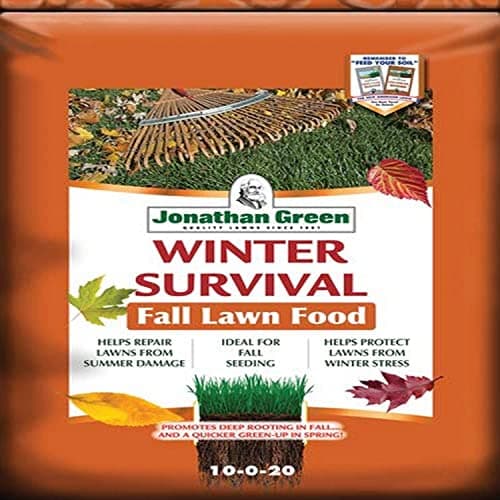
Best winterizer fertilizer, and why the two bags disagree
One of these is a fall nitrogen feed wearing the word winterizer. The other is a potassium application. They are not substitutes.
Affiliate disclosure: we earn a commission if you buy through our links, at no extra cost to you. It never changes which product we rank first — here is how we're funded.
We have not tested these units. Every spec on this page comes from the manufacturer's own documentation and is linked to it. Every computed figure is arithmetic you can redo. Prices are checked daily — last verified October 11, 2026. Here is exactly how we pick.
Quick picks
Ranked on the published specs and the arithmetic below. Tap any row to jump to the full write-up. We have not tested these units -- here is exactly how we pick.
| # | Product | Best for | Score | Price |
|---|---|---|---|---|
| 1 | Jonathan Green Winter Survival Fall Lawn Fertilizer (10-0-20) Twice the potassium and a published 3 lb per 1,000 sq ft rate -- the only fall bag here whose nutrients you can compute from the maker's own figures. | Best potassium for winter hardiness | 8.8 | |
| 2 | 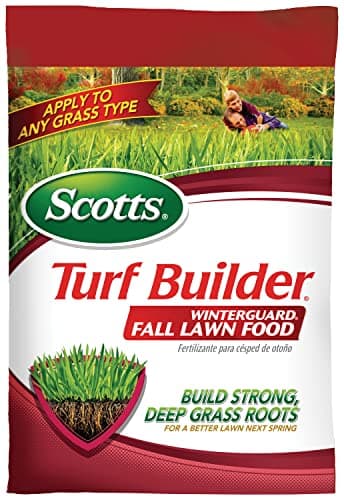 Scotts Turf Builder WinterGuard Fall Lawn Food A 32-0-10 fall feed with the widest application window in the category -- August to November -- and far more nitrogen than potassium, which is the opposite of what the word winterizer implies. | Best fall nitrogen feed | 8.0 |
#ad Buy links are affiliate links. Prices come from a live daily check; where we have no verified price we say "check price" rather than print a stale one.
"Winterizer" is a marketing word, not a formulation standard, and the two bags most people choose between prove it. Put their published analyses side by side and they are nearly mirror images: one is 32% nitrogen and 10% potash, the other is 10% nitrogen and 20% potash. They are sold for the same month and they do different things.
The short answer
The two, on published figures
| Jonathan Green Winter Survival | Scotts Turf Builder WinterGuard | |
|---|---|---|
| Guaranteed analysis | 10-0-20 plus 3% iron | 32-0-10 |
| Application rate | 3 lb per 1,000 sq ft (published by the maker) | Not published; about 2.5 lb per 1,000 from the retail bag weight |
| Coverage | 15 lb covers 5,000 sq ft; 45 lb covers 15,000 | 4,000 sq ft; a 12,000 sq ft option is listed |
| Nitrogen per 1,000 sq ft | 0.30 lb | About 0.80 lb |
| Potash per 1,000 sq ft | 0.60 lb | About 0.25 lb |
| Iron | 3% (0.09 lb per 1,000 sq ft) | None published |
| Slow release | 25%; feeds for 2 months | Not published |
| Window | Late August to early November | Anytime in fall, August to November |
| Temperature condition | Air at least 50 F | None published |
| Grass types | Not restricted on the page | Any grass type |
| Burn guarantee | Not published | Guaranteed not to burn when used as directed |
| Regional limits | Florida: max 2 applications/yr; not N. Florida in winter | None published |
Analyses, coverage, rates, windows and conditions transcribed from each maker's own product page, both cited below. The per-1,000 nutrient figures are our arithmetic. Jonathan Green's come from its own published rate; the Scotts figures rest on the retail listing's 10 lb bag weight, because Scotts publishes no bag weight on its page — the same gap we recorded on its all-season bag.
The potassium gap, worked out
This is the finding that makes the page. Both bags are sold as the fall application, and on the nutrient that the fall application is supposed to be about, they are a factor of 2.4 apart.
Which one to buy, who each suits, and who should skip both
Buy Jonathan Green Winter Survival if you fed the lawn during the season and the fall application is specifically about getting it through winter; you want a rate you can verify from the maker rather than a retailer; you want iron for color without pushing growth; or you want a temperature condition rather than only a calendar window, which matters if you are near the end of the season.
Buy Scotts WinterGuard if the lawn is genuinely hungry and has not been fed since spring; you are applying early in the window, when 0.80 lb of nitrogen still has growing season left to be used in; you want the no-burn guarantee in writing; or you want a single bag that is explicitly safe on any grass type with no exclusions published.
Skip both if you are seeding this fall — a starter fertilizer is formulated for establishment and is the right bag, which is covered in the lawn renovation product kit. Skip both if you have not fed the lawn at all this year and have no soil test, because the phosphorus and pH questions come first: soil test kits and lawn lime cover that order.
#ad Check the Jonathan Green Winter Survival Fall Lawn Fertilizer (10-0-20) price on Amazon — how we're funded.
#ad Check the Scotts Turf Builder WinterGuard Fall Lawn Food price on Amazon — how we're funded.
Timing, and the one condition worth following
- Work to the temperature, not the date. Jonathan Green publishes a 50 F minimum air temperature. Scotts publishes a calendar window and no condition, which is easier to follow and less useful — November in Georgia and November in Minnesota are different applications.
- Once, not twice. Scotts publishes one fall application. Jonathan Green publishes Florida limits of no more than two applications a year across the whole product.
- Spread it evenly or do not bother. At 3 lb per 1,000 sq ft an uneven pass shows as stripes next spring. Our EdgeGuard DLX review and spreader settings cover calibration.
- Keep the iron bag off concrete. 3% iron will mark paths and drives. The cheapest fix is not sweeping, it is not throwing it there — which is what a one-sided spreader shutter is for.
- Fit it into the rest of the fall jobs. The fall lawn care guide has the sequence and the lawn care schedule has the year.
What we cannot tell you
Whether either bag measurably improves winter survival on your lawn. Neither maker publishes a trial, a cold-tolerance figure or a hardiness rating — the potassium argument is agronomic reasoning, widely held, and not something either label demonstrates. Scotts publishes no bag weight, no application rate and no slow-release share, so its figures on this page rest on a retailer's weight and we say so each time. Jonathan Green's own page says 25% slow release where an older store listing says 30%, and we cannot reconcile them. The Amazon listing for the Jonathan Green bag does not print a weight at all, so which of its two sizes you receive is not stated on the listing. We have applied neither product and measured nothing. And no fall fertilizer can tell you what your soil already holds — only a test does that.
The picks in full
Specs are the manufacturer's own and linked to the page they came from. Prices come from a live daily check; where we have no verified price we say so rather than print a stale one.
Jonathan Green Winter Survival Fall Lawn Fertilizer (10-0-20)
Jonathan Green · Granular fertilizer · Our score 8.8/10
#ad Price as of October 11, 2026. Prices change; we check daily. How we're funded.
Twice the potassium and a published 3 lb per 1,000 sq ft rate -- the only fall bag here whose nutrients you can compute from the maker's own figures.
Published specs
| Guaranteed analysis | 10-0-20, plus 3% iron |
|---|---|
| Published rate | 3 lb of product per 1,000 sq ft |
| Coverage | 15 lb covers up to 5,000 sq ft; 45 lb covers up to 15,000 sq ft |
| Application window | Late August to early November, when air temperatures are at least 50 F |
| Slow release | 25% slow release; feeds the lawn for 2 months |
| Item on this listing | Item 12400; the listing does not print a bag weight |
| Florida limits | No more than 2 applications per year; not on North Florida turf in winter |
| Spreader | Apply with a lawn spreader using the chart on the bag |
| Older figure in circulation | An older store listing cites 30% slow release against the product page's 25% |
Source: Winter Survival Fall Lawn Fertilizer, jonathangreen.com
Jonathan Green publishes the rate itself: 3 lb of product per 1,000 sq ft. 3 x 0.10 = 0.30 lb of nitrogen, 3 x 0.20 = 0.60 lb of potash and 3 x 0.03 = 0.09 lb of iron. Against the Scotts fall bag's 0.80 lb N and 0.25 lb K2O, this is 38% of the nitrogen and 2.4x the potassium. Two bags sold for the same month, pulling in opposite directions. The 15 lb bag over 5,000 sq ft confirms the rate independently: 15 / 5 = 3.0.
What the numbers favor
- Publishes its own application rate, so every nutrient figure is computable without a retailer
- 0.60 lb of potash per 1,000 sq ft, 2.4x the Scotts fall bag
- 3% iron published, which the Scotts fall bag does not carry at all
- A published slow-release share (25%) and a feeding duration (2 months)
- A minimum air temperature (50 F) rather than only a calendar window
- Publishes its Florida application limits on the label rather than leaving them to the fine print
What they don't
- 0.30 lb of nitrogen per 1,000 sq ft is modest if the lawn is genuinely hungry
- The product page says 25% slow release where an older store listing says 30% -- the two conflict
- The Amazon listing does not print a bag weight, so which of the two sizes you are buying is not stated
- Narrower window than Scotts at the front end (late August rather than August)
- No burn guarantee published
your lawn needs feeding more than it needs hardening. At 0.30 lb of nitrogen this is a potassium application with some nitrogen attached, not a full fall feed.
How it scores
Scores are our editorial weighting of the published specs above, not a test result. They are deliberately kept out of this page's structured data.
Scotts Turf Builder WinterGuard Fall Lawn Food
Scotts · Granular fertilizer · Our score 8.0/10
#ad Price as of October 11, 2026. Prices change; we check daily. How we're funded.
A 32-0-10 fall feed with the widest application window in the category -- August to November -- and far more nitrogen than potassium, which is the opposite of what the word winterizer implies.
Published specs
| Guaranteed analysis | 32-0-10 |
|---|---|
| Published coverage | 4,000 sq ft; a 12,000 sq ft option is also listed |
| Bag on this listing | 10 lb (retail listing; Scotts publishes no weight) |
| Application window | In the fall, anytime between August and November |
| Applications | Once in the fall |
| Grass types | Any grass type |
| Published claim | Builds strong, deep roots over the winter |
| Burn guarantee | Guaranteed not to burn your lawn when used as directed |
| Bag weight, application rate | Not published by Scotts |
| Winter hardiness rating | Not published |
Source: Scotts Turf Builder WinterGuard Fall Lawn Food, scottsmiraclegro.com
Scotts publishes 4,000 sq ft of coverage and a 32-0-10 analysis but no bag weight, so the rate has to come from the retail listing's 10 lb. 10 / 4 = 2.5 lb of product per 1,000 sq ft -- the same rate Scotts' other Turf Builder bags imply. 2.5 x 0.32 = 0.80 lb of nitrogen and 2.5 x 0.10 = 0.25 lb of potash. The nitrogen figure sits under the 1 lb per application ceiling UMN Extension publishes. The potash figure is the one worth noticing: it is less than half what the competing fall bag applies.
What the numbers favor
- The widest published fall window in the category: August through November
- 0.80 lb of nitrogen per 1,000 sq ft, under the Extension single-application ceiling
- Safe on any grass type, with no exclusions published
- A written no-burn guarantee, which the alternative does not publish
- One application rather than a program
What they don't
- Scotts publishes no bag weight, so the rate rests on a retailer's figure
- 0.25 lb of potash per 1,000 sq ft is the lower of the two fall bags by a factor of 2.4
- No iron, where the alternative publishes 3%
- No slow-release percentage and no feeding duration published
- No minimum soil or air temperature published, so the end of the window is a calendar date rather than a condition
you are feeding specifically for winter hardiness rather than for fall growth. The potassium share is what that argument rests on, and this bag publishes the smaller one.
How it scores
Scores are our editorial weighting of the published specs above, not a test result. They are deliberately kept out of this page's structured data.
Where to buy the tools on this page
Every link below is an Amazon affiliate link. We show no price we have not verified today, so where there is no live figure the link says "check price" and takes you to the listing to read it there.
Best potassium for winter hardiness
Jonathan Green Winter Survival Fall Lawn Fertilizer (10-0-20)
Jonathan Green · Granular fertilizer
Best fall nitrogen feed
Scotts Turf Builder WinterGuard Fall Lawn Food
Scotts · Granular fertilizer
#ad As an Amazon Associate we earn from qualifying purchases, at no extra cost to you. How we're funded.
Common questions
What is the best winterizer fertilizer?
What does a winterizer fertilizer actually do?
When should you apply winterizer fertilizer?
How much nitrogen is in a winterizer?
Can you apply winterizer and grass seed together?
Is iron important in a fall fertilizer?
Sources
Read next
- Lawn Care
Cutting the grass is a third of the job. This is the other two thirds.
- Best lawn fertilizer
Analysis and coverage converted to pounds of nitrogen per 1,000 sq ft, against the Extension limit.
- Fall lawn care, in the order the guidance puts it
Aeration, seeding, weeds and most feeding all land between late August and mid-October.
- What the three numbers on a fertilizer bag mean
N-P-K decoded, UMN's published nitrogen rates, and the maths that turns a bag into pounds.
- Doing your own lawn care: what to do, and when
Four jobs, the right order, the right season. The sequence matters more than the equipment.
- Scotts Turf Builder EdgeGuard DLX review: calibrated, capacious, undocumented
Everything Scotts publishes about its best-selling spreader, the three figures it does not, and what a 15,000 sq ft hopper weighs when full.
- Best lawn lime, and the one product that goes the other way
Published rates by measured pH, 3.6 against 12 lb per 1,000 sq ft, and the only published time to effect in the category.