Leaf Blowers
Spring yard cleanup, in the order that works
The mistake is starting with the mower. Everything in spring goes better if the debris comes off first and the lawn gets time to wake up.
Affiliate disclosure: we earn a commission if you buy through our links, at no extra cost to you. It never changes which product we rank first — here is how we're funded.
We have not tested these units. Every spec on this page comes from the manufacturer's own documentation and is linked to it. Every computed figure is arithmetic you can redo. Prices are checked daily — last verified October 23, 2026. Here is exactly how we pick.
Spring is the season people attack their lawn and the season the lawn is least able to take it. Everything is soft, everything is waking up, and half the standard advice belongs in September. Here is a sequence that does each job once.
The order
Step 1: clear the debris, gently
Winter leaves matted onto turf are the first problem. Extension guidance on clippings applies equally here: material that mats together smothers the grass, reducing oxygen and moisture at the crown. A layer that has sat wet all winter is exactly that.
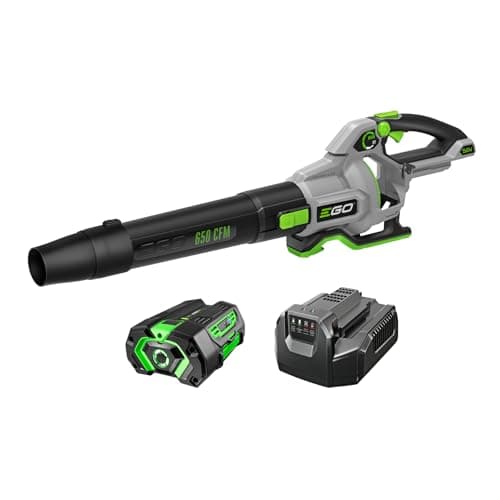
A blower is the right tool because it applies no ground pressure. Spring soil is soft and saturated, and a metal rake dragged across it pulls at crowns and compacts what you walk on. Work at the bottom of the variable range — EGO publishes 225 CFM on the LB6504 — and lift rather than scour.
#ad Check the EGO Power+ 650 CFM Blower LB6504 price on Amazon — how we're funded.
Step 2: look at what the winter left
Before any machine touches the lawn, walk it. You are looking for four things, and each one has a different answer.
| What you find | What it means | What to do, and when |
|---|---|---|
| Matted, greasy patches under leaf litter | Snow mold damage or smothering | Clear the debris, rake very lightly to lift the mat, then wait; most recovers |
| Bare patches and thin areas | Wear, salt damage or winter kill | Seed in autumn if you can wait; extension puts the optimum window late August to early September |
| Spongy layer between green and soil | Thatch. Over 1/2 inch is a problem | Dethatch in late August to early October, not now |
| Water pooling, or soil you cannot push a screwdriver into | Compaction | Core aerate late August through early October |
| Ruts and tracks | Machinery traffic on soft ground | Vary your mowing direction this year; see the patterns guide |
Timing for aeration, vertical mowing and seeding follows extension guidance placing those jobs from late August through early October.
Step 3: the first mow, high
Do not mow on a date. Mow when the grass reaches the height that triggers a cut. UMN Extension recommends maintaining a typical residential lawn at three inches or higher and mowing before it reaches 4.5 inches, removing no more than one third of the leaf tissue.
- Set the deck at or near the top of its range for the first cut of the year.
- Wait for dry grass. Guidance is to delay mowing when grass is wet, because footing is better and mowers plug less on dry grass.
- Mulch if the growth is short; bag if it is long or damp, because matted clippings smother.
- Drop one setting per cut over the following weeks if you want to come down.
The full logic is in how often to mow and should you mow wet grass.
Step 4: weeds, on the published timing
Spring is the one lawn-care job where the calendar genuinely matters, because pre-emergent timing is tied to soil temperature.
| Job | Extension timing | Trigger |
|---|---|---|
| Crabgrass pre-emergent | May 1 to May 15 | Soil temperature in the top inch consistently 50-55 degrees F |
| Broadleaf weed control | Mid-September through mid-October is the optimum | Plants storing energy for winter and actively taking up material |
| Cultural correction | Any time | Mowing height, fertility, watering interval and aeration |
Timings from UMN Extension, lawn weeds, fetched 7 September 2026.
The most useful line in that guidance is not a date at all: find out the reasons behind increased weed growth before using an herbicide, because killing weeds without correcting underlying problems only invites continued invasion. We work through the cultural side in weed control basics.
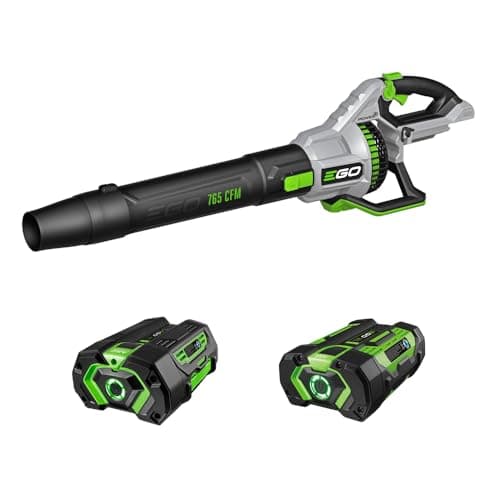
#ad Check the EGO Power+ 765 CFM Blower LB7650 price on Amazon — how we're funded.
The rest of the property
- Drives, paths and patios. Winter grit, salt residue and leaf litter. Low-mode blower work; see best blower for driveways.
- Beds. Rake, do not blow. Air redistributes mulch faster than it clears leaves.
- Fence lines and boundaries. Trimmer work, and the growth is heaviest now.
- Shrubs and hedges. The late dormant season is the best time for most pruning — timing in when to trim hedges.
See the Greenworks 80V 730 CFM Axial Blower on Greenworks's own site — no Amazon listing right now, so this link earns us nothing. How we're funded.
What we cannot tell you
We cannot tell you when spring starts where you are, and the extension timings quoted here are regional recommendations from Minnesota and Pennsylvania. Your own state extension service is the right authority for local dates and any local restrictions.
What travels regardless: clear debris before you cut, mow to a height trigger rather than a date, use soil temperature rather than the calendar for pre-emergent timing, and leave aeration, dethatching and seeding for autumn.
The products discussed
Specs are the manufacturer's own and linked to the page they came from. Prices come from a live daily check; where we have no verified price we say so rather than print a stale one.
EGO Power+ 650 CFM Blower LB6504
EGO · EGO 56V ARC Lithium · Our score 9.0/10
#ad Price as of October 23, 2026. Prices change; we check daily. How we're funded.
650 CFM in turbo with a genuine variable dial down to 225 CFM, and 64 dB published -- the useful range is the whole point.
Published specs
| Max air volume | 650 CFM (turbo) |
|---|---|
| Variable range | 225-470 CFM |
| Max air speed | Up to 180 MPH |
| Battery (kit) | 56V 5.0Ah |
| Runtime claim | Up to 90 min average |
| Noise | 64 dB |
| Warranty | 5-yr tool / 3-yr battery |
Source: POWER+ 650 CFM Blower, egopowerplus.com
56V x 5.0Ah = 280Wh, using EGO's advertised pack voltage.
What the numbers favor
- A real variable dial (225-470 CFM) plus turbo, not a three-position switch
- 64 dB published -- quieter than the 730 CFM Greenworks, which does not publish a figure at all
- IPX4 weather-resistant rating, published
- 5-year tool warranty
What they don't
- The 650 CFM headline is turbo-only; sustained work happens at 470 CFM or below
- EGO does not publish a weight for this model
your yard is a small courtyard or a deck. 650 CFM will move your mulch, your gravel and your neighbor's patience.
How it scores
Scores are our editorial weighting of the published specs above, not a test result. They are deliberately kept out of this page's structured data.
Greenworks 80V 730 CFM Axial Blower
Greenworks · Greenworks 80V · Our score 7.4/10
No Amazon listing for this one right now, so the link goes direct to Greenworks and we earn nothing on it. We show no price because we only publish figures from our own daily check. How we're funded.
730 CFM and a 4-year warranty from a tool Greenworks still sells direct -- but it has no Amazon listing right now, so this link earns us nothing.
Published specs
| Max air volume | 730 CFM |
|---|---|
| Max air speed | 170 MPH |
| Weight | 8.82 lb (Greenworks' own summary figure; its spec table says 15 lb, which reads as shipping weight) |
| Battery (kit) | 80V 2.5Ah |
| Runtime | Up to 60 min on low |
| Recharge | 40 min |
| Warranty | 4-yr |
| Availability | Sold direct by Greenworks; no Amazon listing as of 2026-10-13 |
Source: 80V 730 CFM Cordless Battery Leaf Blower, greenworkstools.com
730 CFM / 8.82 lb = 82.8 CFM per pound. We previously published 133 CFM per pound from a 5.5 lb weight that matches neither figure on Greenworks' current page -- that was wrong and is corrected here. On the real figure the EGO LB7650 leads the category at 765 / 4.6 = 166 CFM per pound, and this tool is second, ahead of the RYOBI RY404100's 730 / 9.4 = 78. The pack arithmetic is unchanged: 80V x 2.5Ah = 200Wh nameplate.
What the numbers favor
- 730 CFM at 8.82 lb is about 83 CFM per pound -- second only to the EGO LB7650 in our registry, and ahead of the RYOBI that matches its airflow
- 4-year warranty on tool and battery
- 40-minute recharge
- Cruise control and turbo button, so it is not a dead-man trigger for long sessions
What they don't
- 170 MPH is the lowest peak air speed here -- airflow moves volume, speed dislodges wet debris
- Greenworks publishes no noise figure for this tool at all
- 200Wh included is the smallest pack of the blowers here
- No Amazon listing right now, so buying means going direct to Greenworks
you own nothing else on Greenworks 80V. A 200Wh pack bought for one blower is an expensive way to start a platform.
How it scores
Scores are our editorial weighting of the published specs above, not a test result. They are deliberately kept out of this page's structured data.
EGO Power+ 765 CFM Blower LB7650
EGO · EGO 56V ARC Lithium · Our score 8.9/10
#ad Price as of October 23, 2026. Prices change; we check daily. How we're funded.
765 CFM and 200 MPH, with the turbo/low split published honestly: 15 minutes flat out, 150 minutes on low.
Published specs
| Max air volume | 765 CFM |
|---|---|
| Variable range | 260-580 CFM |
| Max air speed | Up to 200 MPH |
| Runtime (turbo) | 15 min on 5.0Ah |
| Runtime (low) | 150 min on 5.0Ah |
| Weight | 4.6 lb without battery |
| Noise | 64 dB |
Source: POWER+ 765 CFM Blower (LB7650), egopowerplus.com
280Wh (56V x 5.0Ah) over the published 15-minute turbo runtime = about 18.7Wh per minute. On low, 280Wh over 150 minutes is about 1.9Wh/min -- turbo costs roughly 10x the energy per minute.
What the numbers favor
- Highest published CFM and MPH of any handheld here
- Publishes BOTH turbo and low runtimes, so the trade-off is visible instead of averaged away
- 4.6 lb bare -- the lightest published weight of the handhelds on this page
What they don't
- 15 minutes of turbo on a 5.0Ah pack is the real constraint, whatever the 90-minute average says
- Sold bare in most configurations; budget for a battery and charger
you are clearing a small lawn. You will run it at 260 CFM forever and never touch what you paid for.
How it scores
Scores are our editorial weighting of the published specs above, not a test result. They are deliberately kept out of this page's structured data.
Where to buy the tools on this page
Amazon affiliate links, except where a product has no Amazon listing — those go direct to the maker and earn us nothing, and the button says so. We show no price we have not verified today, so where there is no live figure the link says "check price" and takes you to the listing to read it there.
Best overall
EGO Power+ 650 CFM Blower LB6504
EGO · EGO 56V ARC Lithium
Best budget high-CFM
Greenworks 80V 730 CFM Axial Blower
Greenworks · Greenworks 80V
Best for large yards
EGO Power+ 765 CFM Blower LB7650
EGO · EGO 56V ARC Lithium
#ad As an Amazon Associate we earn from qualifying purchases, at no extra cost to you. How we're funded.
Common questions
What should I do first in spring lawn care?
When should I do the first mow of the year?
Should I rake the lawn in spring?
Should I dethatch in spring?
When do I put down crabgrass preventer?
Should I fertilize in spring?
Sources
- EGO POWER+ 650 CFM Blower (LB6504), egopowerplus.com
- Greenworks 80V 730 CFM Cordless Battery Leaf Blower, greenworkstools.com
- EGO POWER+ 765 CFM Blower (LB7650), egopowerplus.com
- Mowing practices for healthy lawns, University of Minnesota Extension
- What to do with lawn clippings, University of Minnesota Extension
Read next
- Leaf Blowers
CFM moves the pile. MPH lifts what's stuck. Almost nobody explains which you need.
- Leaf cleanup, in the order that actually works
Mulch what the lawn can take, blow the rest, and the energy cost of each stage.
- Doing your own lawn care: what to do, and when
Four jobs, the right order, the right season. The sequence matters more than the equipment.
- Fall lawn care, in the order the guidance puts it
Aeration, seeding, weeds and most feeding all land between late August and mid-October.
- How often should you mow your lawn?
Mow by height, not by calendar: cut at 3 in, mow before 4.5 in, never take more than a third.
- Lawn weed control starts with the lawn
Weeds signal a condition. The cultural fixes, and the published timing windows.