Lawn Care
Best grass seed
Seed bags advertise coverage. Extension services publish rates. Convert one to the other and the two bags here disagree by 50%.
Affiliate disclosure: we earn a commission if you buy through our links, at no extra cost to you. It never changes which product we rank first — here is how we're funded.
We have not tested these units. Every spec on this page comes from the manufacturer's own documentation and is linked to it. Every computed figure is arithmetic you can redo. Prices are checked daily — last verified October 25, 2026. Here is exactly how we pick.
Quick picks
Ranked on the published specs and the arithmetic below. Tap any row to jump to the full write-up. We have not tested these units -- here is exactly how we pick.
| # | Product | Best for | Score | Price |
|---|---|---|---|---|
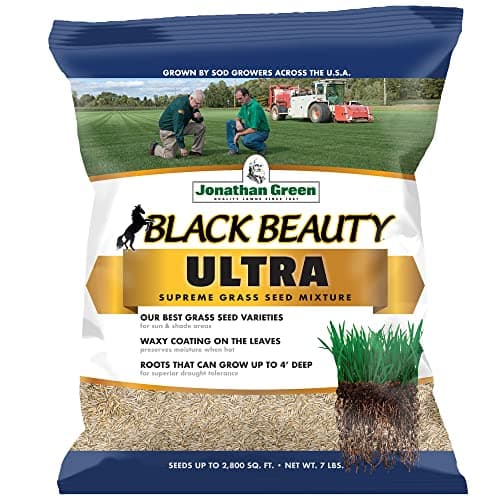
| 1 | Jonathan Green Black Beauty Ultra Grass Seed Half the seed per thousand square feet of the mass-market bag, on a tall fescue base that publishes its species list. | Best coverage per pound | 8.6 | |
| 2 | 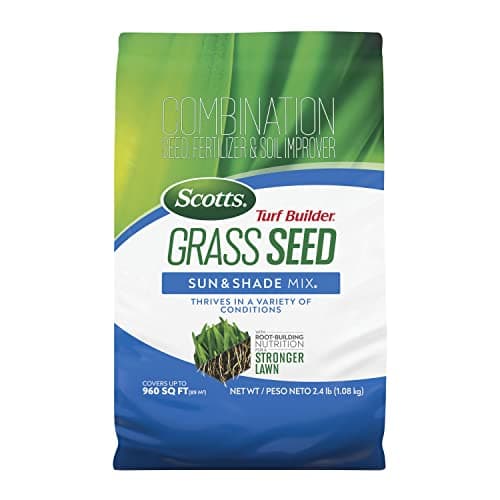 Scotts Turf Builder Grass Seed Sun & Shade Mix Five named species and a 4-0-0 analysis on the bag, at the price of needing half again as much seed per square foot. | Best species disclosure | 8.3 |
#ad Buy links are affiliate links. Prices come from a live daily check; where we have no verified price we say "check price" rather than print a stale one.
A seed bag tells you how many square feet it covers. An extension service tells you how many pounds a species needs per thousand square feet. Those are the same fact in different units, and converting one into the other is the only way to tell whether you are buying seed or buying coverage claims.
The short answer
Coverage claims, converted
Each maker publishes a bag size and the area it covers. Divide and you get a rate.
Every bag size in the Jonathan Green range — 1, 3, 7, 25 and 50 lb — returns the same two rates, which tells you the coverage table was calculated from a rate rather than estimated bag by bag. That is a small sign of a seriously kept specification.
What the extension rates say about those numbers
Penn State Extension publishes seeding rates per 1,000 sq ft by species: Kentucky bluegrass 2-3 lb, perennial ryegrass 4-5 lb, turf-type tall fescue 6-8 lb, fine fescues 4-5 lb.
| Species | PSU rate per 1,000 sq ft | Where it appears here |
|---|---|---|
| Kentucky bluegrass | 2-3 lb | In both mixes |
| Perennial ryegrass | 4-5 lb | In both mixes |
| Turf-type tall fescue | 6-8 lb | Base of the Jonathan Green mix |
| Fine fescues (creeping red, chewings, hard) | 4-5 lb | Three of the five Scotts species |
Rates from Lawn Establishment, Penn State Extension, fetched 9 September 2026. Species lists from the two product pages.
Read the two bags against that table and something interesting falls out. Jonathan Green's mix is tall-fescue based, and its 5 lb per 1,000 sq ft new-lawn rate is below the 6-8 lb PSU gives for tall fescue — the bluegrass and ryegrass in the blend pull the average down, because both are seeded at lower rates. Scotts' 7.5 lb sits above the range for every species in its own blend. Neither is wrong; blends are seeded by count as much as by weight, and seed size differs enormously between species. But it does mean the Scotts bag buys you fewer square feet per pound, and now you know by how much.
The two, on published figures
| Spec | Jonathan Green Black Beauty Ultra | Scotts Turf Builder Sun & Shade |
|---|---|---|
| Species | Tall fescues, Kentucky bluegrass, perennial ryegrass | Kentucky bluegrass, perennial ryegrass, creeping red fescue, chewings fescue, hard fescue |
| Blend percentages | Not published | Not published |
| New lawn rate | 5 lb per 1,000 sq ft | 7.5 lb per 1,000 sq ft |
| Overseeding rate | 2.5 lb per 1,000 sq ft | 2.5 lb per 1,000 sq ft |
| Bag sizes | 1, 3, 7, 25, 50 lb | 2.4, 5.6, 16, 32 lb |
| Germination | 7-14 days | First sprouts in about 6-12 days |
| Seed treatment | Not published | Fungicide-treated |
| Analysis | Not published | 4-0-0 |
| Light requirement | 6+ hours of sun per day | Not published as hours |
Transcribed from the Black Beauty Ultra and Turf Builder Sun & Shade pages, fetched 9 September 2026. Rate conversions are our arithmetic.
1. Jonathan Green Black Beauty Ultra — best coverage per pound
A tall-fescue-based mix with Kentucky bluegrass and perennial ryegrass, sold in everything from a 1 lb patch bag to a 50 lb reseed. Germination is published as 7-14 days, shade tolerance is rated excellent, and the light requirement is stated plainly as 6+ hours of sun per day — a useful piece of honesty in a category where "shade mix" often implies no sun is needed at all.
At 5 lb per 1,000 sq ft for a new lawn, a 25 lb bag does 5,000 sq ft. That is a third less seed per square foot than the alternative here.
What it does not publish: the percentage split between the three species, or any cultivar names. Tall fescue also has a coarser leaf than a bluegrass lawn, which is a look you either want or do not.
#ad Check the Jonathan Green Black Beauty Ultra Grass Seed price on Amazon — how we're funded.
2. Scotts Turf Builder Sun & Shade — best species disclosure
Five species named on the bag — Kentucky bluegrass, perennial ryegrass, creeping red fescue, chewings fescue and hard fescue — plus a 4-0-0 analysis, a fungicide seed treatment against damping-off in a wet spring, and a seeding window published as air temperatures consistently between 60F and 80F.
Three of those five are fine fescues, which is what makes it a shade mix: fine fescues tolerate low light better than bluegrass does. It is also what limits it, because fine fescues are the least wear-tolerant grasses in a cool-season lawn.
The cost is rate. 7.5 lb per 1,000 sq ft on a new lawn is 50% more seed than the Jonathan Green mix asks for, so compare bags by area covered rather than by weight.
#ad Check the Scotts Turf Builder Grass Seed Sun & Shade Mix price on Amazon — how we're funded.
Timing, depth and the part people get wrong
Penn State Extension is direct about when: "late summer is the optimum time to seed in most areas of Pennsylvania," because soils are drier and warmer in late August and early September than in spring. The same page describes covering seed by dragging the area so that most seeds end up under about a quarter inch of soil.
Who should skip both
- Warm-season lawns. Both mixes are cool-season. In bermudagrass, zoysia or St. Augustine country they will not persist through summer — see grass types guide.
- Deep shade under mature trees. Shade tolerance is relative. Below about four hours of light, no seed mix produces a lawn — see moss and shady lawns.
- Anyone who has not tested the soil. Seeding into soil with a pH or phosphorus problem wastes the bag. A soil test costs less than the seed.
What we cannot tell you
We have not grown either mix out. Neither maker publishes the percentage split between species, cultivar names, purity and germination percentages from a seed analysis tag, or a weed seed content figure — all of which are printed on the physical tag and none of which appear on the product pages. Jonathan Green publishes no seed treatment and no analysis; Scotts publishes no light requirement in hours. We have transcribed what each one prints and converted it to a common unit; the rest is on the bag in the store.
The picks in full
Specs are the manufacturer's own and linked to the page they came from. Prices come from a live daily check; where we have no verified price we say so rather than print a stale one.
Jonathan Green Black Beauty Ultra Grass Seed
Jonathan Green · Seed (no power) · Our score 8.6/10
#ad Price as of October 25, 2026. Prices change; we check daily. How we're funded.
Half the seed per thousand square feet of the mass-market bag, on a tall fescue base that publishes its species list.
Published specs
| Species | Tall fescues, Kentucky bluegrass, perennial ryegrass |
|---|---|
| Percentages | Not published |
| New lawn coverage | 200 sq ft per lb |
| Overseeding coverage | 400 sq ft per lb |
| Bag sizes | 1, 3, 7, 25, 50 lb |
| Germination | 7-14 days |
| Sunlight | 6+ hours per day |
| Shade tolerance | Rated excellent by the maker |
Source: Black Beauty Ultra Grass Seed, jonathangreen.com
The 25 lb bag is rated for 5,000 sq ft of new lawn and 10,000 sq ft of overseeding. 25 / 5 = 5 lb per 1,000 sq ft new, and 25 / 10 = 2.5 lb per 1,000 sq ft over an existing lawn. Every bag size in the range works out to the same two rates, which is a sign the coverage table was calculated rather than guessed.
What the numbers favor
- Species list published, even without percentages
- 5 lb per 1,000 sq ft for a new lawn is a third less seed than the Scotts mix asks for
- Germination window published as 7-14 days
- Range runs from a 1 lb patch bag to a 50 lb reseed
What they don't
- No published cultivar names or blend percentages
- Needs 6+ hours of sun despite the shade rating
- Tall fescue base has a coarser leaf than a bluegrass lawn
you are patching a warm-season lawn. This is a cool-season mix and will not persist in bermudagrass country.
How it scores
Scores are our editorial weighting of the published specs above, not a test result. They are deliberately kept out of this page's structured data.
Scotts Turf Builder Grass Seed Sun & Shade Mix
Scotts · Seed (no power) · Our score 8.3/10
#ad Price as of October 25, 2026. Prices change; we check daily. How we're funded.
Five named species and a 4-0-0 analysis on the bag, at the price of needing half again as much seed per square foot.
Published specs
| Species | Kentucky bluegrass, perennial ryegrass, creeping red fescue, chewings fescue, hard fescue |
|---|---|
| New lawn coverage | 320 sq ft per 2.4 lb bag |
| Overseeding coverage | 960 sq ft per 2.4 lb bag |
| Bag sizes | 2.4, 5.6, 16, 32 lb |
| Germination | First sprouts in about 6-12 days |
| Seed treatment | Fungicide-treated seed |
| Seeding temperature | 60F to 80F air temperature |
| Analysis | 4-0-0 |
Source: Scotts Turf Builder Grass Seed Sun & Shade Mix (2.4 lb), scottsmiraclegro.com
2.4 lb over 320 sq ft is 2.4 / 0.32 = 7.5 lb per 1,000 sq ft for a new lawn. The same bag over 960 sq ft of overseeding is 2.4 / 0.96 = 2.5 lb per 1,000 sq ft. Scotts publishes the same two rates on every bag size it sells, so the figures do not change with the bag. The two mixes agree exactly on overseeding rate and differ by 50% on new lawns -- Scotts asks for 7.5 lb where Jonathan Green asks for 5.
What the numbers favor
- Five species named on the bag, more disclosure than most
- Publishes an NPK analysis, which a plain seed bag usually does not
- Fungicide-treated seed against damping-off in a wet spring
- Seeding temperature window published in plain degrees
What they don't
- 7.5 lb per 1,000 sq ft on a new lawn is 50% more seed than the alternative here
- No published percentage split between the five species
- Fine fescues in the blend are the least wear-tolerant grasses in a cool-season lawn
you are seeding a high-traffic play lawn. The fescue-heavy blend is chosen for shade tolerance, not for foot traffic.
How it scores
Scores are our editorial weighting of the published specs above, not a test result. They are deliberately kept out of this page's structured data.
Where to buy the tools on this page
Amazon affiliate links, except where a product has no Amazon listing — those go direct to the maker and earn us nothing, and the button says so. We show no price we have not verified today, so where there is no live figure the link says "check price" and takes you to the listing to read it there.
Best coverage per pound
Jonathan Green Black Beauty Ultra Grass Seed
Jonathan Green · Seed (no power)
Best species disclosure
Scotts Turf Builder Grass Seed Sun & Shade Mix
Scotts · Seed (no power)
#ad As an Amazon Associate we earn from qualifying purchases, at no extra cost to you. How we're funded.
Common questions
What is the best grass seed?
How much grass seed do I need per 1,000 square feet?
When is the best time to plant grass seed?
How long does grass seed take to germinate?
How deep should grass seed be covered?
Sources
Read next
- Lawn Care
Cutting the grass is a third of the job. This is the other two thirds.
- How to overseed a lawn
Published extension seeding rates, the late-summer window, and the passes-per-lawn arithmetic.
- Cool-season grass types, and how to tell which you have
Published mowing heights, nitrogen rates and tolerances for each cool-season species.
- Best lawn spreader for fertilizer and seed
Spread width decides how long the job takes. The passes-per-lawn math, worked out.
- Spreader settings: how to calibrate instead of guessing
Calibrate a spreader by weight in twenty minutes, with the passes and rate arithmetic.
- Soil testing for lawns, step by step
4 inches deep, 8 to 10 locations, every three to five years. What the report tells you.
- Best grass seed for shade
Shade tolerance, sunlight hours and seeding rates for three cool-season mixes under trees.
- Best grass seed for full sun
Sunlight hours, germination speed, soil temperature and seeding rates for three open-lawn mixes.